Crisis in South Africa: The shocking practice of ‘corrective rape’ – aimed at ‘curing’ lesbians

Originally posted by Independent.co.uk

By Patrick Strudwick
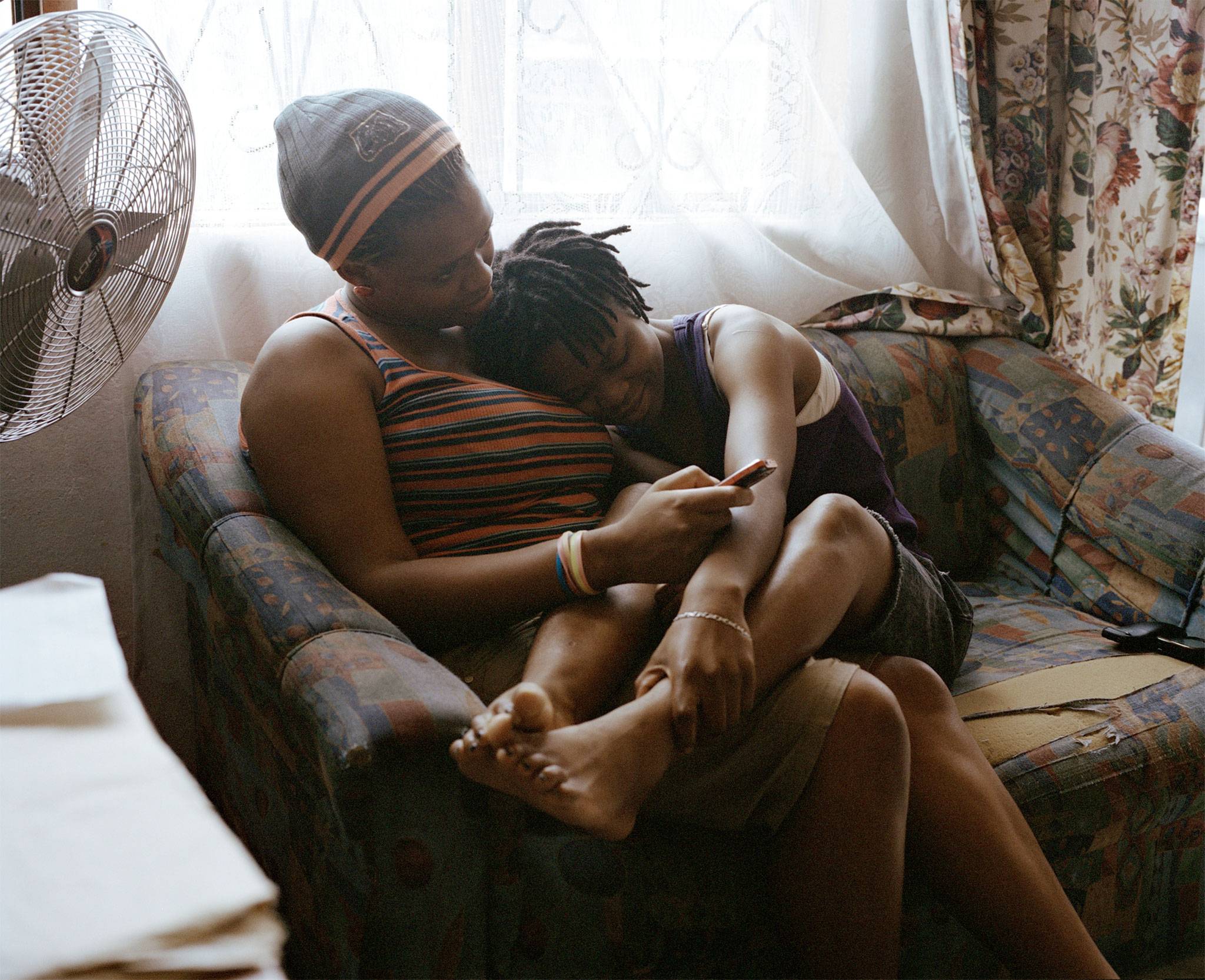
Clare Carter Photo
Clare Carter travelled across South Africa to photograph and interview the victims of this appalling crime. These are their stories…

Mvuleni Fana was walking down a quiet alleyway in Springs – 30 miles east of Johannesburg – on her way home from football practice one evening when four men surrounded her and dragged her back to the football stadium. She recognised her attackers. One by one, the men raped her, beating her unconscious and leaving her for dead.

The next morning, Mvuleni came round, bleeding, battered, in shock, and taunted by one overriding memory – the last thing they said to her before she passed out: “After everything we’re going to do to you, you’re going to be a real woman, and you’re never going to act like this again”.

Corrective rape is a hate crime wielded to convert lesbians to heterosexuality – an attempt to ‘cure’ them of being gay. The term was coined in South Africa in the early 2000s when charity workers first noticed an influx of such attacks. But despite recognition and international coverage, corrective rape in the region is escalating in severity, according to Clare Carter, the photographer behind these images. This is amid a backdrop of parts of the country “becoming more homophobic”, as one recent victim asserts.

Compared to many of South Africa’s victims, Mvuleni was lucky: she survived. At least 31 women in the past 15 years did not. In 2007, to cite one incident, Sizakele Sigasa, a women’s and gay rights activist, and her friend Salone Massooa, were outside a bar when a group of men started heckling and calling them tomboys. The women were gang raped, tortured, tied up with their underwear and shot in the head. Executed. No one was ever convicted.

Mvuleni’s case was also unusual as, unlike 24 out of 25 rapes that even reach trial in South Africa, two of her attackers were convicted and imprisoned for 25 years. The others remain at large.

Ever since a 1998-2000 report by the United Nations Office on Crime and Drugs ranked South Africa as highest for rapes per capita, it has repeatedly been described as the rape capital of the world: 500,000 rapes a year; one every 17 seconds; one in every two women will be raped in her lifetime. Twenty per cent of men say the victim “asked for it”, according to a survey by the anti-violence NGO, CIET. A quarter of men in the Eastern Cape Provinces, when asked anonymously by the Medical Research Council, admitted to raping at least once – three quarters of whom said their victim was under 20, a tenth said under 10. A quarter of schoolboys in Soweto described “jackrolling” – the local term for gang rape – as “fun”.

Although statistics for corrective rape have not been compiled nationally, one support group in Cape Town told ActionAid researchers in 2009 they deal with 10 new cases every week.

Clare Carter left her home in New York City in 2011 to photograph South Africa’s corrective rape victims. Horrified at the magnitude of the problem, she spent two years there, finding those affected and gaining their trust. In total, Carter photographed 45 survivors, hearing their stories and piecing together the mosaic forces fuelling the crime by interviewing priests and NGO workers, gay rights activists and family members. She also met with rapists. Carter’s investigation – the most comprehensive of its kind – brought her right across the country, zigzagging from Durban and Johannesburg to Cape Town and Port Elizabeth, from some of the smartened-up townships replete with tourist-pleasing government housing, to shack-stuffed rural sprawls.

“Even in the two years I was there the stories I was hearing were getting worse,” she says. “Corrective rape is getting more violent.”

Indeed, when we meet in London, Carter produces transcripts of interviews with the survivors she photographed, which more often than not refer to knives, stones and sticks being used. One woman describes being anally raped by a gang brandishing a broom handle.

There is one testimony in particular that stands out, from a young woman called Pearl Mali. Carter was introduced to her by Funeka Soldaat, who runs Free Gender, an LGBT rights organisation that specialises in helping victims of corrective rapes. Free Gender have “no phone, no computer, no money, no counsellors, nothing, except Funeka’s house”. Pearl is now 21 and volunteers there. She was 12 when it happened.

Her mother suspected Pearl might be a lesbian as she was a “tomboy” and so one day her mother returned home from church with an “old man”. Pearl doesn’t know what conversation had taken place, only that “there was money involved”. Her mother told her to go to her room.

“She said if I don’t do what is right I won’t get my lunch tomorrow.”

The man entered her bedroom.

“He locked my door and I was in my pyjamas about to get in bed and he told me how beautiful I was, how fast I am growing.”

He said he was going to sleep there with her, and started slapping Pearl, who screamed, bringing her mother to the door.

“She said, ‘Pearl you are making noise, shut up’. He told me to take off my clothes and I refused. He beat me – I was fighting him but he overpowered me and raped me.”

The next morning, Pearl’s mother acted normally, and soon after asked him to move in. For the next four years he regularly raped Pearl, as her de-facto husband, to make her straight. She tried going to the police, but they started “laughing” when she said the most recent rape was last week. They expect women to come immediately.

Pearl became pregnant by him at 16, prompting her to go to the police again, who this time imposed a restraining order against the man. But days after giving birth, her abuser came to the house while she was alone with the baby.

“He wanted to touch me again so I was fighting and fighting [him]. He kicked me on my waist and all the stitches got loose.” Though she successfully fought him off, Pearl’s troubles soon spiralled.

“My mum and this guy took the baby away when he was seven months old because I was still a lesbian.”

Her mother believed that if Pearl touched and fed the boy “it will make him gay”. Pearl moved out and went to court to gain access, but three years later, she is still trying to win custody and is currently only allowed to visit her son at weekends.

“I used to sleep under a bridge, not eat, just cry. I hanged myself; it was on a Monday. I took pills, took alcohol, drank cleaning appliances and then hanged myself. But God said, ‘It is not your time’.”

Familial collusion in corrective rape is common, according to Carter. Simphiwe Thandeka, from Pietermaritzburg (the capital city of the conservative, fervently Christian province of KwaZulu-Natal) was 13, and a “tomboy”, when a male relation started asking, “Why do you dress like this?”. He raped her in bed one night, putting a pillowcase over her mouth.

“He told me to keep quiet. At the time I didn’t know it was rape.”

When she told her mother the next day – because she was bleeding heavily – her mother replied that it is a “family matter”, and neglected to tell Simphiwe that the man is HIV positive. Simphiwe only discovered she had contracted the virus – a common outcome for such victims – three years later when she became pregnant by the man’s friend, whom he had tried to marry her off to in a final attempt to “correct” her sexuality. After repeatedly raping and beating her with a coat hanger, the friend sent Simphiwe back to her uncle, realising she would never be heterosexual and they would therefore never “get on”.

Soon, however, she was pregnant. She called her baby Happiness.

Now a mother, a local man told a friend of Simphiwe’s that he was attracted to her, but the friend informed him that she liked women.

“He told her, ‘I’ll prove this girl is not a man, but is a girl’. I was scared. He came to my home, he said he wanted to apologise for what he told my friend, but then he blocked me with his hand. He raped me in the dining room.”

This time she went to the police but “they take his side… so nothing I can say or do”. She called her second child Blessing.

Of all the countries in the continent, South Africa should be the least likely to be tarnished by homophobic hate crimes. Its 1997 constitution was the first in the world to secure the equal rights of LGBT people and a flurry of laws followed preventing workplace discrimination and, in 2005, allowing gay marriage.

“The constitution is there but it doesn’t mean anything to anyone,” says Funeka, who founded Free Gender after being correctively gang raped and stabbed multiple times (“My body was there, but I was far, far away,” she says).

“Even if you know how the constitution works, you don’t know how to use it to protect yourself. If you don’t have money you don’t have access to the justice system. Violence in the townships is normal. Homosexuality is [seen as] un-African. Patriarchy is everywhere. The way religious leaders read scripture is painful. Children start raping at 14, 15 and take pictures. We’re sitting on a time bomb.”

One such religious leader is Reverend Oscar Peter Bougardt, a senior pastor in the Mitchell’s Plain township, 20 miles from Cape Town. “Homosexuals can change,” he told Carter. “Homosexuality is a curse… a wicked influence… they come after our young people. Any clergy or priest that approves [of] homosexuality is from the pit of hell.”

David Hessey, who works for the Gay and Lesbian Association, also blames the courts for failing to deal with corrective rape cases.

“It is not treated as a serious offence. We are awaiting the sentencing of a corrective rape case – a father raped his daughter’s girlfriend to ‘cure’ her and he has been convicted – but it took two years to get the case to court and this is fast for South Africa. Most take six years which is why most people don’t report it.”

Witnesses are often disregarded in court, as even seeing and hearing a victim screaming is deemed “hearsay, as the woman may be screaming in pleasure and this may be the way they like having sex”.

The police routinely have neither the resources nor inclination to investigate. Leonie Spalding, aged 37, says when she came out to her husband he correctively raped her, but the police officer on duty was a friend of her husband’s who took her home, asked the husband what happened, to which he replied he was “just doing what any man should do and show me my place as a woman”. No charge was brought. In the testimonies collected by Carter, the most common reaction from police to corrective rape is laughter. But she cites a litany of causes for the phenomenon.

“A lot of people are outraged that gay people have equal rights, and are becoming more angry as gay people become more visible,” she says. “It’s a deeply patriarchal country – men are numero uno in the townships – and use corrective rape as a tool to assert their masculinity, all while egging each other on. Combine that with a lack of education, high unemployment leading to mass boredom, frustration and problems with drink and drugs and you have a perfect storm for patriarchal sadism. And because the police and courts do nothing there’s no consequence to corrective rape, which normalises it. It’s not seen as a big thing.”

Many have argued that the shadow cast by apartheid has a part to play, but it would be wrong to suggest that corrective rape is only South Africa’s scourge. I also speak to three women seeking asylum in Britain to hear their stories.

Patricia, aged 40, fled Nigeria after “one of the guys in my area raped me to make me straight. I told my family, and he admitted it, but they didn’t do anything because they didn’t want to bring any shame on the family”.

Belinda, aged 48, left Jamaica after being targeted for her sexuality.

“My brother belonged to a gang and he heard that they were going to rape me,” she tells me. “One morning I was on my way to work and a guy tried to hold on to me and rape me. I managed to fight my way off knowing full well I couldn’t report it to the police.”

Lillian, aged 26, from the Republic of Cabinda (formerly a province of Angola) says: “The men will rape you so you can taste how good it is to sleep with a man. They gonna really rape you badly to teach you a lesson – they think if they do that you will forget who you are.”

Before leaving South Africa, Carter went to a taxi rank near Pietermaritzburg where she was told there were men who admit to corrective rape. She filmed them.

“If we want to finish lesbians and gays they must be forcefully raped,” says one, grinning at the camera. “A man must go back to his manhood. Women must be women. She must be ready and willing to have sex.”

“They must be raped so that their gay and lesbian behaviour can come out,” adds another.

The third raises his voice, points two fingers at his temple and concludes: “This gay and lesbian thing must end. I say bang bang bang!”

All South African interviews by Clare Carter
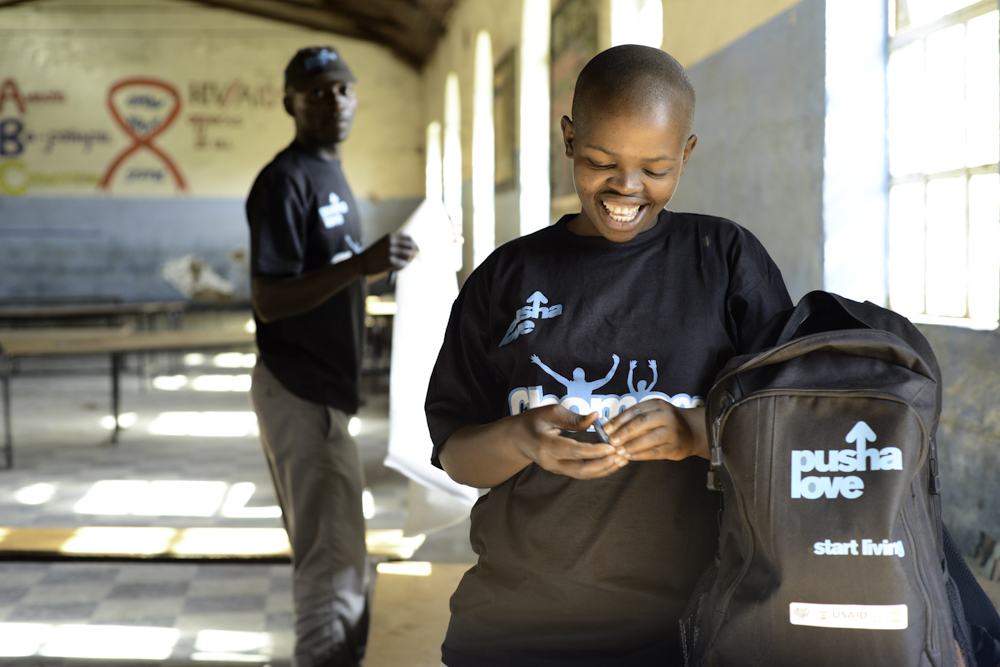
Pusha Love Chomees – Start Living!

Originally posted by Kick4Life

By Leila Hall

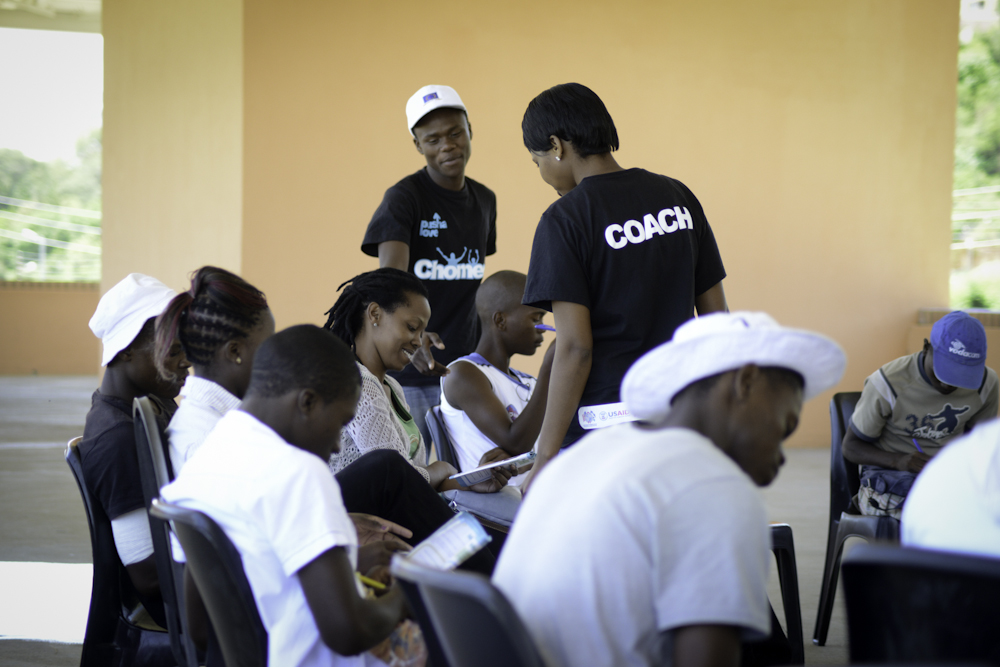
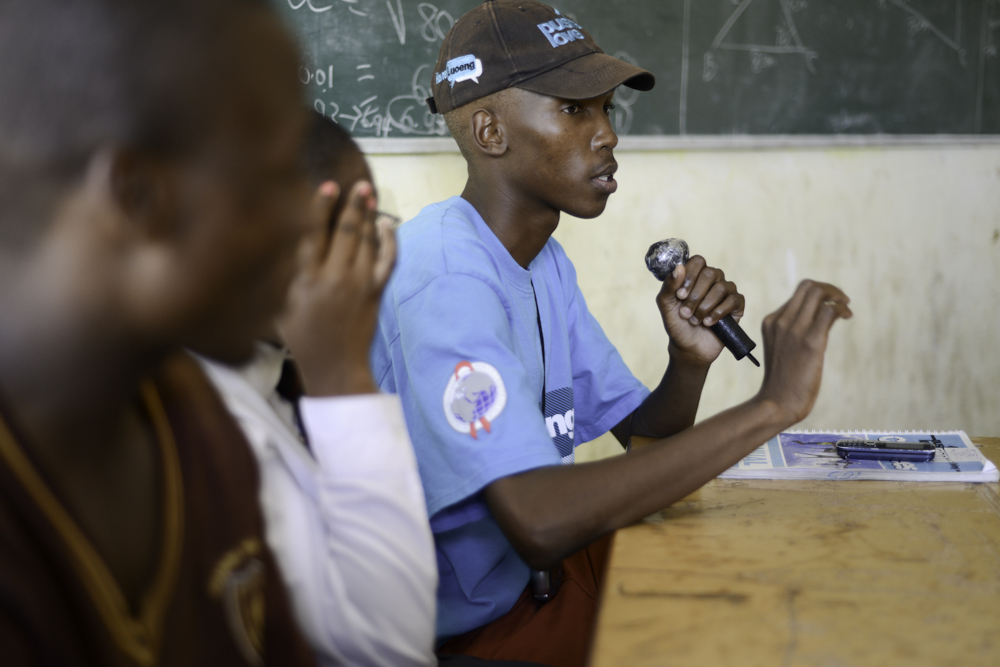
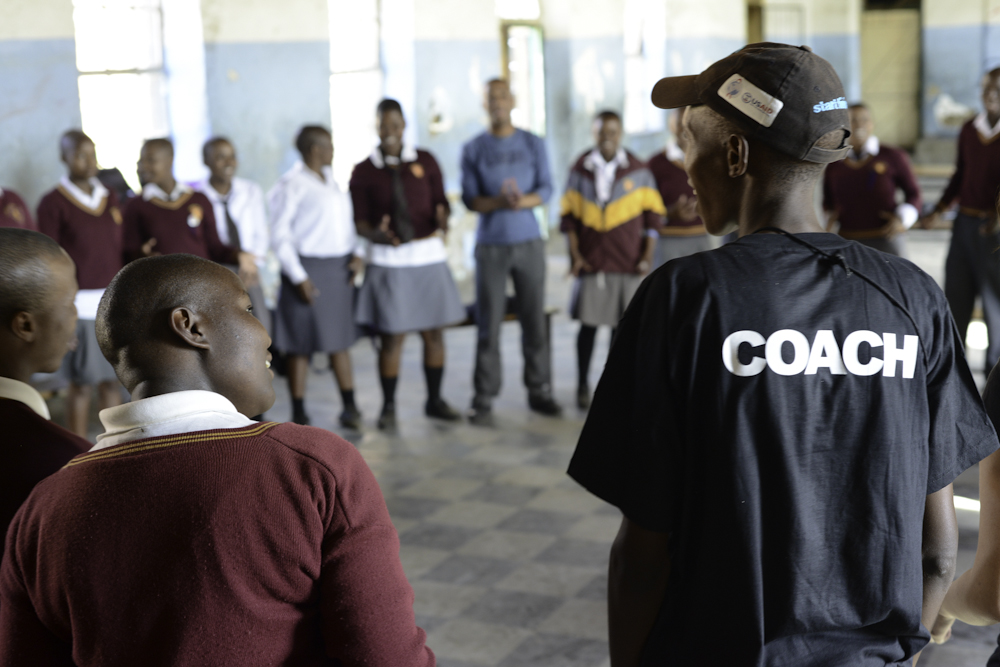
It is a hot summer afternoon in Maseru, Lesotho. On the rooftop of one of the buildings at Kick4Life, a group of young people are sitting in a circle with their heads bent, quietly writing. The silence is broken only by the shouts of children playing down below. Three people in T-shirts with the word ‘COACH’ printed in bold lettering across their backs are moving between the seated participants, stopping here and there to have a whispered conversation with somebody in need of a question answered or a point clarified.

Picture 1

The group is in the middle of the tenth and final session of Pusha Love Chomees – an interactive curriculum which teaches key facts about HIV/AIDS and encourages young people to think critically about the society in which they live, their own behaviour, and – especially – about ways to minimise their risk of contracting HIV. In a country in which 23% of adults are infected with the virus (the third highest prevalence rate in the world), educating young people to make choices that will keep them healthy and HIV-free remains at the forefront of Kick4Life’s work in Lesotho.

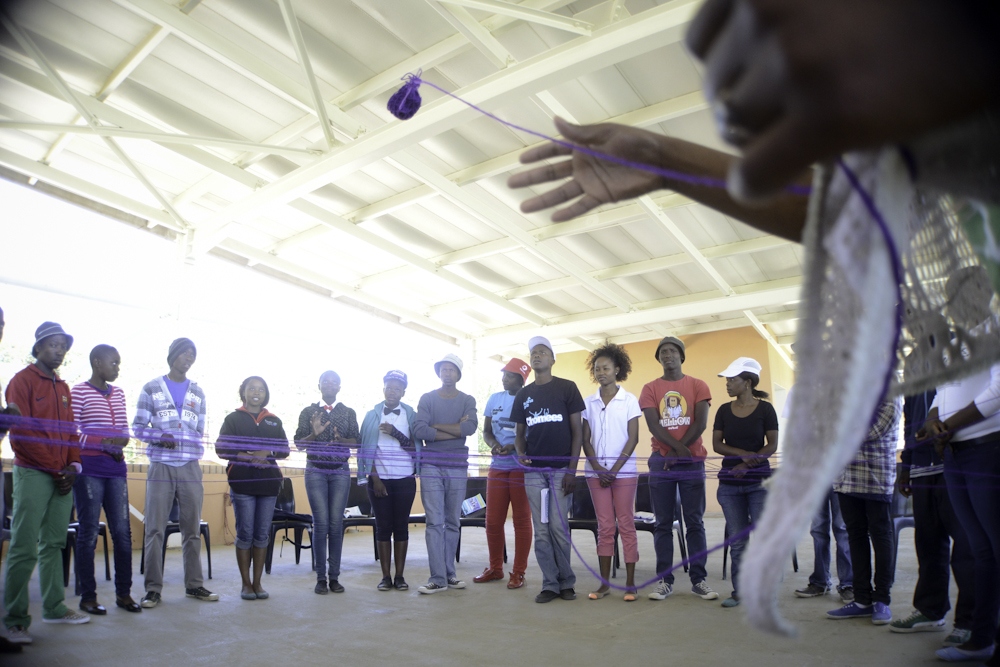
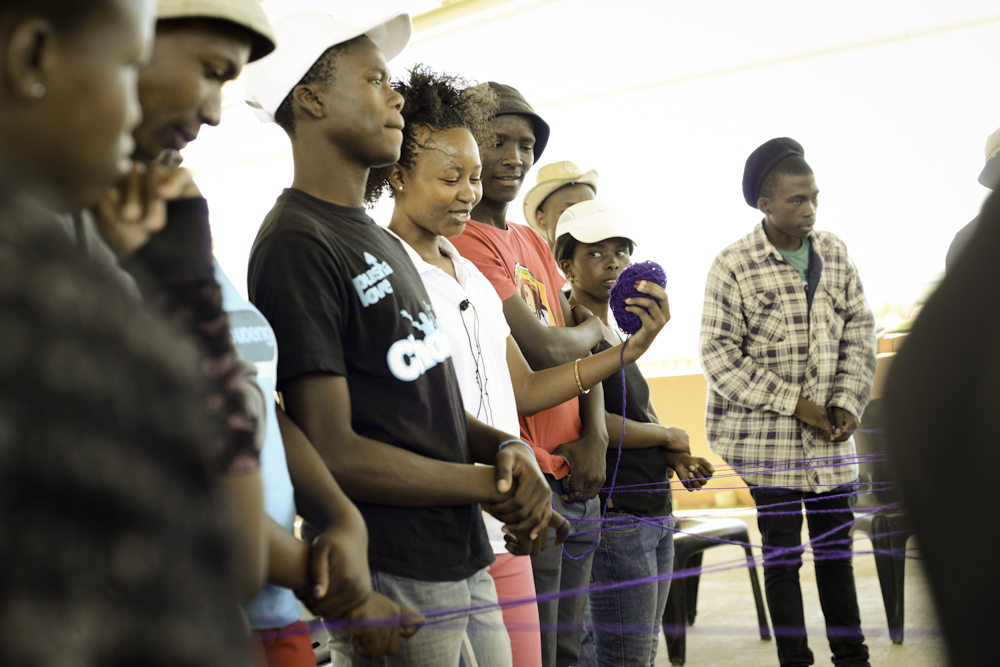
In this final session, participants have been asked to put learning into action by writing down personal promises that they want to make to themselves and to people close to them. Everybody is invited to stand in a circle. One of the coaches holds a purple ball of wool in his hand. He shares his promise with the group, and then tosses the ball of wool to another coach, who does the same thing. One by one, all of the coaches and participants say their promises out aloud, before passing the ball of wool on.

Picture 2

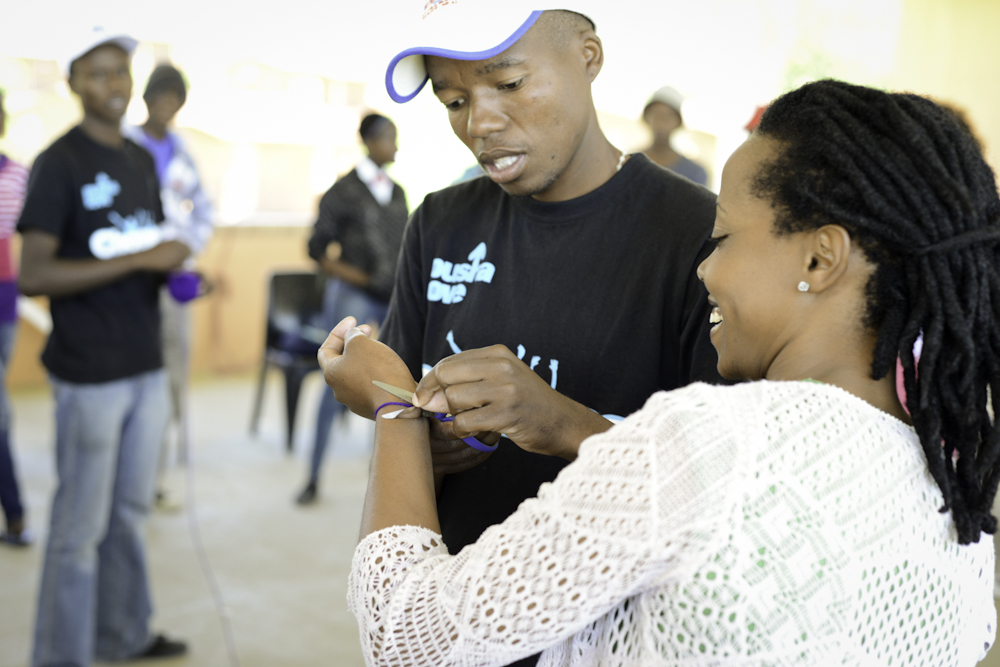
Before long, a giant web of wool has been created, connecting everybody in the circle. Once everybody has had the chance to share, the coaches help the participants to cut a small piece of wool to tie around their wrists as a reminder of the promises they have made.

© Meri Hyöky Photography

Initially designed and piloted as an in-school Youth Club program, the Chomees curriculum was refined in early 2013 to cater specifically for the needs of young adults between the ages of 18-24. In July 2013, Chomees was officially launched as part of Pusha Love – a nationwide behaviour change campaign funded by USAID. Since then, over 3,000 young people in Lesotho have completed the Chomees curriculum.

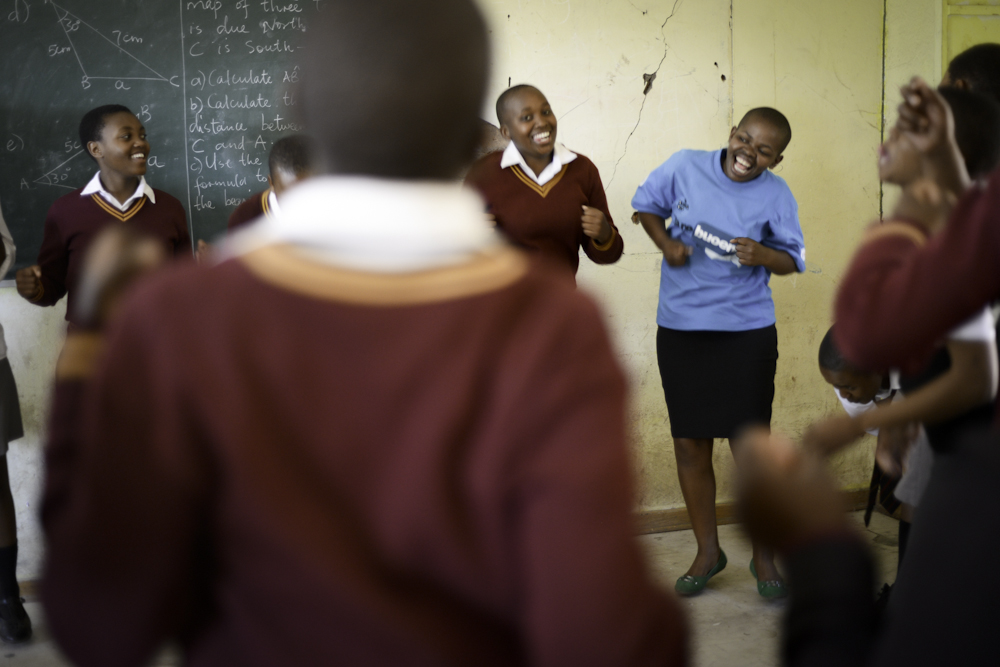
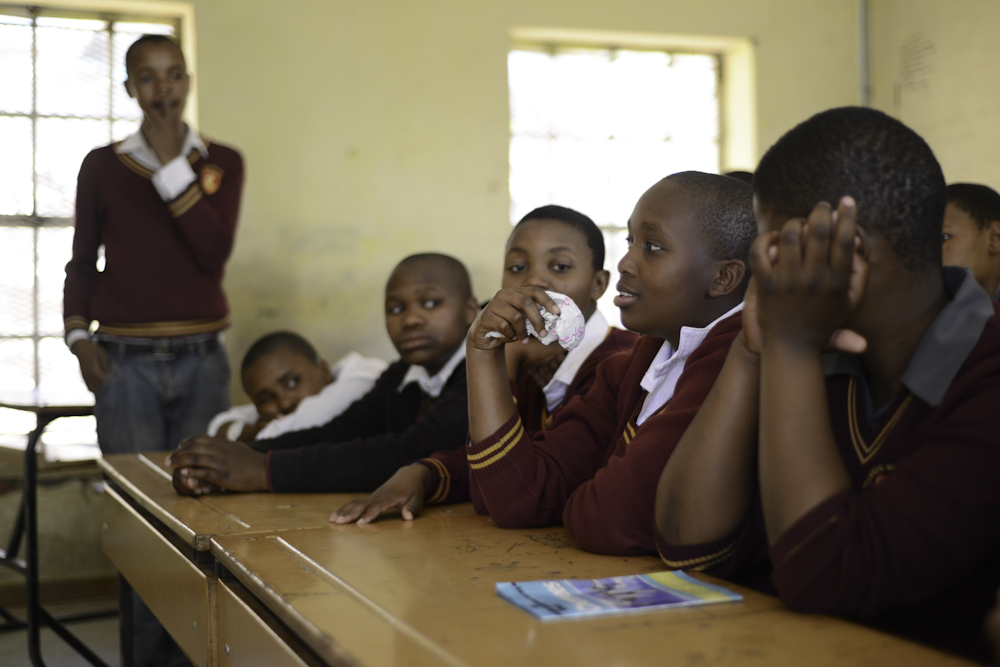
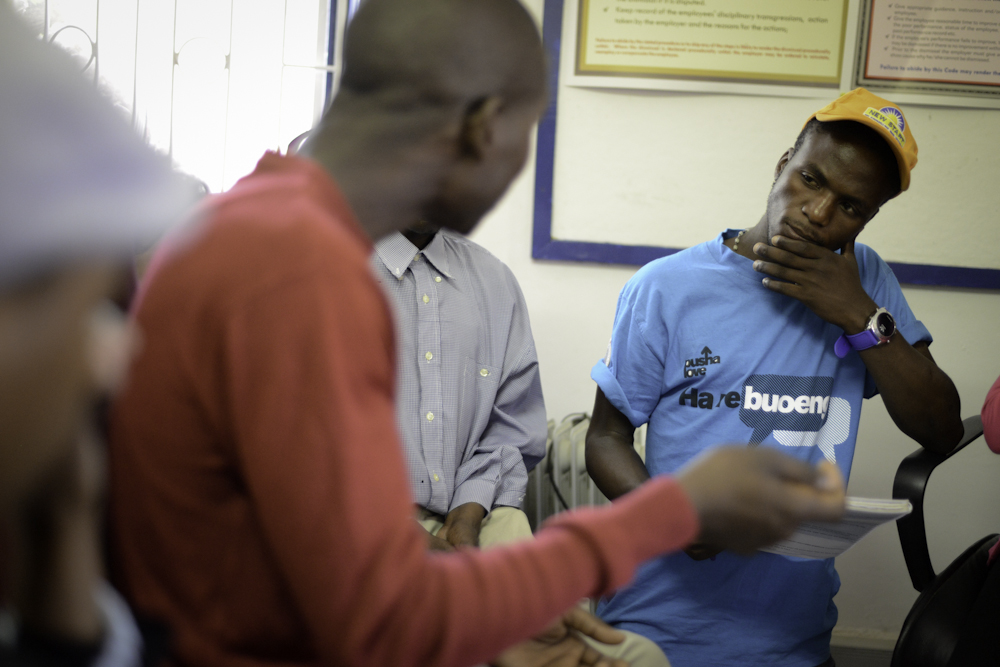
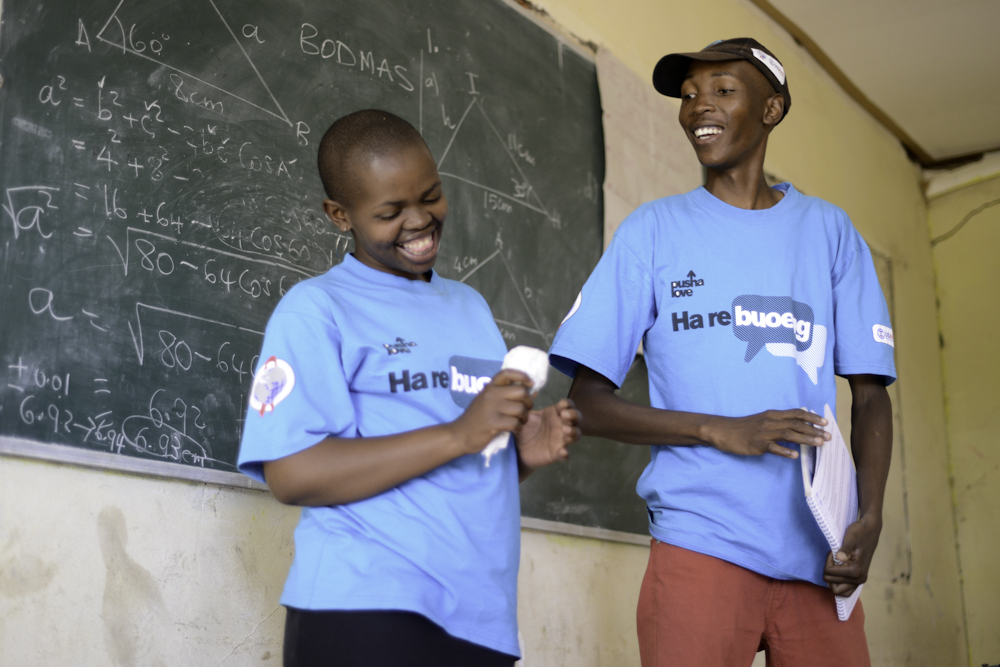
Chomees coaches are young volunteers who are trained by Kick4Life to deliver the curriculum. There are currently 35 coaches working on the program. Typically, a Chomees group will have anywhere between 15 to 30 participants, and will be led by a team of three to four coaches. For the past six months, in communities across four of Lesotho’s districts, teams of coaches have worked tirelessly to deliver Chomees sessions in a wide variety of locations – from classrooms, to prisons, to youth centres, to one-roomed huts in remote villages.

Picture 4

Recently, the Chomees coaches were invited to share their stories and experiences in writing. What emerged is a unique insight into the program and how it works to positively affect both coaches and participants.

Tebelo Phomane, who has worked with groups of young people in and around communities in Morija and Mafeteng, says that session four of the program is his favourite: “In this session, we talk about where HIV comes from, because most participants don’t know the facts about HIV.”

Moeti Lesupi, who works as a coach in Maputsoe in Leribe, has a different favourite: “I like session nine, where we do ‘The Real Deal Talk Show’ which teaches participants about stigma and discrimination. This session makes participants aware that HIV positive people are not bad people, and that it is sometimes not their fault that they were infected.”

Picture 5

“When we do the Talk Show in session three, we talk about love, sex and relationships,” explains Tšeliso Maboee, who also works in Maputsoe. “These are topics that young people are really interested in. We get asked many questions and we find solutions, and at the end participants know how to face challenging situations. We all learn a lot.”

“The good thing about the Talk Show is that it is funny and entertaining, but also serious”, adds Nthoateng Mphanya, a coach from Mapoteng in Berea.

Picture 6

Coaching is not always an easy job. If they are working in remote villages, coaches are often required to travel long distances and to spend many nights away from home. Having to constantly adapt to people of different backgrounds, personalities and abilities is part of the job, as is the frequent disappointment that comes with sessions that are cancelled or delayed.

But despite the hard work and challenges, many of the coaches reflected on the positive aspects of their job, and especially on the unique and powerful relationship that they build with their participants.

Picture 7

“I love interacting with participants, especially during informal time,” says Senate Letsie, a Maseru coach. “It’s during this time that I get to share my personal stories and experiences with participants and they get to reflect on them. I get to give advice and help my participants to make smart choices.”

“Participants start to believe in me in the sense that they ask for advice from me and ask me to help them tackle their challenges and problems,” says Lesupi. “A lot of participants went for HIV tests because of my advice.”

Picture 8

Phomane adds: “Since I became a Chomees coach, most people in my village respect me and tell me about their personal issues. I have had participants come up to me before and disclose their HIV-positive status to me.”

For many coaches, the positive impact of the program on the lives of their participants is immediately evident.

Picture 9

“After a session, a participant came up to me and told me that after we had talked about healthy relationships and communication skills in sessions three and seven he had built a good relationship with his girlfriend and the community around him,” recalls Selebalo Molefe, one of the Morija coaches.

Mabooe remembers a particular intervention at a high school in Maputsoe: “We were doing session six, which teaches participants about gender roles in Lesotho and how these contribute to the spread of HIV. I talked to the boys about the expectations that we face as young men, and I explained to them the importance of living ‘outside the box’ – of making their own decisions about how to live free of the restrictions of gender roles. They were impressed and their facial expressions showed me that they were ready to change and to live outside the box.”

“At the end of one intervention, a participant came up to us and told us that the sessions had motivated him to work hard to save up enough money to go back to school,” says Mailinyane Lihaba, a coach in Hlotse in Leribe.

But one of the most powerful and lasting effects of the program is the change that coaches see in themselves. Many have become role models in their own communities – a new-found status which has forced them to evaluate their own behaviour and to put into action the lessons that they teach others.

“Coaching acts as therapy in my life,” says Tsotuoe Konyana, a coach in Maseru. “If I have my own personal problems, after I have facilitated a group I feel refreshed. I am a shy person, and the fact that I am now able to stand confidently in front of people is one of the great achievements in my life.”

DSC_6841

“Before I became a coach, I had a problem with how I communicated with others,” adds Konyana. “But now, I have good communication with my husband and other people. I apply the communication tips that I teach to my everyday life.”

“I used to have many girlfriends and couldn’t stick to one partner,” recalls Mabooe. “I now only have one partner.”

“Before becoming a Chomees coach, I discriminated people who are HIV positive because I didn’t know the facts about HIV. But since becoming a coach, I support HIV positive people and I teach others to do the same.”

2014 has now begun and Chomees is already off to a good start! We plan to work with many more thousands of young people in the country this year, and to train more coaches to become role models and agents of change in their community.

(If you would like to find out more about the program, or if you live in Lesotho and have a group of young people who you would like us to work with, please do get in touch via email: [email protected] or [email protected]).

Photography by Meri Hyöky

Picture 11

Lesotho ACE MTB – Puts it into perspective

Originally posted by Dig Deep Coaching

There are many great charities doing a fantastic job at enriching the lives of children and adults all over Africa, by providing them with bikes for school or work.

But have you ever considered the prospects for those children who catch the ‘Cycling Bug’ and discover that they have an exceptional talent on their bikes?

The Lesotho ACE MTB Race Team is positioning itself to fill this void and give deserving young riders an opportunity to shine on the world stage.  We are launching Africa’s first ever black UCI MTB Team and we are desperately seeking support from anyone who can get a “foot-in-the-door” to cycling industry suppliers, global businesses or sympathetic companies who may be interested in supporting our team.

In Lesotho, we discover many potential cycling sensations, but in a country ranked a lowly 162nd in UN Development Indexes and where the government has other priorities than investing in sport, it has been very difficult to provide these cyclists with the opportunity that they yearn for.

The Lesotho ACE (Academy of Cycling Excellence) MTB Race Team is a mouthful, but encapsulates what we are trying to achieve as a team.  The Race Team is an important facet, providing those who have already proved their potential, an opportunity to race in some of the biggest races on the African continent, including UCI World Cup and UCI World Marathon Championships.

However the team members will also act as role models, committed to grass-roots development initiatives to get children inspired in the sport.  We really believe (as did our dearly departed Tata Mandela) that sport has the ability to break down the barriers of poverty and race, and can also give children hope, focus and fulfilment.

With the help of Dig Deep Coaching sessions and The Sufferfest videos, we were able to prepare a team for the 2013 World MTB Championships in South Africa, where Lesotho made the continent proud by being the only black African nation represented.  The event was an eye-opener and we realised that the only way we can improve is through regular international competition, both at home and away.

As we stand at the moment – January 2014, we are still in need of a Title sponsor for the team and pretty much all the team equipment as well.  We must be the best-value UCI MTB Team with a modest budget of just £20,000 (€24,000).  As a Title sponsor of a bone fide UCI MTB Team, we can promise great international news interest and exposure.

New Team Bikes would be a dream but our most pressing need is for bike parts that need regular replacement because of wear and tear – drivetrain and tyres.  Next in line would be racing wheelsets, suspension forks, reliable brakes, helmets, shoes and clothing.  GPS cycling systems would also be a great help to prescribing and measuring training – better still Power Meters will enable our coaching team at Dig Deep to evaluate our training and progress much more closely.

We cannot promise that our team will become world-beaters, but we will give it our best shot!  We are confident we can get riders into the 2014 Commonwealth Games and the next target will be Rio 2016 Qualification.  Along our journey, we will endeavour to make all our sponsors and supporters proud and to continually applaud their contribution and highlight their products through our active social media channels and upcoming website.

More images can be found here –  https://vimeo.com/83564524

Lekwere-kwere means you are ignorant

By Lineo Segoete

I find it funny that migrants who have settled in a place longer than others have the audacity to reject and humiliate newcomers. Indeed the world has grown to become an unsavoury and forsaken place where one must always look over one’s shoulder in the quest for survival and security. We look toward strangers with paranoia and aggression and resort to name-calling, forgetting all about brotherhood. We forget that we are all travellers and at some point or another we will be that new guy in a place, in the same vulnerable spot we once put someone else in.

I was cast off as a youth, due to this I found solace within the minorities, be it the group of bmx riders in college, the boisterous Indian girl in University, the introverted and brainy Muslim girl from Tanzania in primary school to the cheeky Finnish photographer who rekindled my love for the place my mother was born (Morija), presently. These characters granted me the appreciation for the wholeness inter-connectedness of life because as others were busy spotting and picking at what set them apart, I identified it as uniqueness. More importantly, I noted the things that bring us together.

There’s a word/label that has become so ingrained within the context of our language that we tend to overlook its implications: This word “Lekoerekoere/Lekwerekere” is derived from the sound interpretation of dialects that originate outside our Bantu and Nguni origins and could mean barbarian in its most exaggerated translation. For many people the use of this word is such a non-issue that it has been adopted as a legitimate term to refer to anyone else of African roots (except maybe American and European Africans), especially the darker their skin tone.

I personally revere a heavily melanised skin tone by virtue of taking pride in my identity, more with the help of popular models made famous by looking unlike their fair-skinned counterparts and what is commonly referred to as yellow-bones (light-skinned individuals of African descent) within their own ethnic group. Unfortunately, thanks to our petty prejudices and even jealousies this word is used to classify our brethren as though they are an exclusive species, to the extent of making them feel inferior and unwelcome.

The absurdity of this label lies in its basis; if someone you look similar to is better qualified than you, looks more exotic than you, has better luck with the opposite sex or has been able to make the most out of limited resources compared to you, which you find unfair and uncomfortable, it is YOUR problem, not theirs. We are all (and I mean world-wide) migrants by virtue of being human, we travel from place to place in search of “greener pastures” and better living conditions and the establishment of borders and the likes has no bearing on this fact regardless.

I’ll admit that before I was enlightened about xenophobia and relieved of my ignorance, I too was prone to referring to people as Makoerekoere because to me it meant the same thing as calling the Chinese “Machaena” or the Zulus “Mazulu” and I realise many other people are still as innocent about it. Still, if we sit back and ignore the implications of its use we perpetuate a form of discrimination worse than racism because it means estranging our own kin.

The next time you visit or move to a new place and expect to be received with warmth and open arms think about being at the receiving end of the names you call new-comers in your native area. At times nicknames can be coined as a form of expressing welcome, which is fine, what’s problematic is when you or those around you deliberately create labels meant to make the next  person feel they are an outcast. Just a thought!

Hope in Koalabata

By Lineo Segoete

The word merry in “Merry Christmas” has been perverted to mean excessive lewd and riotous behaviour (never mind the toll it has on the wallet). Truth is regardless of our varied religious orientations what puts the merry in Christmas is the opportunity to be selfless and express love unconditionally. For Thato Child and Youth Care Centre, an orphanage based in Koalabata on the outskirts of Maseru, it is a time of beckoning.

Thato Child and Youth Care Centre was one of a group of orphanages to get merry at the Maseru Club grounds on December 12 as Standard Lesotho Bank invited them to receive gifts and supplies in the spirit of the season.

On behalf of the Centre, Mr Tšeliso Hlalele said they were prompted to open the centre in 2001 by the maxim “charity begins at home”. They started with 10 children of kin because they were touched by the conditions those children were living under after their parents died.

In 2005 the centre was registered, but the road ahead was bleak and peppered with conflict. What took off as a positive development with donors taking an interest in the centre’s work- building premises and developing infrastructure- deteriorated into five of the ten founding members falling off which escalated into a court dispute that chased away the funders.

In addition to struggling with getting enough food, clothing and tuition money to sustain the kids, the centre remains stagnated by the ensuing court case which also forced a change of location. Fortunately, Mr Retselisitso Moleka also a founding member contributed his land in Koalabata where they make do with very little. Their challenges nevertheless do not deter them from pushing on to source new funders and business partnerships so that they become self-sustainable and grow.

Currently Thato Child and Youth Care Centre is home to 220 kids ranging from 18 months old to 16 years old. The programs designed to engage them in and rehabilitate them as well as the love of their care-givers (who also function as role models) helps them recover from the adverse hardships they faces prior to becoming part if the centre.

Treated to jumping castles, music, trampolines, snacks and KFC, the kids had unrestricted fun, their contentment reminding to us to appreciate the priceless gift that is life. Although they had banners and other branding there, Standard Lesotho Bank had not made a big media fuss about the event, a good move considering corporates tend to turn Corporate Social Responsibility into marketing campaigns thereby losing sight of the importance of giving for the sake of giving not recognition and praise.

“Simply give others a bit of yourself; a thoughtful act, a helpful idea, a word of appreciation, a lift over a rough spot, a sense of understanding, a timely suggestion. You take something out of your mind, garnished in kindness out of your heart and put it into the other person’s mind and heart.” -Charles H Burr