
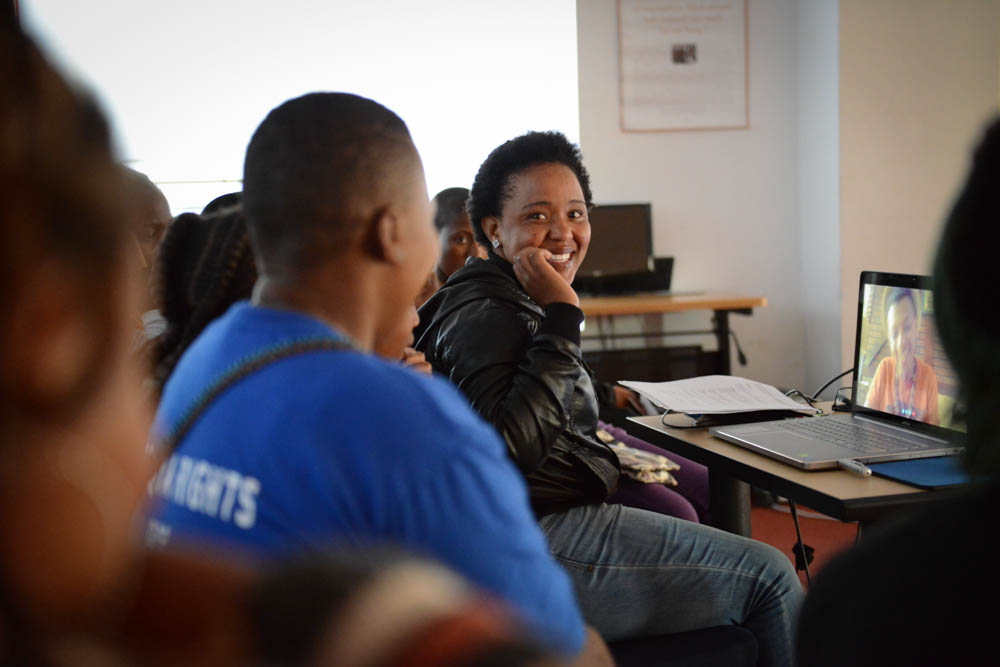
‘Global LGBTI Conversations – Out Loud!’ was an event held on Saturday 23 May at the State Library in Maseru. The event was organised by Matrix Support Group, with support from the U.S. Embassy in Maseru, and equipment and logistics provided by The Hub.
The aim of the event was to connect young Basotho with international activists who are working to promote the rights of lesbian, gay, bisexual, transgender and intersex (LGBTI) people worldwide. The conversations offered new insights and perspectives on the issues and struggles that LGBTI people around the world face, and the many ways that activists in different countries are tackling these.
Below are some memorable quotes from each of the speakers.
- Germaine de Larch is a South African writer, artist, photographer and art-activist. De Larch uses photography to create portraits of trans* people, and shares these on social media, in exhibitions and at conferences to increase awareness and visibility of transgender and non-conforming people.
“We’re not seen as human or as real, which makes it easier to discriminate against us. Through my photos, I show that we exist, we have lives, we’re not going anywhere.”
“Simply being who you are, existing as an LGBTI person, is a form of activism.”
“South Africa has one of the most liberal constitutions in the world, and yet there is hideous violence towards LGBTI people in our townships. For white people, being gay is virtually a non-issue, it is only in small towns that you face severe discrimination. As a white trans / queer person, I cannot just celebrate my privilege. I have to be an activist. As a white activist, I cannot speak for my black brothers and sisters, but I can support them.”
“I used to be unhappy. My depression stemmed from not accepting myself. Be who you are and fight for who you are. When you share your truth, people respond to that in an overwhelmingly positive way.”
- Zanele Muholi is a South African photographer and visual activist. She has exhibited widely around the world, and has won several awards for her work. In 2009, Muholi founded Inkanyiso, a collective of young LGBTI individuals who use visual arts and media advocacy to document their lives and stories.
“I am a visual activist. I document. I don’t limit activism to placards and marches and taking to the streets to shout – ‘eehh, they’re killing us!’ I don’t focus only on that.”
“I had to deal with the lack of visuals and history that was produced for us, by us. I couldn’t depend on mainstream media to do that for us, because the only time that we are represented in the media is when there has been a tragedy, like when a black lesbian has been killed. We [Inkanyiso] have documented from weddings to funerals, we have our own people writing our own stories. We are very clear about what we are doing. We want to make sure that we are counted in history.”
“Whatever good things happen to us, we also document them. One of our collective members graduated last month, and we documented that. We don’t want to only document the negative. Whether it’s good experiences or bad experiences, we just want to make sure that our people get the recognition and the respect that they deserve.”
“You have to document your lives, your stories. In as much as there are people interested in Lesotho and the LGBTI people there, it’s very important that most of you get trained and share with the world what it means to be you. Nobody will write your history better than you.”
“Wake up and write this life, even if it’s painful. If you are expelled from school when people are chased away from your home, you still write about that movement, that move, as you leave your mother’s door and you move to the neighbour’s house for that night. Write…write black people, write your own histories, write and rise, the time is NOW! Even if you don’t know how to write, even if you know your English is not good enough, it doesn’t matter. Write. Even if you have grammatical errors, write still. Write in Sesotho, somebody will translate.”
“I’ve learnt to be a proud Zulu lesbian, to fuse my butchness with my culture and my tradition. We need to make sure that ourselves, our identities, are also written in Sesotho, in Zulu, in Tswana, in Xhosa, in all the African languages that exist in Africa to show our true pride. We need to be proud of who we are in international spaces. At Oslo Pride, come as a Sotho dyke, in your hat and your blanker, and say I am a true African.”
Regarding the challenges of unemployment, lack of ‘education’, and limited funding and resources:
“One of the highest challenges faced by LGBTI people in our country [South Africa] is unemployment. The people who join our group [Inkanyiso] are mostly young black lesbians who are graduates, and who are unemployed. But whenever there’s the chance for them to write and document, they come on board, and then that’s where they revive themselves and develop themselves.”
“There is no such thing as a person being ‘uneducated’. Education comes in many different forms. You may not have finished high school, but you have brains. You can make contributions to your organisation, without having to bring a degree on board to articulate your issues. There is so much that you can do without anyone saying ‘bring your education, your diplomas, your papers’. There is still so much that you can do without that piece of paper. Life is beyond just a piece of paper, it’s about what we are able to make out of life.”
“Most of the work that we do has no resources or funding, but I always say to myself: I don’t need any person to validate my life. I don’t need validation from external parties. The members of Inkanyiso do not get paid. We do not have an office, we work at home from our laptops.”
“Whatever challenges I face, I love photography, and photography is my therapy, so whenever I shoot, I feel better. I shoot every day – that’s my pill, that’s my healing tool, and it’s great. I meet a lot of amazing individuals in different spaces. I travel for what I do.”
- Tiffany Kagure Mugo is originally from Kenya, but currently lives in Cape Town. She forms part of the team behind the website HOLAAfrica, which deals with a whole range of topics, including sex, relationships, politics and identity.
“The highlight of my work is when I get a message from somebody that says: ‘thank you for what you do’. It’s the little things that make the work we do worthwhile.”
“You are not alone. Every struggle that you go through, someone out there has gone through the same struggle, and has come out OK.”
“Anti-sodomy laws came with British colonialism. Attack them from a modernist / historical perspective. Problematise the law, understand that it’s important to say: ‘this is not something we should uphold’.”
“If you’re having a bad day, know that it will get better. And be sure to never take yourself too seriously. If you do, you will focus only on the shine and the accolades, and will lose contact with the work you do.”
- Aija Salo is the secretary general of Seta, Finland’s main LGBTI rights organisation. Amongst its many activities, Seta does advocacy work, aims to change laws and influence government policies, and provides materials, training and counselling.
“In 2014, 20,000 people attended our pride march in Helsinki. Fifteen years ago, only 300 attended. Change is possible, it’s not so long ago that we were struggling. Recently, we established a support group for LGBTI family members in Rovaniemi, in the north of the country. Only two parents showed up to the first meeting, but it was a start. Don’t get discouraged. These things take time.”
“Politicians and common people often don’t understand the scope of LGBTI issues. They affect all stages of life – from childhood, to school, to growing old. They do not just affect issues such as marriage – but, more widely, the ability to live peacefully, and without discrimination.”
“It’s important to look at your own community. Even within the LGBTI community, there are hierarchies, struggles and judgements. We’re not always a family. Listen to everyone in the community, we must try to build bridges across the differences in our own communities.”
“It’s important as an activist to think of one’s own well-being and that of friends. In my job, there is so much work, and often a sense of inadequacy. It’s important to stop working and to breathe, celebrate and relax with family – to look at and celebrate the important work that we are doing as activists. Conserve your energy and remember to rest.”
“I’ve learnt to be calmer and more friendly – to not get angry, to not take things personally. I’ve learnt to respect others. Staying calm works better than getting outraged. We are all humans, even our opponents. We can still stay calm and be friendly.”
What is your take on homosexuality and Christianity? — “I think it’s perfectly possible to unite the two. One of our sister organisations focuses on that. At our pride events, we have worship services for LGBTI people – we call them ‘rainbow masses’. In Finland, parliament has approved civil marriage. The Lutheran Church is discussing whether one day they will marry same-sex couples, as they do in Sweden, but I think that’s still many years away.”
- Maurice Tomlinson is a law professor and gay rights activist. He lives in Canada with his husband, Tom Decker, but still regularly visits his home country, Jamaica, to participate in legal challenges to anti-gay laws, and to engage in LGBTI activism work. Tomlinson and his husband work together to deliver LGBTI sensitisation sessions to policemen.
“We are on a liberation train for LGBTI rights, and although there will be some stops and some jerks and some speed humps, we are moving forward.”
“I did not initially want to be an activist for LGBTI rights, I have to be honest. I am a corporate lawyer, and I wanted a nice, comfortable life, just writing contracts, and making a lot of money. I slipped into activism, it happened incrementally. When I got married to my husband, I received a lot of death threats in Jamaica. I was kicked out of the closet, and I thought: let me turn this negative into something positive. I feel that I have an obligation to use my visibility to campaign for people who cannot campaign for themselves.”
“I’ve learnt to be hopeful. Be hopeful, everything you do will make a difference.”
“The best way to challenge homophobia is for people to know people who are gay – people need to know that we are their family and their friends. Be visible: because people fear what they don’t know.”
“Help to spread messages of tolerance, find ways to support the movement, even if you can’t be visible.”
How to approach changing the anti-sodomy law in Lesotho? — “Changing the law won’t change the hearts of the people, but you can work on both at the same time. One doesn’t have to follow the other.”
Regarding the Church and acceptance of the LGBTI community — “The irony is that we [Jamaica and Lesotho] are now using an imposed religion to condemn our brothers and sisters. Regardless of logic, people will only listen to another religious person – one with a lot of influence. My husband comes to these trainings with me because he’s a priest, he can answer all religious questions. He can tell them: ‘the greatest commandment is love.’ You always have to embarrass them into remembering that fact. Find influential, tolerant religious voices in your churches, and amplify them.”
How does one conduct LGBTI sensitisation sessions with policemen? —“There has to be pressure from the top-up. The commander has to say to them: ‘you have to come to this’. It has to be mandatory. The most impactful thing is to connect with these police officers…Some don’t change, some will never change, but some do understand what we are saying, and they realise that we are just like them.”
- Laila Nur is an American musician and activist. Originally from New York, she now lives in North Carolina, where she is increasingly successful as a musician. She released her first album ‘Pocket Change’ in 2014. She has been involved in a number of social justice campaigns in the US, and whenever possible tries to find ways to blend her music and her activism.
“A friend of mine once said to me: ‘Every strong, black woman I know has burnt herself out.’ So I’ve learnt the value of self-care. In order for me to be active in fixing issues, I need to make sure that I’m taking care of myself, or else I’ll get burnt out.”
“Any moment that I’ve been in a space with someone who had false ideas about women, black people or LGBTI people, and I’ve seen a transformation in them – that’s been a highlight for me.”
“Change doesn’t happen overnight, and it doesn’t happen through one approach, it happens through a multitude of approaches.”
“Take ideas that you have and act them out. I wrote my first political song at the age of 14, about the Palestinian movement. That was what I could do at that point. There is so much fucked up in the world. As long as you are able to do something about it, you should.”
“Being visibly gay is doing political work. We have to be visible. There is something very powerful about being out. I came out at 18, and I still have to fight with my family about it. My uncle kept saying to me: ‘Wait’, but I insisted that it’s important for me to be visible: for myself and for others.”
“Labels put us in a containable space where we can be predictable. This is challenging for people in in-between spaces. Sexuality and identity are very fluid. People always ask me ‘what are you?’ I just tell them – ‘I’m Laila’. Be yourself, don’t worry about what other people think you should be.”
Photos from the event – https://thehubatmorija.co.ls/2015/05/31/photos-from-global-lgbti-conversations-out-loud/




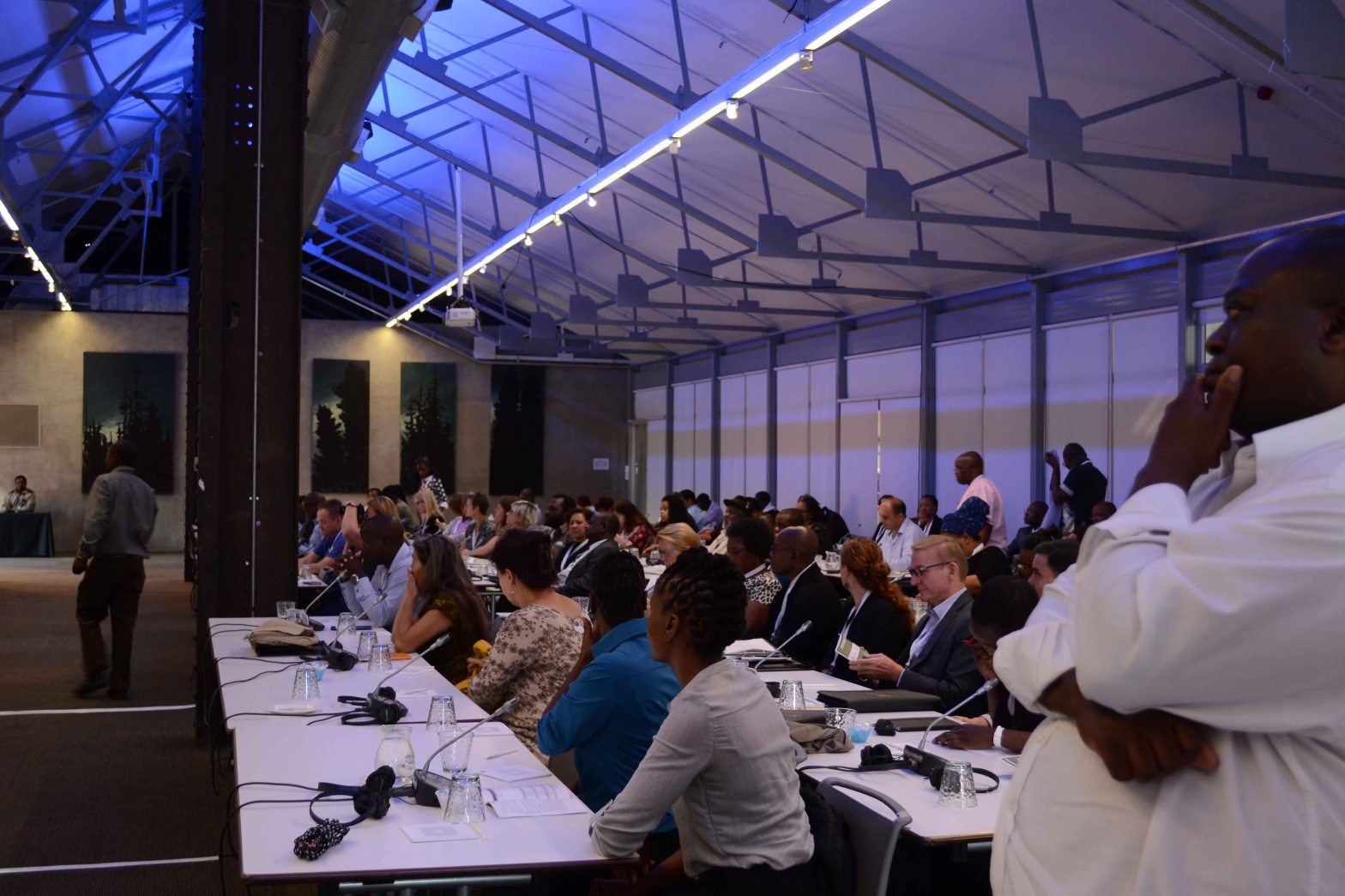
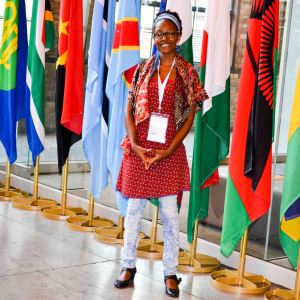 To say it was a stimulating week is an understatement. I got to listen to some profound ideas and perspectives centered on creative production and preservation, which are some of my primary interests. Over and above all, I absorbed doses of enlightenment and gained insight into how creatives in other disciplines across South Africa and the rest of the continent approach their work. I reflected on how the value of art production and management run parallel with Lesotho’s development and are in alignment with what we’re offering Basotho through our vision for Ba re e ne re.

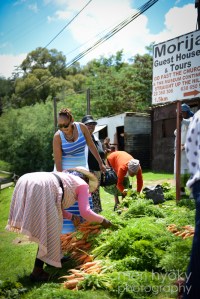 Lesotho is a small landlocked country completely surrounded by South Africa and, due to its high altitude, is known as the ‘Kingdom in the Sky’. Mostly mountainous, only a small portion of the country is dedicated to agriculture, but I realized that knowledge of our culinary traditions was lacking. Therefore, I decided to make my experience as a chef available to my country and founded Ska’s Kitchen Consultancy, as well as other projects.
 The Hub