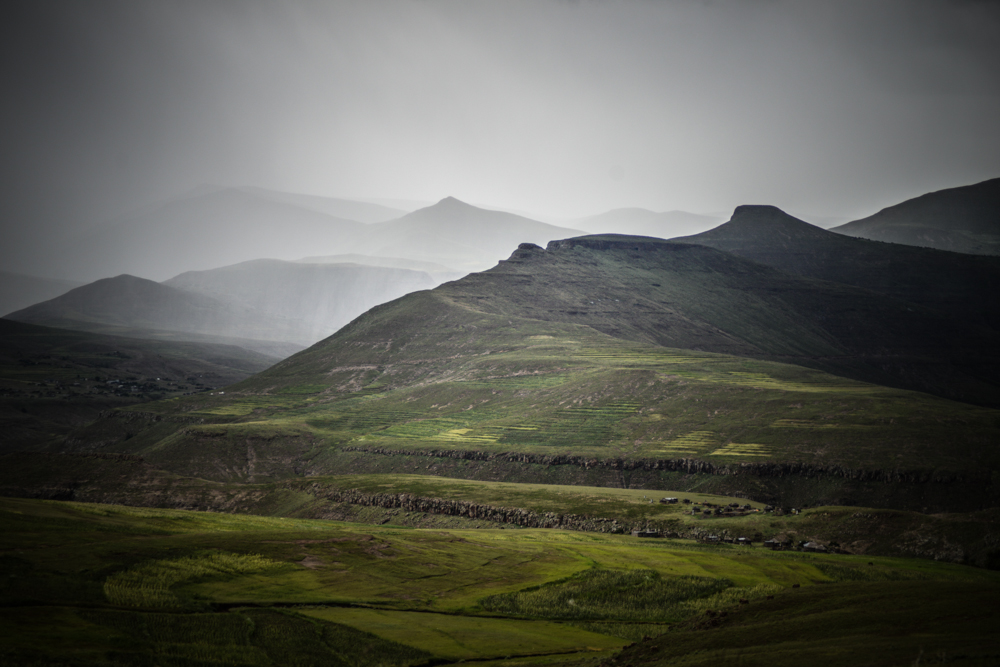
Photos from Africa’s Green Generation’s fundraising mixer

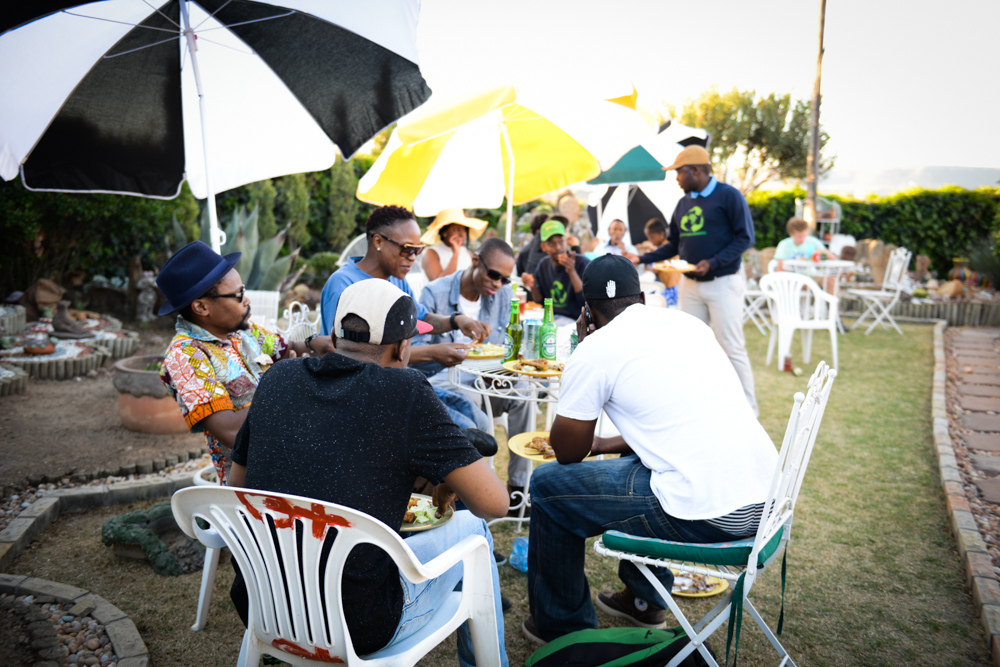
In celebration of Lesotho’s Independence Day on October 4th, Africa’s Green Generation (AGG) held its 1st social fundraising mixer. With great food and entertainment, the event was a success, with proceeds going towards supporting the efforts of Africa’s Green Generation in the community of Moshoeshoe II in Maseru. Follow AGG on Facebook!

Skate or die – Culturing a new lifestyle for Lesotho, the mountain kingdom

Skate or die - Culturing a new lifestyle for Lesotho

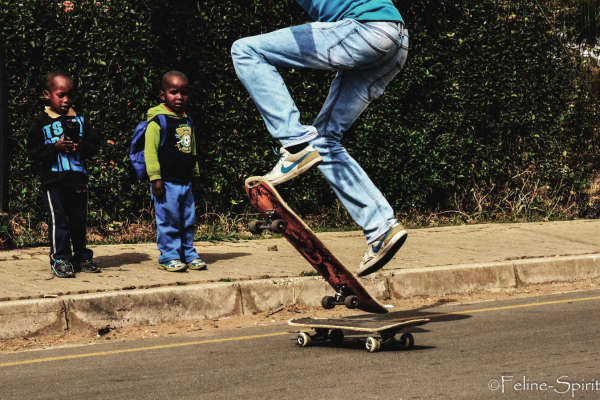
A small bunch of youth have revolutionised the norm and introduced skateboarding to the streets of Maseru, the capital of Lesotho; a small country completely surrounded by South Africa. The life of an average child in the rural parts of Lesotho consists of herding livestock (mainly for boys and sometimes girls) and tending to chores such as kneading bread dough and collecting firewood (girls). In the city, middle-class to high income offspring enjoy more modern privileges such as satellite TV, PlayStation, gadgets, mountain bikes and an array of malls (with a grand total of two thus far). Besides activities revolving around mainstream sports and academically inclined extracurricular programmes such as science or debate clubs, there is little else available for kids to occupy their time.

Originally posted by AfroPunk

By Lineo Segoete

Skate or die - Culturing a new lifestyle for Lesotho

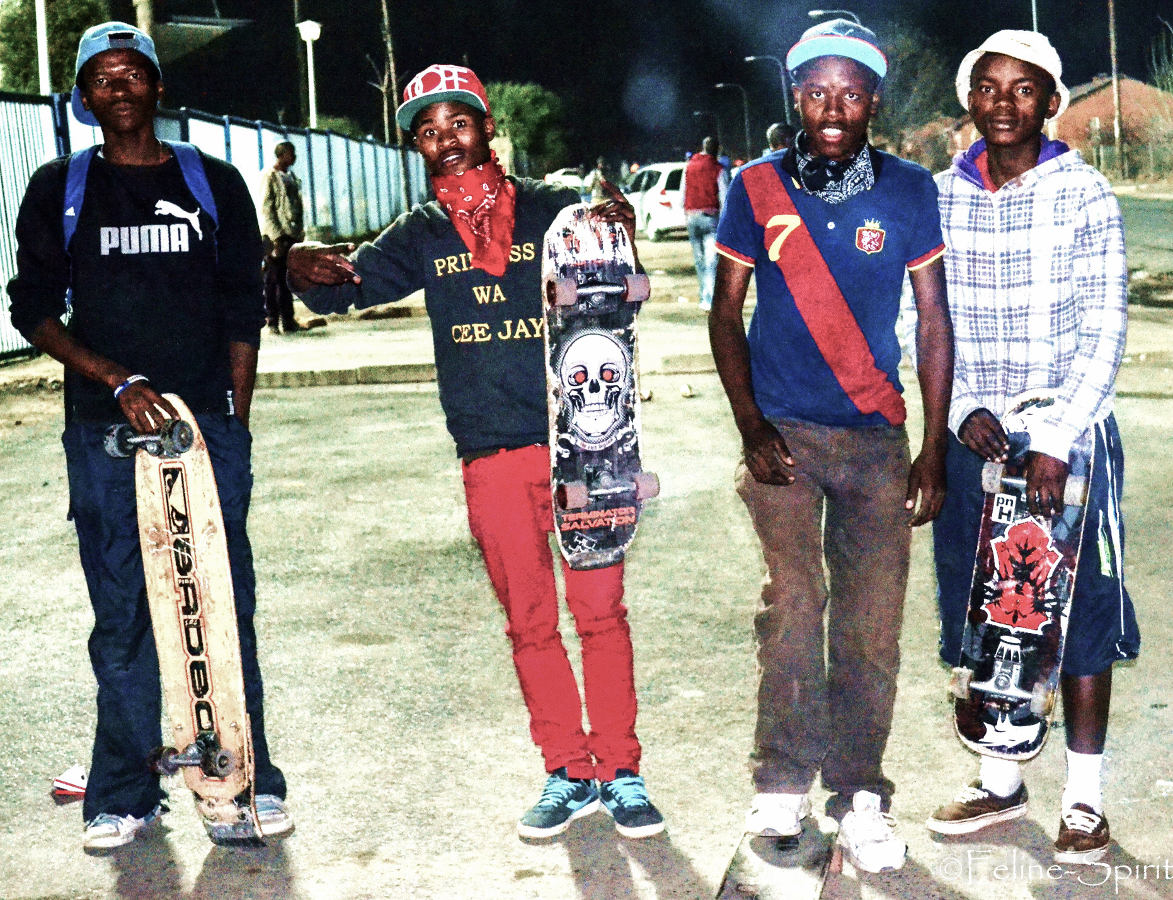
It’s a warm night in the middle of September. The national football team had just hosted Gabon in a tournament qualifier and energies were high. Flashing past the stadium gates after the match with bandana-covered faces, are 4 guys doing tricks and causing a stir among alcohol-saturated fiends. Random and rare always inspire intrigue! I introduce myself to the ringleader C-boi, exchange contacts and agree to a hang out with him and his crew (SOD: Skate or Die) some time soon.

Skate or die - Culturing a new lifestyle for Lesotho

Two weeks later on a brisk and dusty Wednesday, the sun’s gaze piercing through a coat of clouds spread across the sky, I meet C-boi and a mate, the rest of the crew is in their respective schools: “that’s one thing we emphasise, be in school yo! The only reason we’re here now is because our school resumes in January”, C-boi says with his board rested between us.

Skate or die - Culturing a new lifestyle for Lesotho

He tells me that skateboarding is a lifestyle they’ve adopted; “we wanna have it recognised as a legitimate sport in the country, we wanna have local tournaments and host foreign skaters because they have more experience to share. We want skate parks and better boards” C-boi went on to add that they’re trying to link with other skaters in solidarity and love for their sport and to grow a movement, “we have dudes, chicks and even kids among us, we don’t discriminate”.

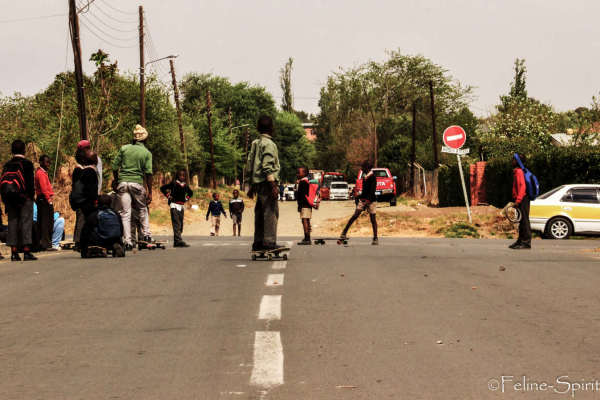
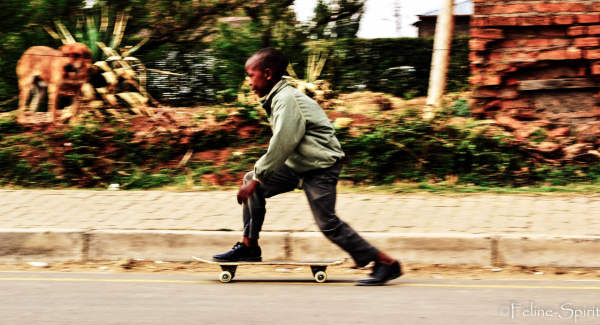
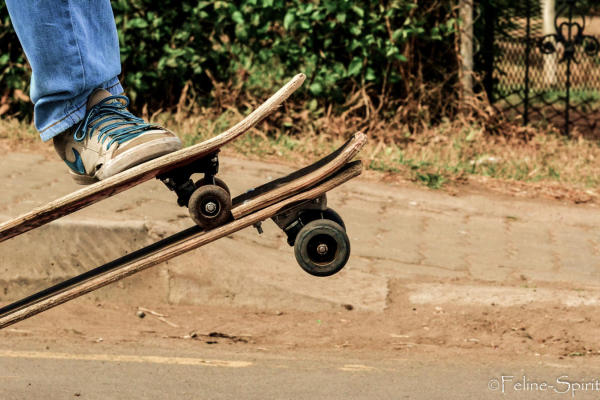
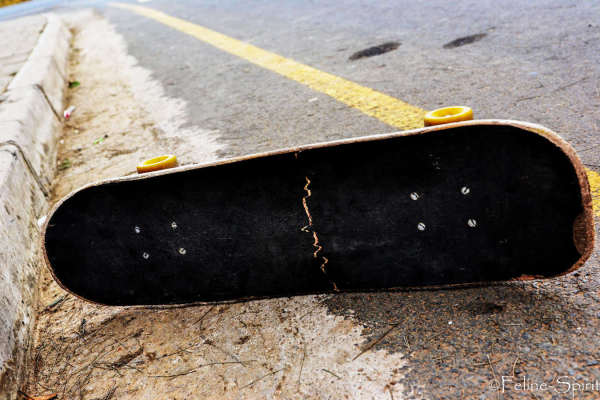
Their boards are not the best quality and tend to break easily, they skate in worn-out shoes because their folks beef over them ruining their good shoes, but these and other challenges they face do not deter them. They skate in “Sea-point” a neighbourhood near the CBD that is semi-notorious for violence and lewd-behaviour, but they have clearly marked their presence in the 6 months or so since they started rolling around. “We even adopted the street and named it ‘skate-street’ and we meet regularly to try out new tricks we learned from videos on YouTube” C-boi tells me.

Skate or die - Culturing a new lifestyle for Lesotho

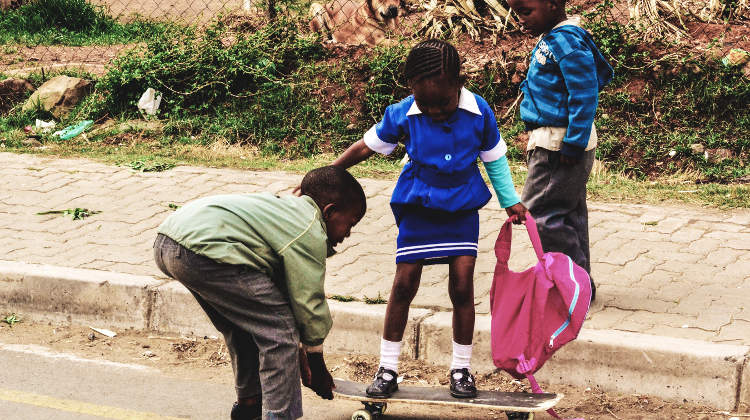
Gathering around us are kids ranging from 5 to 11, they are fascinated with the skaters and all want to take turns learning how to skate as well. They lie down on the boards and push each other through the street. I’m inspired by this because by daring to introduce an alien sport in their hood and passionately training themselves to get better, SOD is setting a positive example and motivating younger kids to aim at dreams they deem impossible. More significantly, they are adding a new spin to skateboarding by breaking the stereotype that it’s only for a select brand of youth. Totally wicked!

Skate or die - Culturing a new lifestyle for Lesotho

Skate or die - Culturing a new lifestyle for Lesotho

* Lineo Segoete online:
https://www.morija.co.ls
https://www.facebook.com/barelitfest
https://www.thehubatmorija.wordpress.com


A secret history unraveled in the Giants Of Lesotho

Originally posted by Mail & Guardian

Award-winning writer, Max Du Preez, transports listeners with a true story of wise men, warriors and an ideology that created the country of Lesotho.

When thinking of Lesotho, a lot of things immediately spring to mind. In more recent times it has become a land shrouded in controversy. But way before all the utterances of coups, water projects and labour issues, lies a gripping secret history of a land filled with giant personalities.

The Giants of Lesotho is told by Max Du Preez and accompanied by the musical compositions and sound design of Markus Wormstorm. It uncovers the lesser-known secrets of Lesotho, story of wise men and warriors and of an ideology that led to the creation of this fascinating country.

Listen to the full podcast of The Giants of Lesotho.

Through the guidance of its leaders, Lesotho withstood attacks from just about everyone ranging from Shaka Zulu, Mantitisi – Queen of the Wild Cat People, The Boers and eventually even the British Empire. It became a beacon of hope in a tumultuous time of famine, wars and cannibalism. The Giants of Lesotho attempts to understand who the great men were that founded this small country that protected many from apartheid, and changed the history of southern Africa.

The story begins with a young prince named Mohlomi, who during his initiation has a miraculous vision. In this vision, he is visited by his ancestors who foretell his destiny. The sequence of events leads to the formation of an ideology, sometimes known as “Mohlominism” that eventually paved the way to the foundation of Lesotho.

Often referred to as the African Socrates, Mohlomi was a wise man, fascinated by ethics, philosophy and political theory. It is said that he literally walked through most of Southern Africa unifying people and spreading his doctrine wherever he went. In his later days, he founded a leadership academy to which tribes would eagerly send their young princes to be taught by the wise and respected leader. It is through this initiative that a protégé by the name of Moshoeshoe, the son of a minor chief, became one of the greatest leaders South Africa had ever known.

Moshoeshoe closely followed the teachings of Mohlomi and adopted many of his ideologies. It was through these ideologies that Moshoeshoe became what many considered to be the greatest statesman Africa has ever seen, settling on Thaba Bosiu (The Mountain At Night), and subsequently founding the kingdom of Lesotho.

These beautiful and lesser know histories come to life through Du Preez’s burly narration and Markus Wormstorm’s composition. Du Preez, a recent winner of the Sunday Times Alan Paton award for his book Rumours of Spring, is a well-known political commentator and an authority on lesser-known South African history. He has been researching the early fathers of Lesotho for many years and his mind is a treasure trove of historical secrets relating to the subject.

Markus Wormstorm, executive producer of the project, attempts to illustrate the lesser-known history of Southern Africa through feature film quality sound design and composition. Wormstorm is a composer, who has most nobly recently composed the score for the internationally acclaimed film Four Corners. Through this project, the two hope to shed some light on some of southern Africa’s great, yet lesser known leaders.

For more podcasts by Honeymoon visit its website.


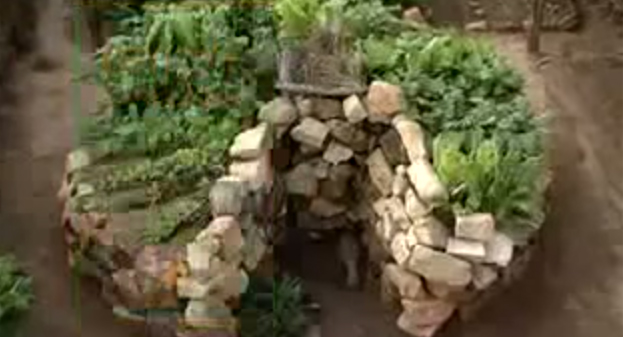
Video: How to Make a Keyhole Garden

Set in Lesotho, this video shows a group of schoolchildren making a keyhole garden. The charity Send a Cow showed them how to make it and the children can now make their keyhole gardens at home and have more food.

Keyhole Gardens are a great addition to any school grounds. The design – which looks like a keyhole from above – incorporates a central ‘basket’ where compostable waste is placed and ‘grey’ water is poured. They get brilliant results and are a fantastic whole school sustainability project.

Read more about keyhole gardens by following this link, and watch the video below.


Cultivating African Voices

Originally posted by Mahala

By Lineo Segoete

September 5-7, 2014 saw the beginning of a revolution in the politically tense mountain kingdom of Lesotho, with the re-birth of Ba re e ne re literature festival. Ba re e ne re means: “They say it was said…” (The equivalent of “once upon a time…”), and the concept was conceived by the late Liepollo Rantekoa who was a surge of artistic energy the country had been yearning for in the past half-century.

Liepollo spent most of her life in South Africa; living in Bloemfontein and Cape Town. Here she nourished her thirst for origination and creativity and acquired a wealth of skill and knowledge with regards to art and literature. She was humble enough to want to share that wealth with her people back home.

She created the Ba re e ne re literature festival in 2011, and invited the likes of Njabulo Ndebele, Kgosietsile Keorapetse and Lesego Rampolokeng to join her. The inaugural festival was a phenomenal success. Although she had plans to expand the festival to further enhance an appreciation for literature, the dream was stalled when a car accident tragically claimed her life in September 2012.

Her friends and family collaborated to continue her legacy by continuing the Ba re Litfest in her honour.

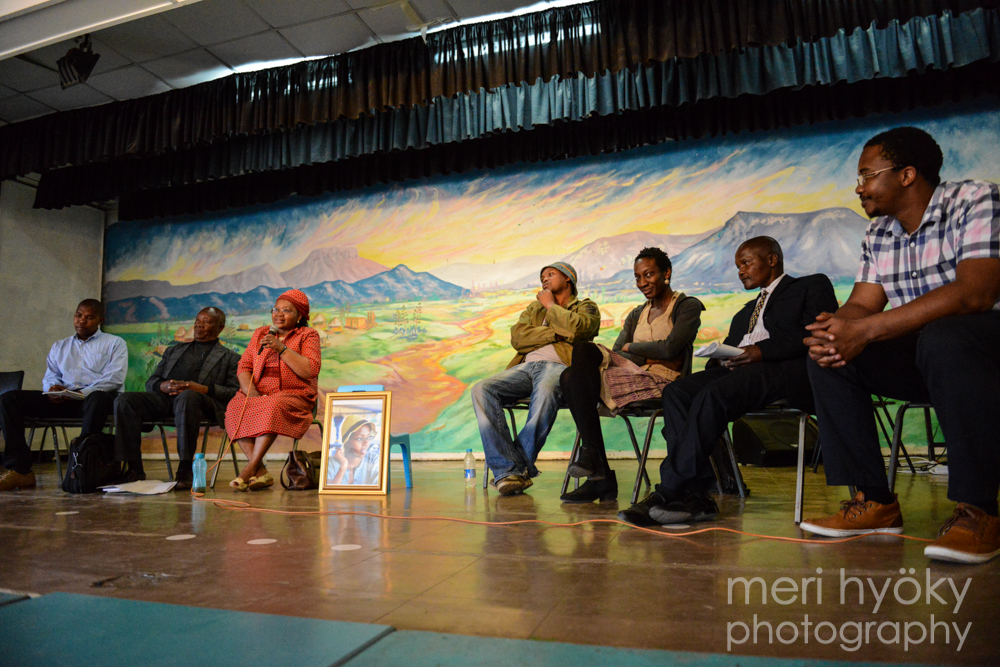
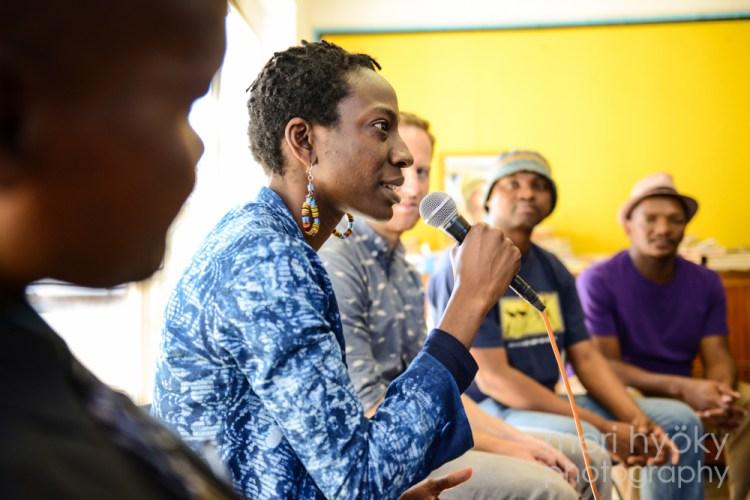
This year, a group of accomplished guests stepped up and took part, including Niq Mhlongo, Yewande Omotoso (Nigeria), Keamogetsi Molapong (Namibia), local writers and the Chimurenga team, of which Liepollo was also a part (sessions were broadcast live on Chimurenga’s www.panafricanspacestation.org.za).

The guests headed discussions on how to cultivate a new generation of readers and writers in southern Africa. They also shared wisdom on getting published, developing writing techniques and striving to get stories to be heard in an environment where written works are being less and less appreciated.
Ba re e ne re

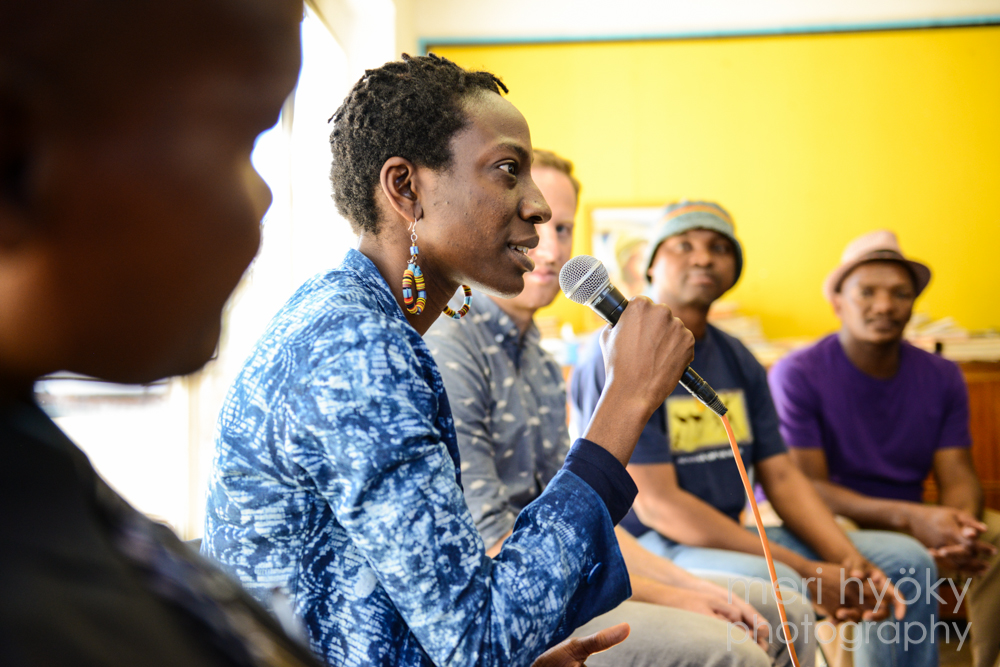
Yewande did a stellar job representing the female voice during the festival; imparting an independent, bold yet graceful African woman’s voice. She shared stories from her childhood; particularly on how the love of reading and writing was instilled in her and her brothers from an early age: “I remember writing my first ‘book’ when I was about seven years old,” she said, “it was six pages long and my cousin did the illustrations. Creativity was nurtured throughout our childhood.”

Much like Liepollo, Yewande spent most of her life living outside her country of origin (Nigeria) but never disconnected from her heritage, which she exalts through her Yoruba-style storytelling, referencing mythology and various characters from her first book Bom Boy.

Reflecting on what it takes to become established as a writer, Yewande said that writers need to have a heightened level of daring arrogance because otherwise it’s very easy to be turned away or worse, exploited! “Don’t trust your friends,” she added, “because they will not give you a fair and honest critique.”

Yewande further demonstrated that self-starting, driven, young, black women can make a career out of writing with focused discipline and tenacity. For example, she recently travelled to the University of East Anglia in Norwich in the UK after she received the Etisalat Prize for Literature; a fellowship lasting four months, where she joined members of the school of literature, drama and creative writing at the university.

It’s imperative that our stories be told, more-so that we tell our stories ourselves. We have an advantage now because technology supports us and a growing number of youth are venturing into imaginative careers such as creative writing, filmmaking, theatre and especially music. As painful as it is that Liepollo died so young, she will be remembered through-out Basotho history as the guide that helped reignite a passion for one of our most valued treasures as a culture… storytelling.


See more photos from Ba re e ne re by following this link.