Ba re e ne re: Reigniting Lesotho’s literary culture

Originally posted by Mail & Guardian: Voices of Africa

By Leila Hall
DSC_6263
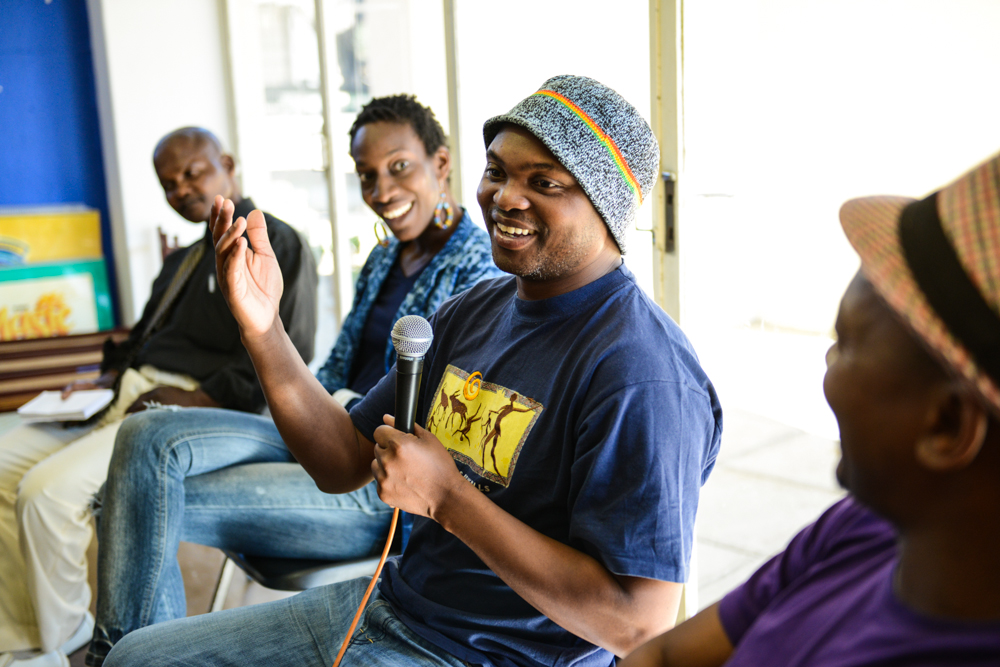
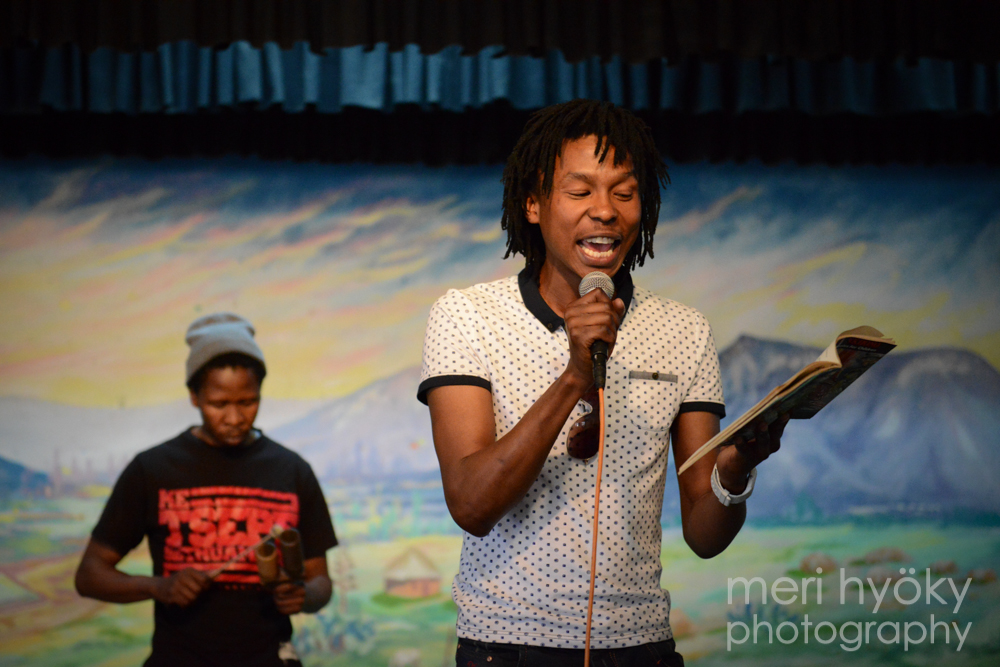
A storytelling performance at the 2014 Ba re e ne re Literature Festival.

Lesotho is an interesting place to be in at the moment. At the end of August, we made headlines worldwide, unfortunately for the wrong reasons. The news had nothing to do with the country’s many unique and positive qualities. There was no mention of natural beauty, of Basotho culture, or of the many exciting initiatives that a host of organisations and individuals in the country are working hard on.

Instead, it focused on the country’s current political mess. An apparent attempted military ‘coup’ took place, and the Prime Minister fled to South Africa. Tom Thabane is back in the country now, but political tensions remain high, with no clear resolutions in sight. Everyday life continues, but people are tense, confused, and many fear a repeat of the political violence that the country experienced in 1998.

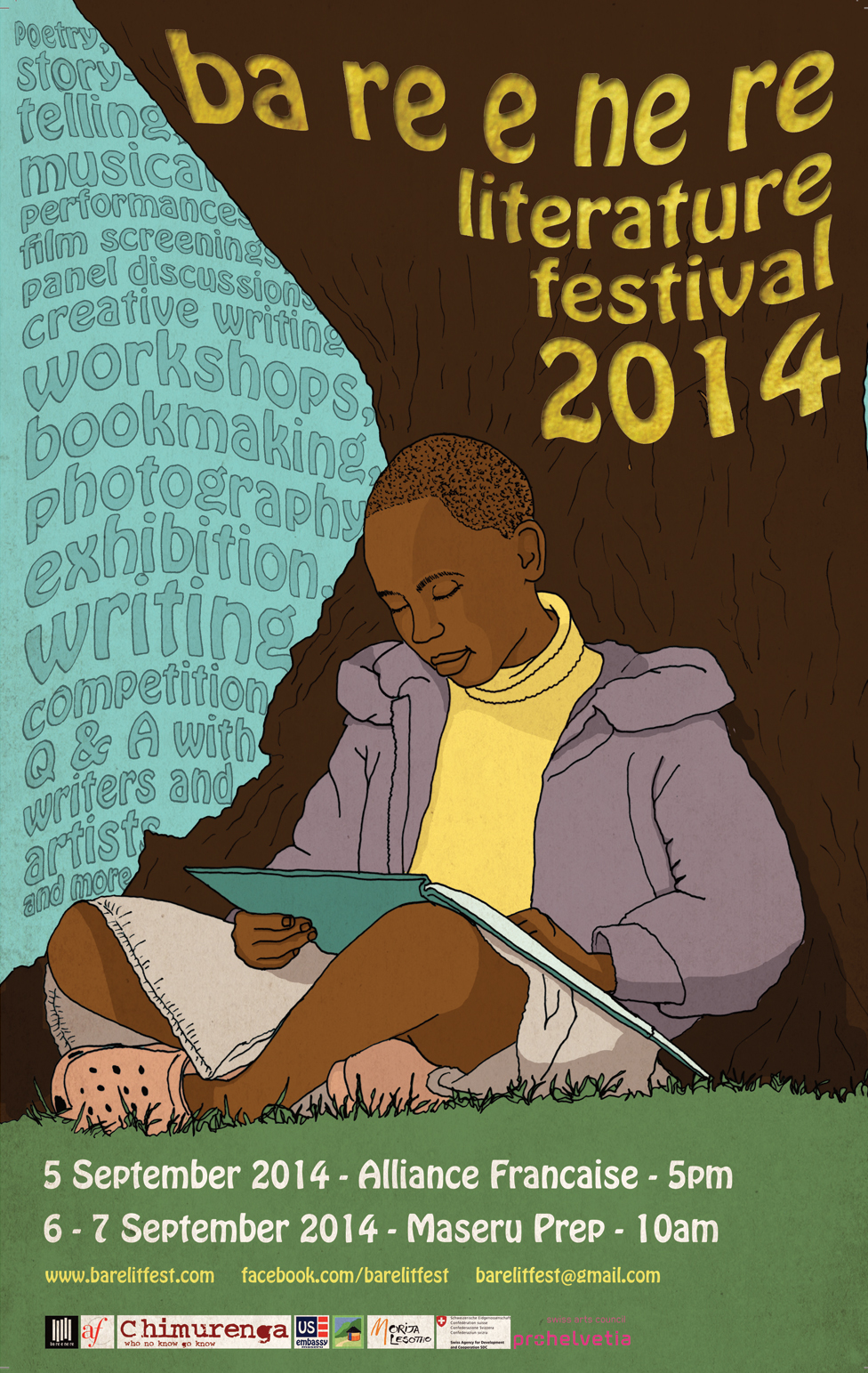
In the midst of this uncertainty and political instability, the weekend of 5 – 7 September saw the return of Ba re e ne re Literature Festival, the only event of its kind in Lesotho, founded in 2011 by the late Liepollo Rantekoa, a young Mosotho literary enthusiast who passed away in a tragic car accident in 2012.

Inspired by Rantekoa’s vision of a movement that would reignite a culture of reading and writing in Lesotho, and especially an appreciation of Sesotho language and literature, a group of her friends and family have come together and are continuing with the work she began.

This year, a number of writers from outside Lesotho were invited to take part in the festival. These included South African novelist Niq Mhlongo, Nigerian/Barbadian writer Yewande Omotoso, and Namibian poet Keamogetsi Molapong. Cape Town-based Chimurenga Magazine jumped on board as the event’s official partner. International authors were joined by a number of writers from Lesotho, including Mpho Makara, Teboho Rantsoabe and Patrick Bereng.

The festival’s opening ceremony took place at the same time that a political march was held through the centre of Maseru. Night-time events were cancelled in the face of potential security threats. But despite these challenges, people of all ages came out to enjoy the day-time events, which featured a vibrant combination of live music, poetry readings, storytelling performances and discussions with authors.

Nobody ignored the political situation in the country. On the contrary, the challenges that Lesotho currently faces became a crucial talking point, as guests and participants spoke of the role that artists, writers and literature can play in times such as these. The final event of the second day of the festival saw people of all ages sitting in a tight circle around a small computer screen, laughing together at jokes told by renowned South African author Zakes Mda (addressed by the audience as ‘Ntate Zakes’) who, although unable to be present in person, joined the festival via Skype.

Mda spoke with strength and encouragement to the professional and aspirant writers in the room: “You writers will always play a critical role in the country. Artists can be catalysts for change.”
DSC_6536
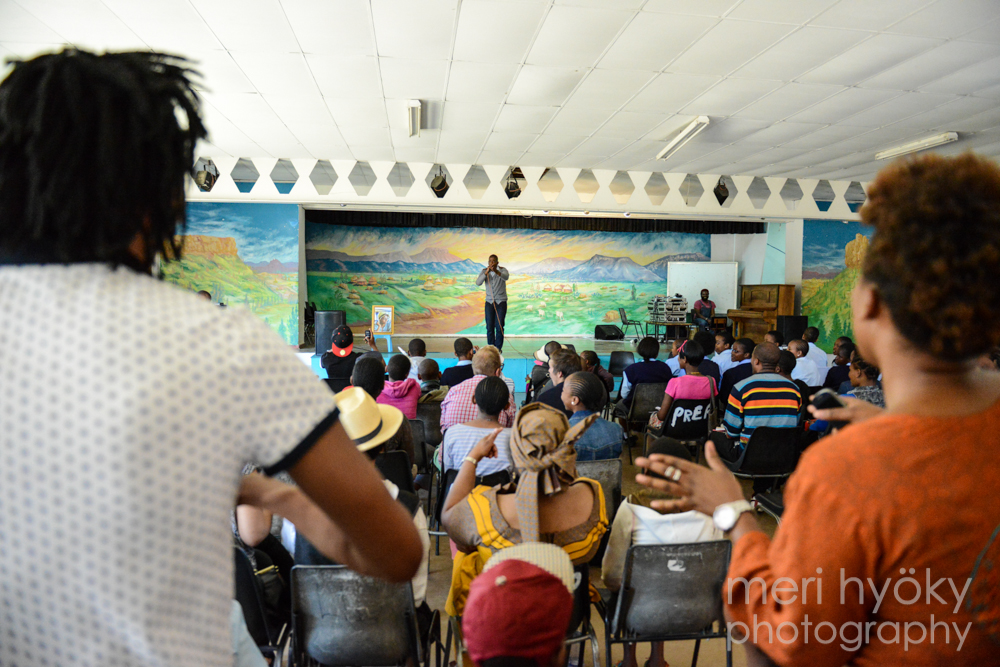
Audience members enthusiastically join in with the chorus of a live music performance at the festival.

Later, Mhlongo commented: “The festival happened at the right time to bring people together, to give them the chance to express themselves, to express their frustrations, and to interact with others. Writers can go beyond the boundaries of political and cultural divisions. Writers can liberate, especially in times of turmoil like this.”

Teboho Moekoa, a local artist, performed a poem that spoke blatantly and scathingly about Lesotho’s current politics: “My people seem mentally possessed / by the same system that keeps them suppressed / And every time they protest / It’s the voter that the voted cannot respect…”

“We are black youth trying to find our position in the system, trying to find definitions that have already been defined for us,” said Moekoa. “It’s very important that something like this is happening in Lesotho. We don’t have a platform here, and this festival provides that platform.”

Intelligent and outspoken writing, however, can only be truly powerful if it is widely read. In a country with one of Africa’s highest literacy rates (over 90% amongst women, according to Unesco), the serious lack of a reading culture in Lesotho was a prominent topic of discussion. Festival director Lineo Segoete addressed the issue directly: “People in Lesotho have developed an attitude that reading is only important for school, without realising that successful people are avid readers. We want people to learn the importance of reading for pleasure, of reading to self-educate. We are challenging everyone to get back to reading.”

Questions surrounding identity, language and culture permeated the weekend. Mosotho author Mpho Makara spoke of her decision to only write in Sesotho, but nonetheless encouraged young writers to abandon false notions of ‘pure’ Sesotho: “Language cannot afford to stand still. English borrows words from other languages. In the same way, we can steal from English and make Sesotho grow. Write in the Sesotho you know, in the Sesotho you speak every day.”

Mhlongo offered a different take on the language debate. Mhlongo chooses to write his novels in English, and argued that writers should be allowed to write in whatever language they feel comfortable in: “Storytelling doesn’t have a language. It’s like music. The message is the most important thing. Whatever the language, the important thing is to preserve culture. I believe that you can write about your culture in English.”

The focus of day three of the festival shifted to more practical issues, with the authors discussing writing techniques, and sharing tips and advice with the audience.

“The hunger here is evident,” remarked Mhlongo when I chatted with him later. “There’s an obvious interest in writing. School kids filled the hall. A filled hall is a rare thing in literary events!”

Addressing the audience directly, he urged the young writers in the room: “You in Lesotho need to write about your challenges. I hope that after this we are going to see novels and short stories coming from Lesotho.”

Ba re e ne re boomed with engagement, enthusiasm and positivity. The energy was palpable. Soon, we hope, the eyes of the world will turn to Lesotho for the right reasons.

Leila Hall is a freelance writer living and working in Lesotho. 
See more photos from Ba re e ne re by following this link.

Ba Re E Nere Literature Festival

Ba re e nere was first dreamt up by Liepollo Rantekoa to promote the culture of reading/writing and the arts in Lesotho. Ba re e nere Literature Festival took shape in March 2011 as a month-long series of weekly events dedicated to topics of arts and literature. Liepollo brought her vision to life through an innovative blend of public conversations, film screenings, story telling performances, book readings and art installations. The event brought together writers, readers, students artists, publishers, creatives even ministers in conversations about how to promote and support the worlds of arts and literature in Lesotho. The event was received as a breath of fresh air as it encouraged Basotho to be active in engaging with literature, especially texts written in Sesotho, as a means to creatively express their own stories and contribute to the development of the nation.

After Liepollo’s tragic passing in 2012, her friends and family came together to carry on the work she began. They are dedicated to reviving Ba re e nere Literature Festival in early 2014 both in Liepollo’s honour and because they think her vision remains vital for the growth of Lesotho and the Basotho people. They hope Ba re e nere can continue to evolve with the support of all people who believe in the power of literature and creative thinking.

Ba re e nere Literature Festival will return in September 2014 with a rich programme of activities developed through feedback from Lesotho’s art’s community, offering the following activities:

  • Creative writing workshop
  • Panel discussions
  • Q & A with established writers and artists
  • Storytelling, poetry and music performances
  • Film screenings
  • Bookmaking
  • Photography exhibition and more

Visit the website for more information: bareenere.com

Ba Re E Nere

A beautiful flower wild and yet divine

By Lineo Segoete

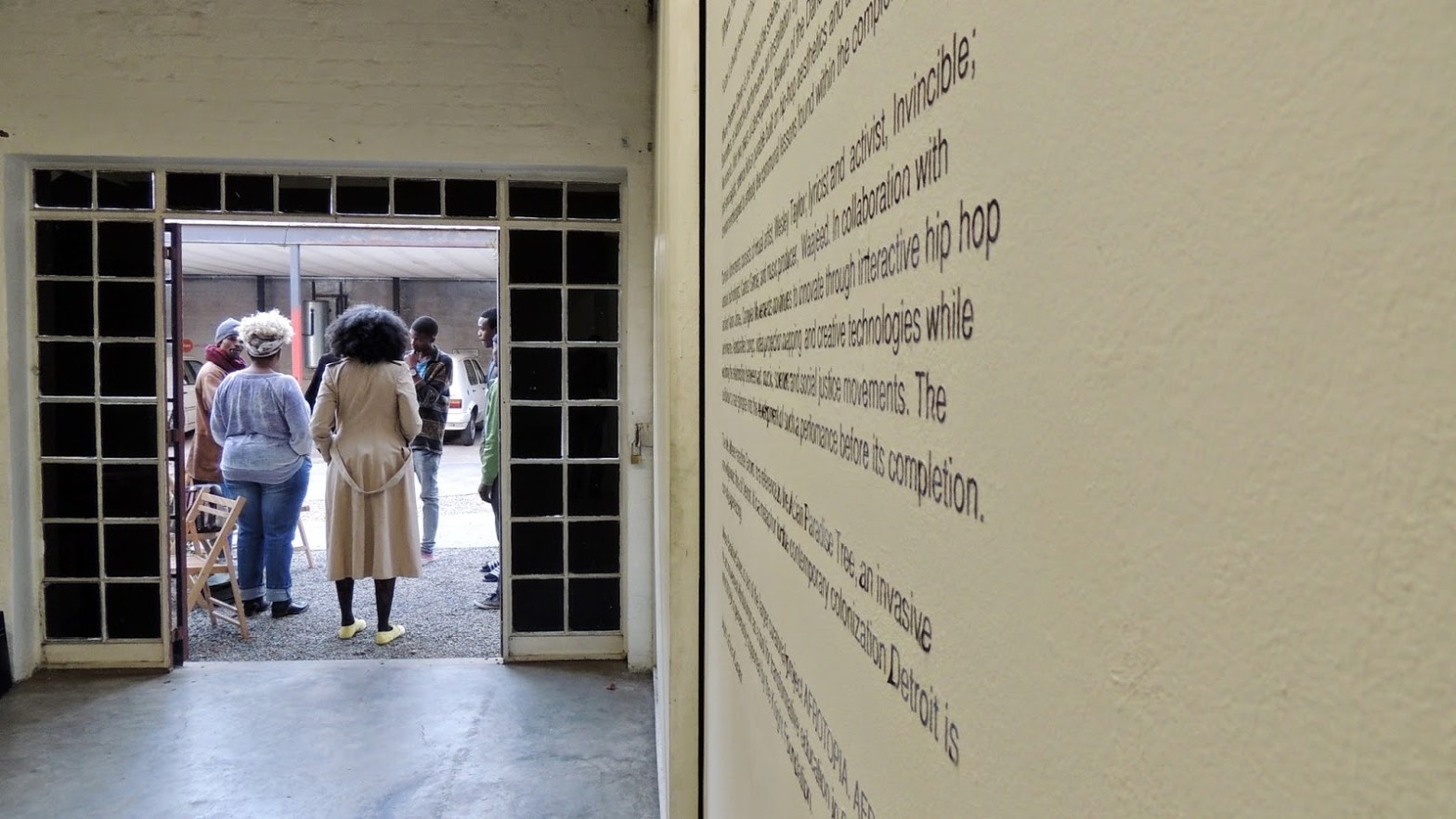
Curated by Ingrid LaFleur from Detroit, “Beware of the Dandelions” is an Afro-futuristic exhibition currently on display at Goethe on Main in the Maboneng Precinct, Johannesburg. The concept was conceived by the Science-Fiction-meets-Hip Hop collective from Detroit; “Complex Movements”. It is a multimedia ensemble integrating photography, song-writing, graphics, video, music and text. “A beautiful flower wild and yet divine” (I stole these words from a popular 90s RnB song), as a child I marvelled at Dandelions:  I wondered why they were labelled wild flowers when they were simply ‘furry-flowers’. I fascinated over their delicate and convoluted structure when intact before breaking into independent entities just as poignant. Where would they land? Did they fly consciously and deliberately? The exhibition linked my nostalgia with a mutual philosophy of harmoniously living with and drawing from our Earth’s eco-systems along with the development of art communities and structures aimed toward societal transformation.

The objective of “Beware of the Dandelions” is to: “REFLECT on the ways we approach the work of transforming ourselves, our communities, and the world. ENGAGE in conversation about networks, new forms of organization and leadership, drawing lessons from quantum physics, emergence, and other complex science theories. REDEFINE change from critical mass to critical connections, from growing our economy to growing our souls, from representative democracy to participatory self-governing communities (and) CONNECT communities working for change within Detroit and Grand Rapids to one another and to communities around the world” and is gaining momentum globally at challenging new thoughts and ideas aimed toward refining our quality of living.

Ingrid’s desire to exhibit in South Africa was prompted by parallels she identified between the socio-political and art landscapes of Detroit and Johannesburg in spite of each city’s raw appeal.  She said Joburg’s diverse audience showed exceptional curiosity. Granted, some visitors struggled to find correlation between the different art mediums and how their ostensibly varied themes tied together; a confusion that she quickly cleared through a guided walk-about through the exhibits.

Through her work, Ingrid wishes to incite consistent training, innovation and more verve among artists as the three are crucial for growing mediums of expression. Inherently these mediums may be applied to confront daily societal ills such as discrimination, segregation and gender inequality while inversely growing cultures of cultivation, scholarship and sharing. In this way the Dandelions metaphorically blew across the oceans to impart revolutionary seeds to an uncharted environment abound with fertility therefore, disseminating and intensifying connections.

Joburg prides itself as a hub of potentially flourishing opportunities for cleverly-planned and researched artistic niches. These niches are steadily blossoming into an incubator of knowledge and learning for visitors from neighbours such as Lesotho, where I am from. It is encouraging that exhibitions like “beware of the Dandelions” are being imported from overseas: the farther the message reaches (outside of the World Wide Web) the closer we will get to synchronising and harnessing new disciplines.

This multi-media revolution can set off a tradition of artists applying scientific and other approaches to represent their ideals and militancy. It can inspire a matured discipline that is easy to adopt and creations that are almost immune to becoming watered-down versions because so much study, intellect and personal involvement go into them. “Beware of the Dandelions” summons our attention to the minute details that our existence and eco-systems rely on such as ants: the ant symbolizes vigilance and robust labour compelled by a unified instinct for survival. Ants collaborate and make do with their numbers to successfully gather, build and sustain. The same moral if adapted by human beings can uproot injustices, promote peace on our war-torn planet and arouse a more nurturing attitude toward the environment and the lives dwelling within it besides our own.

Although the exhibition at Goethe is modest in comparison to those on-going in the U. S and elsewhere, it is just as powerful and edifying. It reaches into the visitor and motivates him to think about his role beyond his immediate surroundings. One is forced to think about one’s self as an integral piece composed of love and altruism within the framework of existence, two attributes that are light enough to flow with the wind and reach faraway places without much effort, like Dandelions. I especially admire the name “beware the dandelions” because we pay Dandelions little thought beyond our adolescence and yet through the exhibition they are piously transporting revolutionary seeds that hone creativity, boost unity in diversity and serve as weapons of mass-construction. Hip Hop entwined with Science-Fiction, so exquisitely presented at that, just imagine the odds!

Images courtesy of Khahliso Matela:

InI sound a breath of fresh air

Originally posted by Lesotho Times

By Mohalenyane Phakela

GIFTED with a witty lyrical delivery coupled with a unique melody, InI’s bursting on the local music scene has been a breath of fresh air for Hip Hop lovers. Imagine and Inspire, or simply InI, is a grouping consisting of producers, rappers and vocalists. The outfit was formed a couple of years ago but later on disbanded.

However, after reuniting in April this year, the group immediately entered the studio and emerged with outstanding singles, ensuring their comeback was felt from Roma to Kingsway Streets where they have performed.

InI’s versatility is palpable. They seamlessly weave between the old school boom-bap and the now popular “Venack”. Although they are mainstream, it is their lyrical content, witty punchlines and unique beats that distinguish them from others in the industry. This week, the Weekender caught up with the group to get a feel of what makes them tick.

Rapper, Bible Verse, who spoke on behalf of the outfit, said InI was formed in Roma but disbanded as members forayed into various endeavours since music was not financially rewarding. The group only reunited in April thanks to the efforts of producer, Fredi Fonz.

“We were pursuing solo projects during this break with everyone adapting to his or her own craft,” said Bible Verse. “And when we came back together we combined those styles to give our sound a different direction from the rest.” According to Bible Verse, InI members work as a team. “After a producer throws a beat, we engage in a cipher session from which we draw the concept of the song and which artist bests fit on it,” he said.

Vocalist and rapper, Black, pitched in saying: “Music is not taken as seriously in this country as our neighbouring country where a lot of money is made from music. “We will not stop until this becomes a thriving industry.”

Black said InI intends to reach audiences outside of Lesotho’s borders and collaborate with artists from around Africa and beyond. “We believe our sound needs to go global,” she said. “InI also intends to inspire and groom youngsters into this craft.”

InI is currently working on its debut mixtape to be released in September, preluded by its listening prelaunch session to be in Roma next month.

More about InI on their facebook page: www.facebook.com/imagineandinspireent

Ini performing at Unsung Heroes in May: