Vibing and ting at the poolside

By Lineo Segoete

The Victoria hotel poolside became a historical venue this past Saturday when the first Summa Mashup dancehall gig was hosted by Raggavybz.

By now everyone is familiar with the weekly dancehall sessions held at Meloding but this time, the organisers took it to the outdoors, to a more fitting set up.

There were displays of merchandise laid on the grass by the pool, delectable nutriment available at a decent price and a quaint bar set up, all of which moulded together right on point.

The gig began right as the sun was about to set, providing quite a picturesque scenery. The crowds hovered in oozing positive vibes and a yearning to finally get to dance to something other than the usual bombardment of house music and the likes.

The show was set in motion with roots reggae, played to an “easy skanking” audience.

The poster promised live music, DJ sets and special appearances and that’s what the crowd got.

Hieroglyfic set the show off with an ill hip hop set, followed by Blaze who made her attempt to represent. The next set however, set the whole joint off, especially for heads.

For a while now, cats in Joburg have been asking where Tha Hymphatic Thabs is hiding, those in Lesotho have been seeing him roam the streets and wondering too when the man would grab a Mic and drop his heavy and hard-hitting bars; which made this performance that much more special.

As soon as he arrived at the poolside the crew that made way from Jozi screamed from their cars “Hymphatic Thabs”, to which he cordially responded in a humble and almost shy demeanour.

The fact that his performance was set as a surprise made heads lose their minds even more, Hymphatic was announced and kings and queens alike almost fell over themselves racing to the stage.

Avid followers rapped along while the rest listened intently, hanging onto his every word, giggling and howling at punch-lines. It was a memorable day not only for hip hop but especially for many fans of the Hymphatic who had never seen him perform before, more-so in Lesotho.

Momo-dread got on the stage and gave Dancehall heads a healthy and real life offering of Dancehall as never before seen in the Mountain Kingdom. After dropping a few tracks, Momo Dread left Dj Fanta to do his thing on the ones and twos.

Fanta bewitched the masses with stunning transitions between drum and bass, dub-step, old and new school tunes and KILLED it!

As if the event could not get any better, Faya Uman adorned the stage with her beautiful poise and melodic voice. Beyond spitting relevance, she sparked a certain level of ruggedness that showed she is not to be messed with, not on stage and not as Faya Empress.

Meanwhile, locals were growing agitated because hours kept passing and Sledge was nowhere near approaching the stage.

You cannot mention dancehall and reggae in Lesotho without Sledge coming to mind: his insane energy on the stage, his murder-some lyrics, his playful sing-along choruses and his hypnotic charisma on the stage.

It came as no surprise that the crowd was growing desperate for Sledge. This became even more apparent when his name was finally mentioned by the MC and there was pandemonium from the shadows.

The crowd hopped up and down mimicking everything Sledge did and sang along to his music as loudly as they could. At this point there could not have been a single soul that was in a bad mood.

Euphoria and dance were the only rules and everyone abided.

Despite minor technical glitches the event was a great success, the Lioness Productions SA, DJ Fanta and everyone else who performed were well received and shown copious amounts of love and appreciation.

Lesotho needs more variety in terms of gigs and genres promoted, the Summa Mashup showed that the masses are not one track minded and are willing to absorb so long as they are given great quality to bump. ONE LOVE.

Creative dialogues: engaging with Lesotho’s diaspora

Originally posted on Morija.co.ls

By Leila Hall

“For the younger generation of the Basotho diaspora, especially, I hope that the Conversations provide the inspiration to do more… I hope that this is an example of what can be done.”

Maeder House – one of the oldest recorded buildings in Lesotho – stands quietly and unobtrusively next to the Morija Printing Works. Its simple brick walls, thatched roof and low doorways proclaim nothing about its historical significance to passers by.

Today, however, this unassuming building is the venue for a one-of-a-kind event. It is a hot, glaringly bright day in Morija, where the town’s annual Arts and Cultural Festival is taking place. Directly behind Maeder House, there is a bustle of tents and stalls selling food and crafts. Music drifts through the air from a nearby stage.

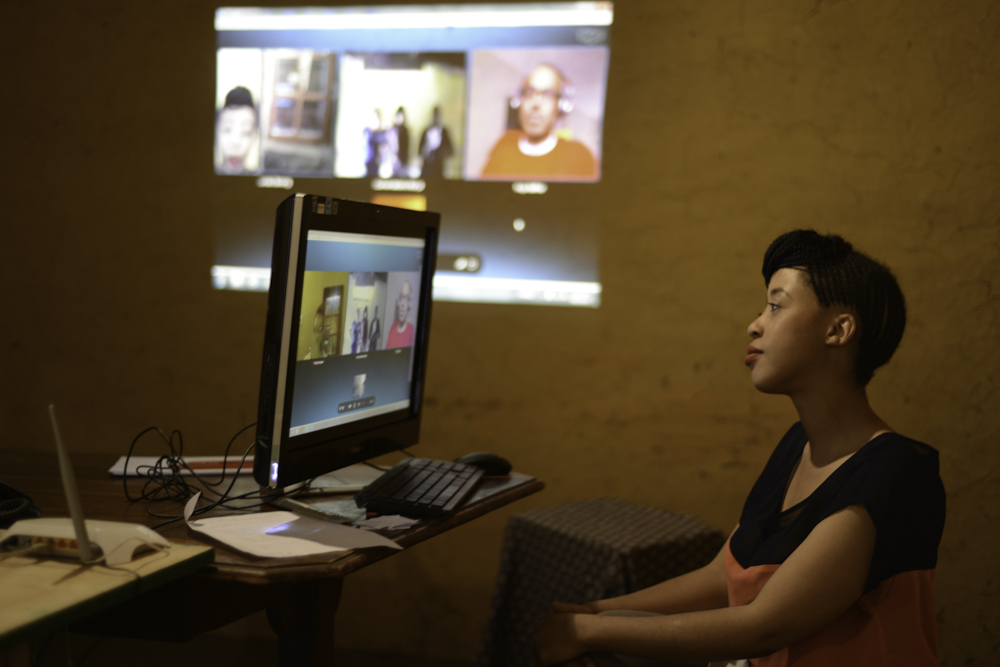
A steady trickle of people walk up the steps to the doorway and enter the building’s cool, dim interior. In the centre of the room, a large table has been set up with computers. Those who have just entered sit down on one of the benches lining the walls and listen. There is a conversation taking place.

Lerato Bereng, the curator of the event, speaks directly to the screen in front of her: “Here we are, skyping in one of the oldest buildings in Lesotho.”

The person at the other end of the line is projected onto one of the mud-smeared walls. The participants in the room are talking to Pepsi Pokane – actor, television presenter, director and businessman. Although originally from Lesotho, Pokane is speaking to the room from Johannesburg, where he currently lives and works.

There are instructions on another wall – immediately visible as one enters the room. One of them reads: ‘Join the conversation by speaking directly into the microphone and webcam.’ Although many of the people in the room are happy to be onlookers, the invitation to participate in the discussion is extended to all.

Bereng turns to the participants in the room: “Does anyone have anything they would like to ask Pepsi?” ‘Me ‘Matsepo Ramakoae – Lesotho’s Deputy Minister of Finance – sits down in front of one of the computers. Her question is simple and direct. “Pepsi,” she says, “when are you coming home?”

Smiles and laughter fill the room. Pokane’s face registers a mixture of surprise and amusement. He is clearly taken aback. His reaction is much the same when another participant asks him if he has any ideas for creative projects in Lesotho.

“Lesotho is not engaging with us,” he says. There is a pause, and – almost immediately – he acknowledges his own responsibility in this: “I could also be engaging, but I’m not – and I can’t really say why.”

As the conversation wraps up, Pokane declares: “I’m thinking now that we should be filming a movie here – and this is sparked by this conversation. It’s a new thought – I haven’t given this serious consideration before.”

Ramakoae leans again into her computer screen and assures him: “We as government are willing to engage with you.”

He smiles. “When I am next at home, I will come and speak to you.”

Pokane is one of a number of prominent figures who have been invited to engage – via Skype – in the day-long event. The impressive list of participants also includes Desmond Dube, actor and entertainer; Louisa Mojela, CEO of WIPHOLD; and Mphethi Morojele, founder of MMA Architects, South Africa’s first black-owned architecture firm.

Although from many different walks of life, the invited participants have something important in common: they are all members of Lesotho’s diaspora – people who were born in the country, or who at some point lived or worked in the country – but now are primarily based elsewhere.

Bereng, who is curating Conversations at Morija as part of her MFA, explains that a major focus of her work is the idea of accessibility within the visual arts. “I’m very interested in how curators can utilise certain tools to engage broader audiences,” she says. “I wanted to create an event where the Basotho diaspora are acknowledged for their achievements, but not in an inaccessible way. I wanted the public to realise that these are real people that they can speak to, that ke Basotho. That was very important to me.”

“The idea for the Conversations stemmed from my own position as a member of the diaspora,” explains Bereng. “Having been sent to boarding school and university in South Africa, I haven’t technically lived in Lesotho since I was 12. And yet, this is very much ‘home’. I am constantly conscious of my foreigness when I’m in Johannesburg, but strangely also when I’m here. I think a lot of us who are in the diaspora are in a very strange position of not quite belonging anywhere. Lesotho remains more of a home to me than anywhere I have lived.”

In the course of the day, several of the participants comment on this ‘in-between’ position. “You are living this migrant life,” says Mphethi Morojele, “You are living in two places at once.”

Louisa Mojela expresses something similar: “I consider myself a migrant labourer. Periodically, I go home – as often as once, twice, even four times a month. Lesotho is part of me – I can’t take that out of me.”

As an extension of Conversations, Bereng is planning a publication titled Haueeng Banna,which will bring together multi-media contributions from members of the diaspora, as well as accomplished individuals living in Lesotho. The title of the publication is drawn from a song by Lesotho hip-hop artist Kommanda Obbs. The song tells the story of both sides of the border: it includes the voices of those who have remained in Lesotho, as well as two characters who have made the journey to South Africa in search of better job opportunities.

Future plans also include holding a continuation of the Conversations at next year’s Festival in Morija. More than anything, however, Bereng hopes that the Conversations will be a starting point for more members of the diaspora to creatively engage with the country.

“It seems like a lot of the diaspora are looking for ways to engage, but nobody knows how to yet, which was also my problem for many years.”

“One of the issues that was touched on in the Conversations was the absence of creative platforms in Lesotho. We talk of the need for creative engagement, but the fact is that these spaces do not exist.”

“There comes a point, however, where you have to get over it, and you have to just do it. No one is going to make it happen unless you say it should happen – no-one cares, no-one even knows that something is missing until you point it out. You have to make the space happen.”

“The definitions of what we consider ‘art’ or ‘literature’ were born elsewhere, and brought here, and they have not been assimilated properly with the culture. Our generation is in a unique position. We are in a sense defining things for the very first time in a Lesotho context, and it is important for us to carve out niches and definitions so that they have immediate resonance to our context. We need to think of new ways – Lesotho ways – of doing things.”

“For the younger generation of the Basotho diaspora, especially, I hope that the Conversations provide the inspiration to do more. For those who are nervous or unsure, I hope that this is an example of what can be done.”

Mini Gallery:

Musical Dialogue

Written by Lineo Segoete

Kouyaté-Neerman the Mali-French music duo made their way to Maseru this past Tuesday evening thanks to Alliance Francaise de Maseru and Maseru Sun. The Lesotho leg of Kouyaté-Neerman Africa Music tour was presented as a dinner concert where audiences were spoiled with a wonderful food buffet courtesy of the Maseru Sun Cabanas before being taken on a journey of note in what is best described as “a musical dialogue between two instruments that are distant cousins”: the balofon and the vibraphone.

As I arrived I nodded approvingly at the attendance. Although diverse, the audience present showed great potential in terms of mingling and networking, it consisted of an exceptional expat presence, locals with a flair for music, academics and artists. I could tell it would be great night.

The atmosphere in the venue was vibrant and relaxed, giving way to flowing conversations and laughter and anticipation for the performances of the night. That it was also a warm evening made the event that much more gratifying.

Local songstress Nthakoana set the show in motion with two graceful pieces that gave a decorous representation of a Mosotho’s interpretation of jazz and identity. Next was an extended pre-concert exclusive featuring singer Aprille Goodman from Tennessee who played a medley of jazz and the blues on acoustic guitar.

During her act, Aprille mentioned that before her year-long working assignment to The Mountain Kingdom she dwelt in dismay on the seemingly lengthy duration of her stay however, two months since her arrival she now feels that a year is simply too short.

Aprille had a few surprises in store for the audience, first by having Kouyaté-Neerman’s Antoine Simoni join her on bass guitar and then calling Nthakoana back on stage to do a number with her, an act of solidarity and creativity.

To add a bit of flavour, dynamic dancing duo Sina and Reatile gave an energetic rendition of the Salsa that was fuelled with charisma, chic and seduction.

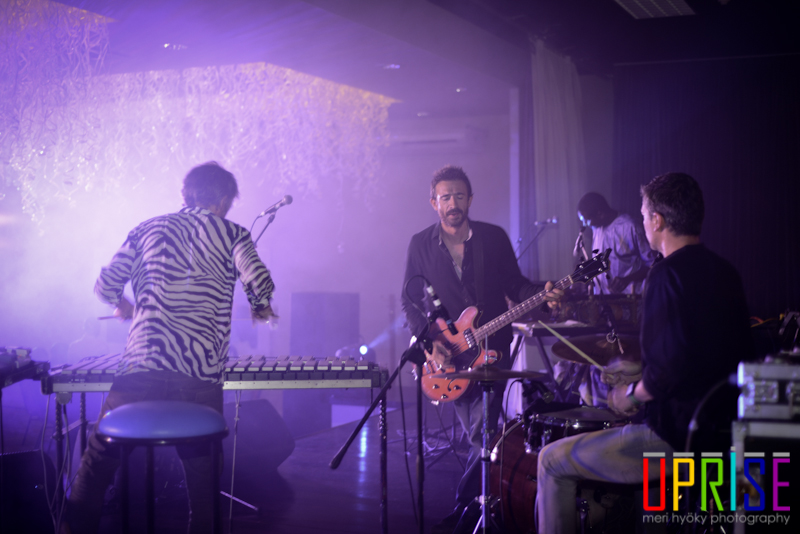
At last, Lansiné Kouyaté, David Neerman and their band finally got on stage and set the Maseru Sun convention centre ablaze. The band’s ensemble enunciated an eternal fact that music is intrinsic to all cultures and transcends beyond words, time and even space.

For the next one and a half hours, the duo reconciled paradoxes of word, sound and feeling. Their interpretation of the balofon and vibraphone fused traditional and modern music adding a touch of experimentation that creates an eclectic sound revolution that is pleasant to one’s senses and soul.

I could tell that Kouyaté-Neerman’s music stems from joy and oneness, the chemistry they have on stage is electrifying as is the compatibility of their instruments. One can tell that more than music being a full-time career for them, it is also the thread that binds them together as brothers regardless of their ethnic backgrounds.

Following the show, I asked them about the tour and whether they had had any expectations prior to visiting Lesotho. They expressed that each new place is trial and error and they are happy so long as they play for a receptive audience. They showed interest at the prospect of playing in the scenic landscapes of the Mountain Kingdom yet again and playing for an even more dynamic audience. Needless to say their performance was memorable and will remain among the fondest memories for music and cultural enthusiasts within Lesotho.


The common misconception

Written by Lineo Segoete

It is common knowledge that relationships come with confrontations and flaring tempers. Offensive things are said and sometimes done, and often times we are challenged to find ways of salvaging our sanity and or the union itself.

Conflict is an inevitable part of life, especially in relationships because personalities are bound to collide in the process of getting acquainted with one another. The charge is in learning how to remain grounded and within context.

Dealt with positively, confrontations bring individuals closer and intensify the level of openness between them. They shed light on qualities that would otherwise remain hidden.

On the contrary if confrontations are dealt with negatively they may cause never-healing wounds, destroy otherwise strong bonds and create unnecessary animosity.

For a very long time history and traditions have dictated that a woman should be subservient, speak only when spoken to and not contest anything said by the prominent male figures in her life.

In the instance where she does violate these “rules”, punishment follows suit. Either she is deprived of certain privileges or she is reprimanded physically.

The common misconception is that women tend to forget their place and have to be reminded the hard way so they do away with the behaviour entirely.

Sadly some men assume that hitting a woman is the only form of abuse. They figure that they can shove them, yank them like a bag full of corn, tell them who to associate with, dictate what they wear, demoralise them with words and all this will not count as abuse.

Worst even, some men feel they can defend their actions on the grounds that their tempers got the best of them. Their rationale is that they were provoked and could not have helped their reactions.

Many women endure this kind of treatment on the premise that perhaps they instigated being abused. After-all in confrontations both (or more) parties are accountable.

In many cases emotions, attachment and memories induce women to regress back into abusive relationships despite having summoned the courage to get up and call it quits. They are compelled by the hope that things will change as well as the need to forgive, neglecting their well-being and recovery in the process.

Regardless how cheeky, hard-headed or even potty mouthed a woman is, no reasoning qualifies grounds to hit and abuse her. If anything, do the both of you a favour and call it quits if none of your confrontations are constructive. It beats the pain caused by abuse.


What it’s like to attend a Siyakhona mobile cinema community screening

Originally posted by Siyakhona

Written by: Leila Hall

It is a chilly Tuesday evening in Liphakoeng – a community perched on a hillside above the industrial zone of Ha Thetsane in Maseru. People are just getting home: many of them are workers in the nearby textile factories, and it is a long walk up the steep tar road before they turn onto the dirt paths that lead to their homes.

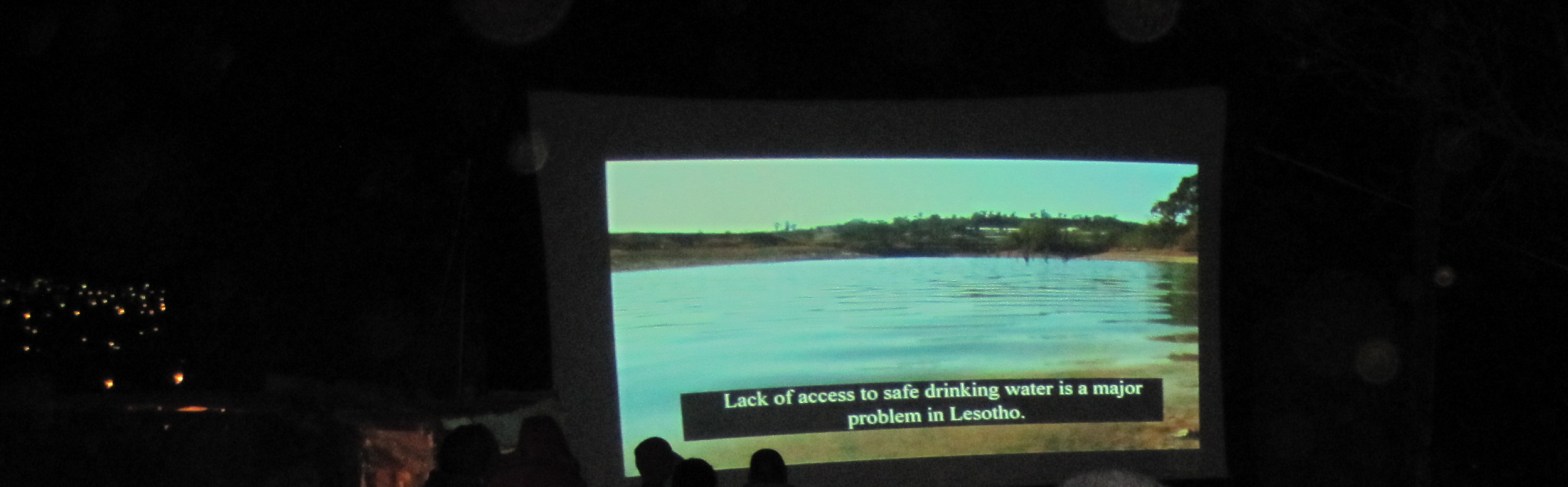
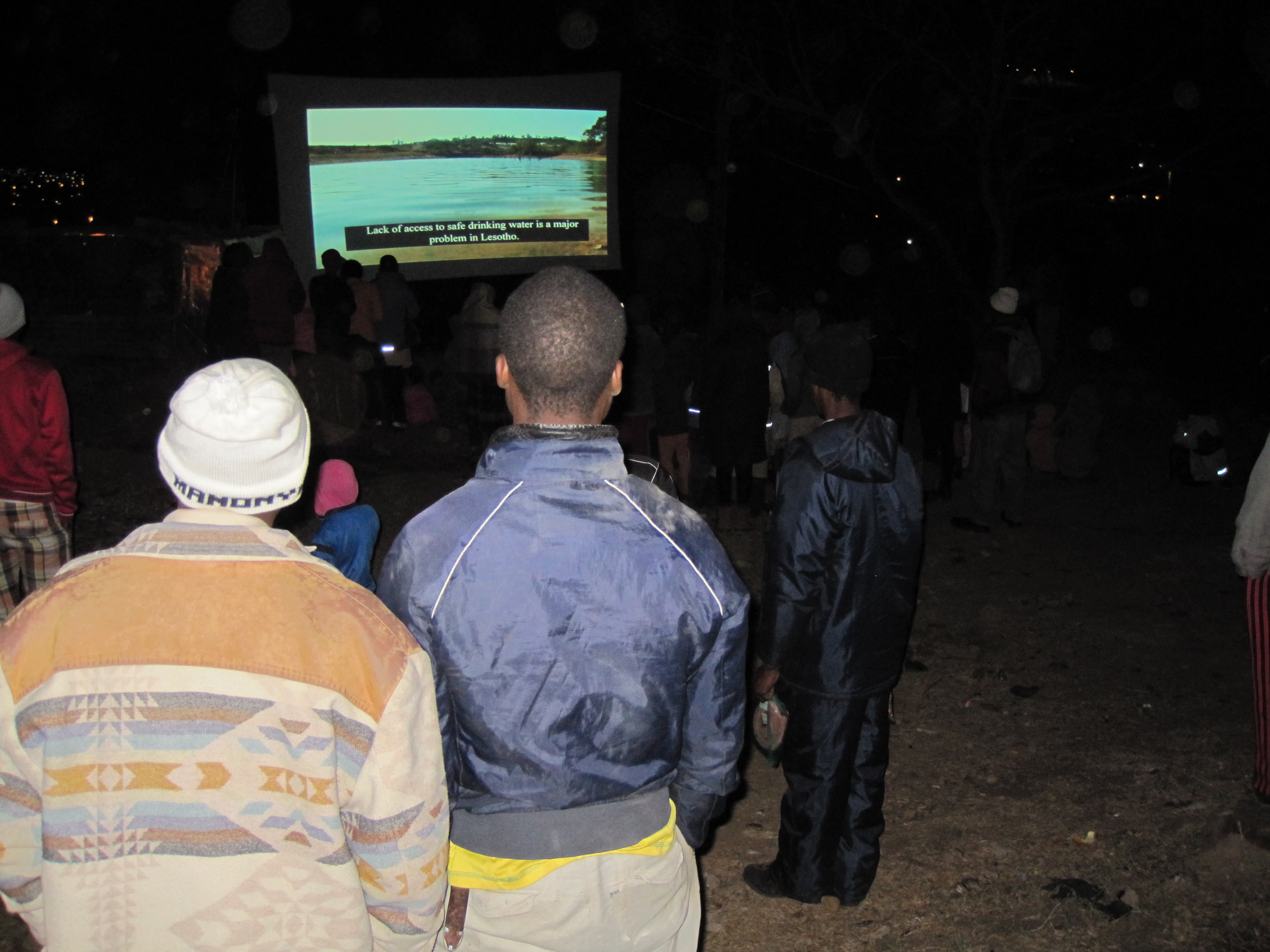
On this workday evening, however, something unusual is happening in this community. On a small, rocky patch of ground underneath a tree and beside a small food stall selling fruits and snacks, a giant blow-up screen has been set up. Music is pumping from speakers and as it gets dark, people are beginning to curiously gather around the noise and lights.

This is the first of a series of screenings that the Siyakhona Media Studio at Kick4Life is holding in communities in and around Maseru. It has now been seven months since the team of eight began their intensive training in filmmaking and citizen journalism. This evening, they are screening Fresh Cut – their first “magazine show” – which includes a series of short five-minute films that profile a variety of local personalities, topics and current affairs.

The central piece of the show, however, is a sixteen-minute call-to-action film called The Darkest Hour, which explores the lack of access to clean water that many communities in Maseru continue to face.

“Siyakhona works with communities to find out what burning issues they are facing. We went out and spoke to people and we found out that one of the most urgent issues they face is access to safe drinking water,” explains Malefu Taoana, of the Siyakhona crew members.

“We visited Tšenola Lepereng, a community in Maseru where many people struggle to get safe drinking water. We worked with one of the villagers there – an elderly lady who sometimes has to wake up at 2am to go and fetch water with her grandchildren, and even then sometimes finds that there is a queue of people waiting at the well. We spent the whole day with her filming her story, following her through the day and seeing for ourselves how much she struggles to get water.”

“Affordable water and sanitation is a human right, and we are trying to make sure that people have access to this,” says Malefu. “Lesotho sells water to other countries, but so many Basotho people don’t have water themselves.”

On this Tuesday in Liphakoeng, many of the people who are walking past the screening are carrying buckets of water on their heads. This too is a community where access to water is a daily struggle for most residents. In the growing dark, more and more people gather as, one after the next, the Fresh Cut films are played. The Darkest Hour is screened last, and by this time there is a sizeable group of people standing around – their interest sparked by what is clearly an issue that is relevant to their lives.

At the end of the screening, the Siyakhona crew invites members of the audience to come up and express their opinions about the topic. People come up one by one, with little hesitation, and speak firmly, sometimes angrily, into the microphone. They narrate the frustrations, the string of promises made and broken by politicians and officials, and the need for members of the community to speak out and take action.

“We have been getting positive reactions to the screenings from people,” says Malefu. “A woman I spoke to at one of the screenings told me that it makes her happy to see that there are people who care for them. People in her community have been complaining about water for a long time, but they haven’t been heard. She believes that Siyakhona will bring change into their lives.”

“We are working with the Transformation Resource Centre (TRC) to collect 10,000 signatures for a petition that will be handed to the government. We are also trying to inspire communities to work together to find short-term solutions, such as finding ways to protect a local well from livestock, or getting a cooperative together to buy a water pump.”

“We are trying to reach as many communities as we can, and at the moment are doing three screenings a week. We’ve partnered with Sesotho Media and Development, and will soon be moving to communities outside of Maseru. We’ve collected 606 signatures so far, and we’ll keep going until we reach the goal of 10,000.”

Related post – Take a stand in addressing Lesotho’s water crisis

Siyakhona mobile cinema community screening
© Siyakhona