April Weekend Workshop: Animation

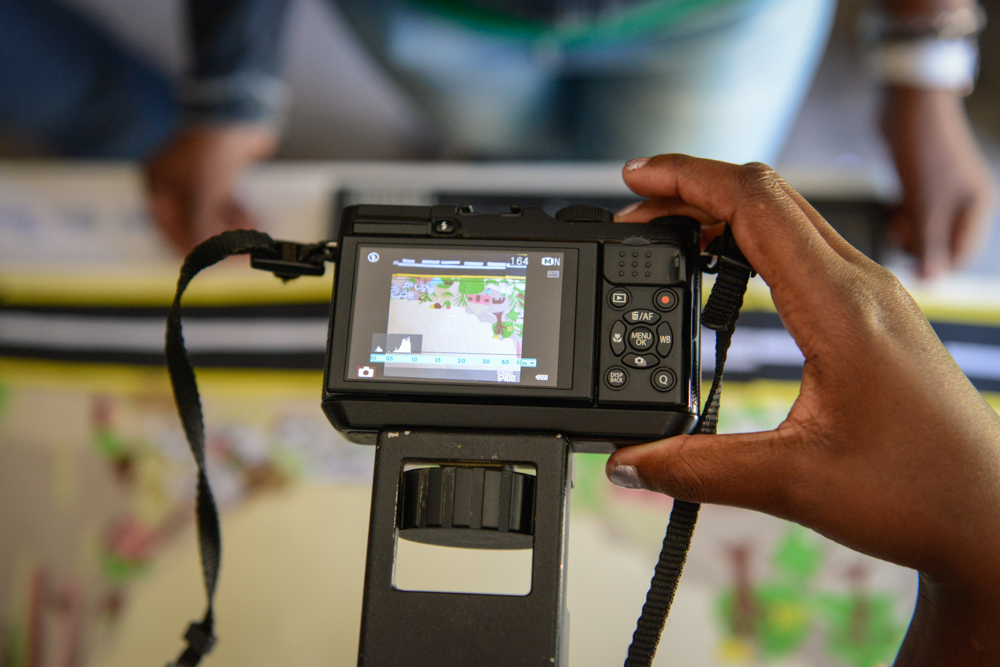
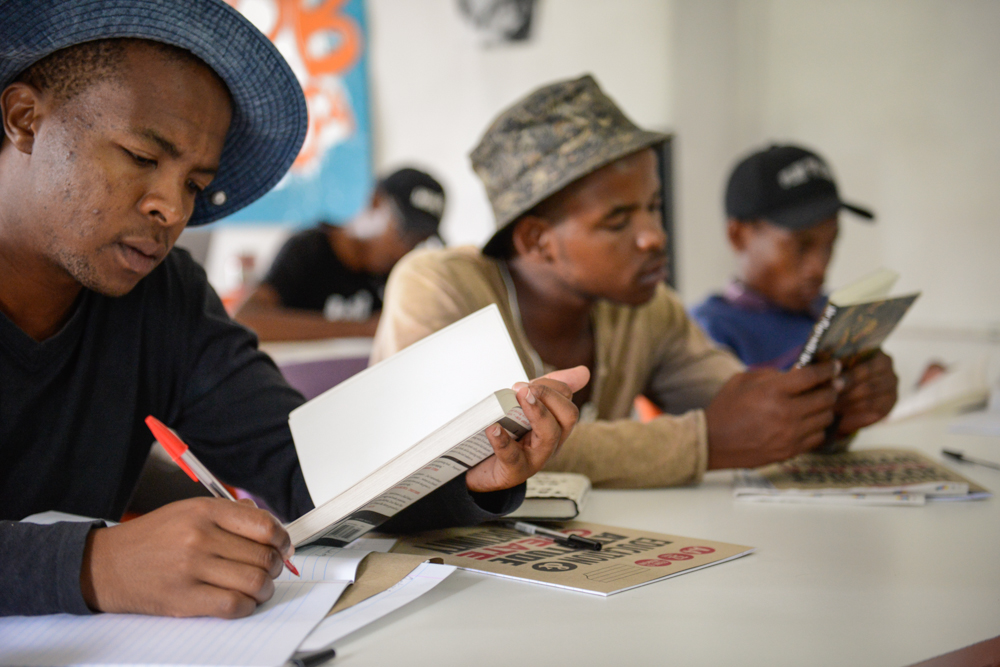
From April 22-23, 2017 The Hub hosted Patrick Rorke for a weekend workshop on Animation. In celebration of Earth Day, the animation created by participants over the weekend was a story about the importance of keeping our communities clean.

Hub volunteers have the task of editing the animation, using our new MacBook Pro, donated by our friends at Inside Out Media, complete with Adobe Creative Suite. This is The Hub’s first computer with industry standard software for creative projects. Huge thanks to Inside Out Media for their recent donation to us, which included laptops and camera equipment.

Special thanks also to Open Society Initiative for Southern Africa for supporting our weekend workshops, and to Patrick for sharing his skills with us.

“Everything starts at home, everything starts with you. You guys are the solution, not your parents. It will be you and your children living on this earth.” – Africa’s Green Generation

Photos from the weekend:

March Weekend Workshop: Women’s Rights & Gender Based Violence

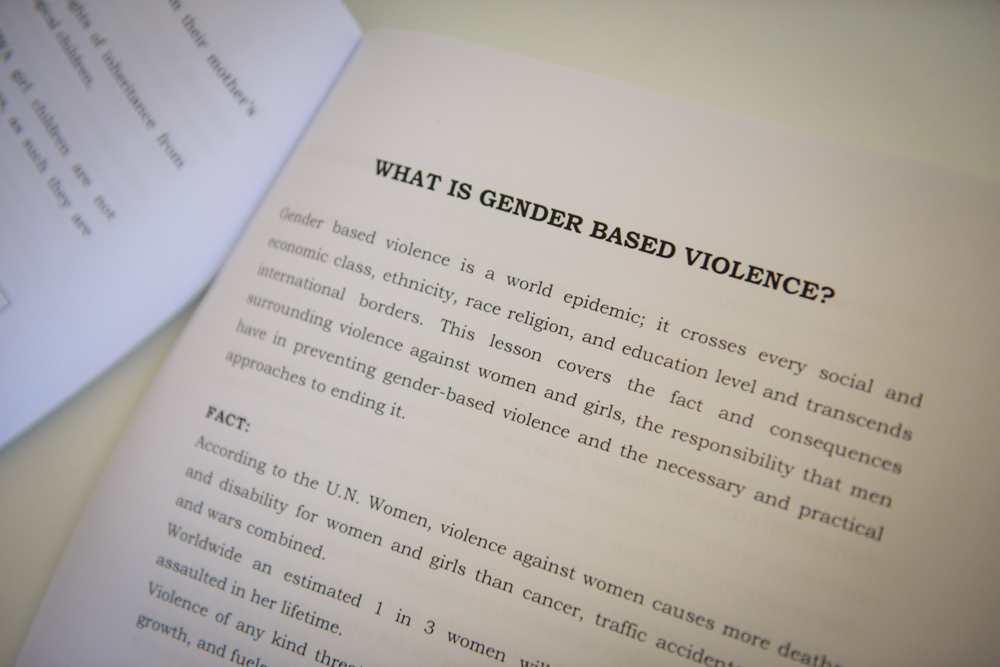
The weekend workshop for March on Women’s Rights and Gender Based Violence wrapped up yesterday afternoon at The Hub. Over the two days Human Rights Lawyers Mats’eliso Khesa and Mpho Maema of Women’s Law Clinic broke down a number of issues facing communities in Lesotho.

Founded by Advocate Mpho Maema in 2016, Women’s Law Clinic is an NGO that tackles Human Rights issues in Lesotho. Women’s Law Clinic has done advocacy work toward advancing women’s rights such as inheritance and property issues, LGBTI rights, and sensitization of police on the issues. Their outreach work also takes them to the most rural parts of Lesotho, where poverty and lack of information affect the quality of life for many people.

Next weekend workshop will take place April 22-23, when we host Patrick Rorke who will teach animation. Interested in taking part? Sign up at The Hub!

The Hub’s Weekend Workshops are supported by Open Society Initiative for Southern Africa and Anthony Maeder.

On The Project: Lineo Tsikoane

merihyokyphoto2017-0204-1191

Originally posted on: https://love961.wordpress.com/2017/02/14/on-the-project-lineo-tsikoane/

This past Saturday my life changed again. I feel like it changes all the time, but well, why would it not? Everything else changes. At some point not so many days ago the sun used to set at 7:30pm, now not anymore. The sun now sets earlier, and it seems it misses our 4:30 rise more and more, so mortal me never stood a chance at not changing. More so, when thing such as the women of The Project happen to you.

On Saturday the 4th February I buckled up my sons and drove out of town to the gem called Morija. Coincidentally, this is where we can claim is the first place civilisation as its now perceived was first introduced to Basotho. A place where vast knowledge and critical information was not only shared but remains stored about Lesotho. This also happens to be my oldest son and I’s secret love place where we used to go when we escape the buzz of Maseru along with its demands. Our happy place where we could bond over our love for books and my son’s love and knowledge of dinosaurs. I digress. What I really wanted to talk about is how twenty or more women and one transgender individual of Lesotho and those that love Lesotho set apart an afternoon to just pour out. I have waited a while to formulate my thoughts as everyday my attempts to pen this would often be overshadowed by feelings of overjoy and utter agony and it became too much to really finish this. After a lot of thinking, meditating and a bit of yoga, I have the words that are almost good enough to express that day.

The platform was intended to create a forum of interaction between the women, mostly mid-twenties and thirties and one maybe fifty, of what it means to be a woman, feminism, LGBTI issues, women and politics in Lesotho and inheritance and succession laws as regards to women in Lesotho. All this was to be done with a bit of tea, and a whole lot of pizza from the local place. (If you haven’t been to The Hub, I am sure you are the only person by now). The conversations were loving, kind, sometimes loud but never without affection. There was even a sanitary pad on the table… I am still not sure if it was part of the décor, but it just made the vagina topics easy and a whole lot more relaxed as we all knew there is no shame or fear in acceptance. The topics ranged wide and as deep as each speaker wanted. From exploring the labels of being a feminist, denouncing by some, proclaiming by others and just observation and constant giggles and warm smiles from others. Looking back, I realise we may never fully appreciate the Impact that afternoon and evening had in its totality because truly it was greater than all of us. Between moments of when I was not talking or breaking down patriarchy, I was looking at the faces of the younger women. The ones the age of my sister and less. And then it hit me. They have what we never had! They are not just smart and bright, they are born into a changing and better Lesotho! I know this statement might be shot down by others but I will tell you why I say so.

A 20-year-old me was still trying to fit in and buy Levi’s jeans and ensure that my manpower money affords me clothes that someone that had been a recipient for almost five years had and the same amenities. These girls were in this room in their vintage shirts that I am sure they ransacked from their mother’s closets and “kist”, heads wrapped in turbans that would require all my my data’s worth of YouTube, were rocking their natural hair and had all kinds of ink and piercings that I was only bold enough to have at twenty-seven and long out of my mother’s gazing eyes. These girls talked about bodily autonomy and integrity like it was a description of a road downtown the streets of Maseru and I realise I had to wait until I was tired of violations that I only took charge. These girls were clad in beads, African print and even wore animal skin headbands and were vegetarian during the week just to teach the body refrain. These girls had all kinds of locks on their heads full with knowledge that I regretted my son was outside because today was not open to men. You will realise that these women decided, that this place, at this time is only going to be for those in vaginal bodies, and guess what? We did not want to leave! By the time we put a stop on the amazing conversations that I deliberately avoided to include in this piece for the sanctity of that moment it was dark outside. The sun still sets at around 7:10 pm and worse it was a rainy day. So not even the rain could huff and puff us away. When an announcement that we must ensure that we all ride together back to Maseru I almost cried again, the love in this place was enough to heal any illness granted doctors gave us a chance!

When I walked outside to the car with my sons I gulped a huge lump of tears that God decided not to give through me another woman that would have joined these amazing minds. I realised that even if this be our last meeting with the women of the project, something supernatural happened in that tiny but bright mud painted beautiful house. I hugged my son and pat the older to find out what they did while they waited for mama. I was a little worried that even my young Sanakara can tell that mama has changed. I went in as Lineo that was going to share knowledge on feminism and what it means for a Mosotho woman. I came out wide-eyed eager not to miss any opportunity to learn, un-learn or even re-learn what it means to be a MOSOTHO woman who openly identifies as feminist. I could not even hide it. I had changed. And I loved it. I still do.

Love and light.
Lineo Tsikoane

February Weekend Workshop: Creative Writing

We held a two-day Creative Writing Workshop at The Hub on the weekend of the 18th and 19th February 2017. The workshop began with the group reading extracts from Zakes Mda’s prose and a selection of poems by different writers. We discussed what the term “creative writing” means and talked about the different techniques that writers and poets use to engage an audience.

We then watched Chimamanda Ngozi Adichie’s TED Talk “The danger of a single story”, which led to a discussion about identity, cultural representation and the importance of telling diverse stories from Lesotho.

The remainder of the first day was spent on a series of freewriting exercises that encouraged participants to reflect on their surroundings, experiences and memories.

In the second day of the workshop, participants used their freewrites as raw material for stories and reflections that they were willing to share with the group. We listened to one another’s work and offered constructive feedback on how to improve our pieces. Participants were then given time to produce a second draft of their pieces, based on the feedback they had received.

During a break, we watched an interview of MK Asante, who earlier this year donated copies of his memoir ‘Buck’ to The Hub. In the interview MK talks about the effect that discovering writing had on his life.

“The blank page begs me to tell a story – dares me to tell one – one that’s never been told before, and to tell it like it will never be told again… The blank page lights up a room in my heart that I didn’t know existed.” – MK Asante

The workshop ended with public reading on the Sunday afternoon, in which workshop participants and guests read selections of their writing to the group. We were joined by writer, actress and film-maker Mannini Mokhothu, who shared poems from her book ‘Suitcase of Lifela’.

Photos from the workshop:

The Project – Pizza & Conversations

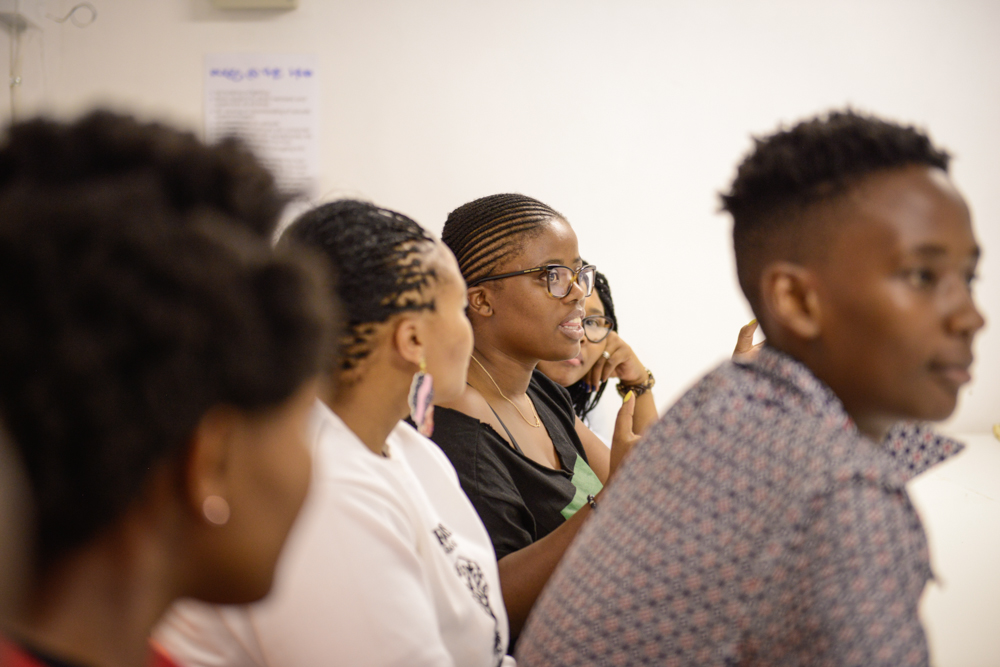
On Saturday 4th February, The Hub hosted the inaugural event of The Project, a new initiative founded by six young Basotho women: Tsebo Phakisi, Mats’eliso Mots’oane, Mpho Maema, ‘Masehlabaka ‘Mokose and Madingane Maliehe. The Project aims to provide a safe space for honest and open intergenerational conversations about feminism, sexuality and the complexities of being a woman in Lesotho today.

Two of The Hub’s volunteers – Ts’episo Mahooe and Mats’eliso Moruthane – participated in the event. Here are their reflections on what they learnt from the day.

Ts’episo Mahooe:

“Being a feminist means fighting for equality. Many people compromise their happiness because of society. This happens to women more than it does to men. For example, if a woman arrives home late it’s said to be bad behaviour, but if a man does the same thing it’s acceptable. We are taught these expectations from a young age: we are told that certain work is only for men, and some is only for women. We are fighting for equality, so these expectations need to change. For example, in the olden days men were said to be the providers of the family. That strategy doesn’t work anymore because women too are working now.”

“I also learned that being a lesbian, gay, bisexual, transgender or intersex (LGBTI) person is not a choice, like I thought it was before. People lack this knowledge. People believe that members of the LGBTI community are sinners, but one question stands out: Why would God have created them that way if he didn’t want them to live that way?”

“The conversation made me aware that I personally am a victim of compromising my happiness because of the fear of culture or worse, of what my community will say. I really like red lipstick, but girls who wear this are said to be whores, so my grandmother never used to allow me to wear it. Thanks to the people who made the conversation a success, I am now able to put on red lipstick and my granny is fine with that, because I talked to her and made her understand that 2017 is different to when she was young. This makes me happy.”

Mats’eliso Moruthane:

“Feminism is the belief that both men and women should have equal rights and opportunities. Feminism doesn’t try to take rights away from men, but rather it tries to improve the status of women. Women find themselves in a difficult position today because of the grounds that were set by culture. Women cannot wear pants, women with tattoos are disrespectful, a woman who does not wear mourning attire is a witch, and so on. Society needs to be taught that times have changed: women are not housewives, women are scientists, women are politicians, women can do all the jobs that men can do.”

“There are many issues that surround feminism. There are challenges surrounding marriage. For example, a divorced wife is seen as a disgrace to the community, and a woman who does not prepare food for her husband is seen as lacking respect. Feminism affects women in the work place, because we live in a society that actively discourages female intelligence by painting it as a non-feminine trait. I think that the discussion surrounding feminism should also include males so that they do not feel marginalised and left out.”

Photos from the day: