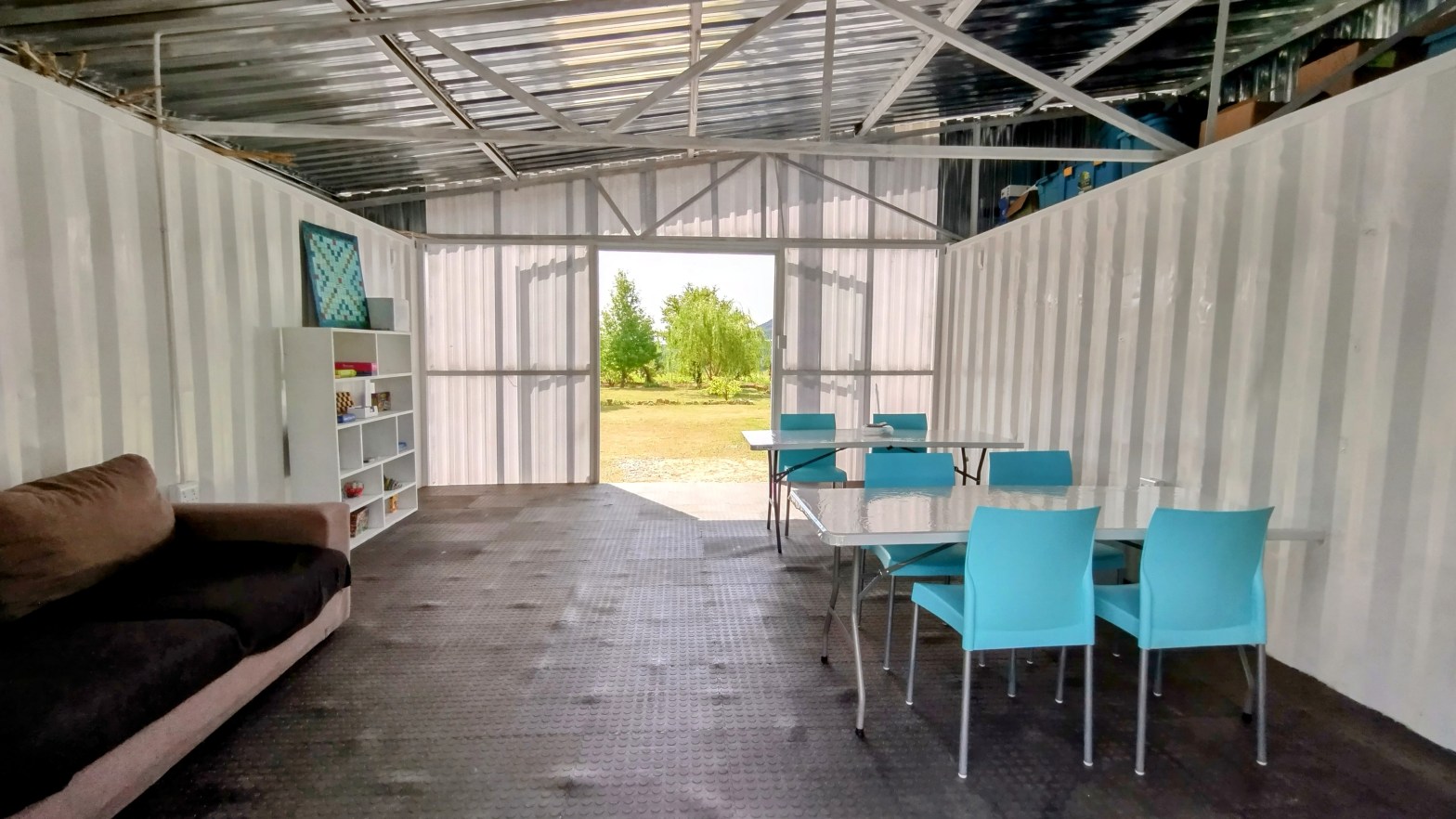
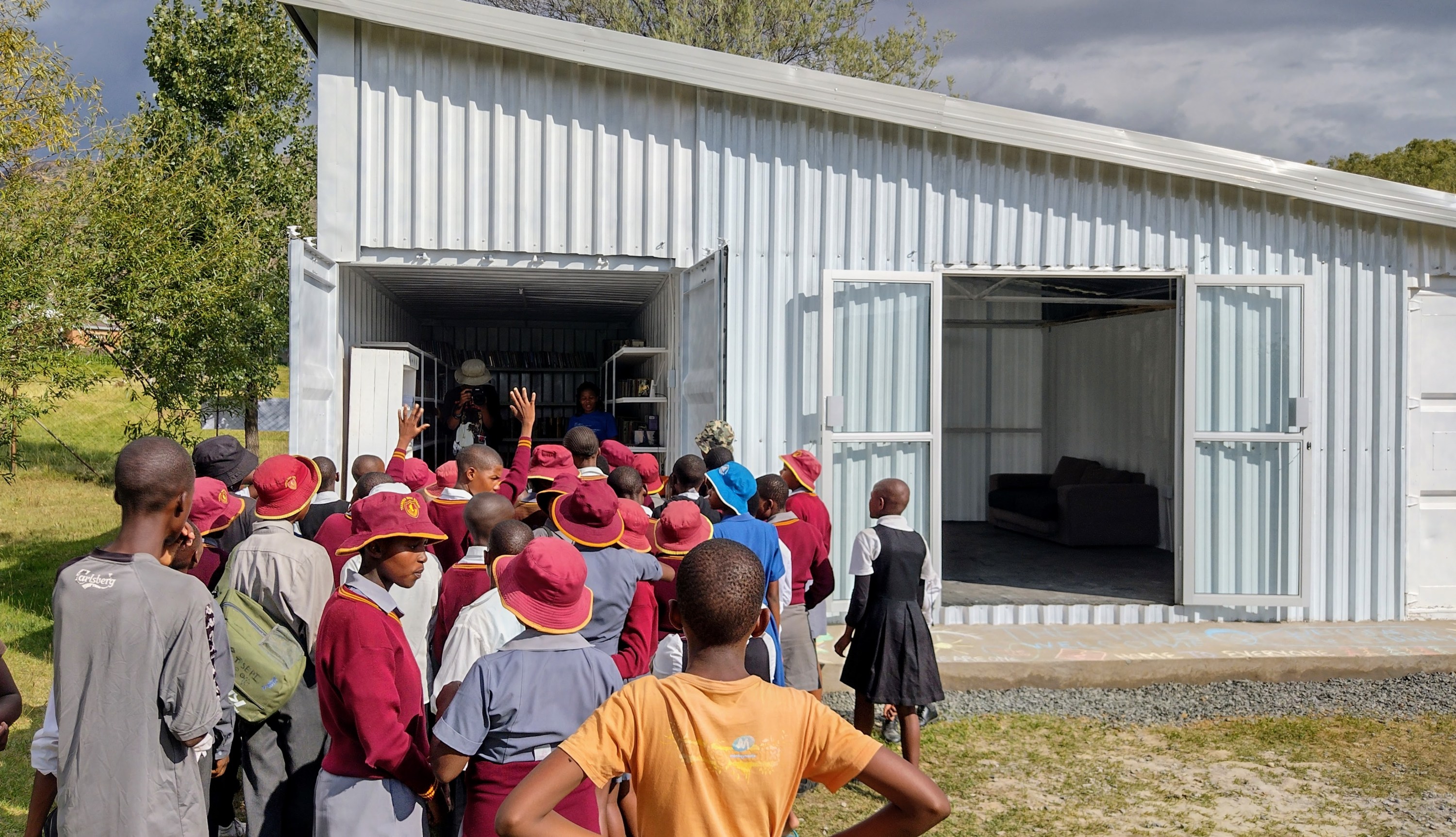
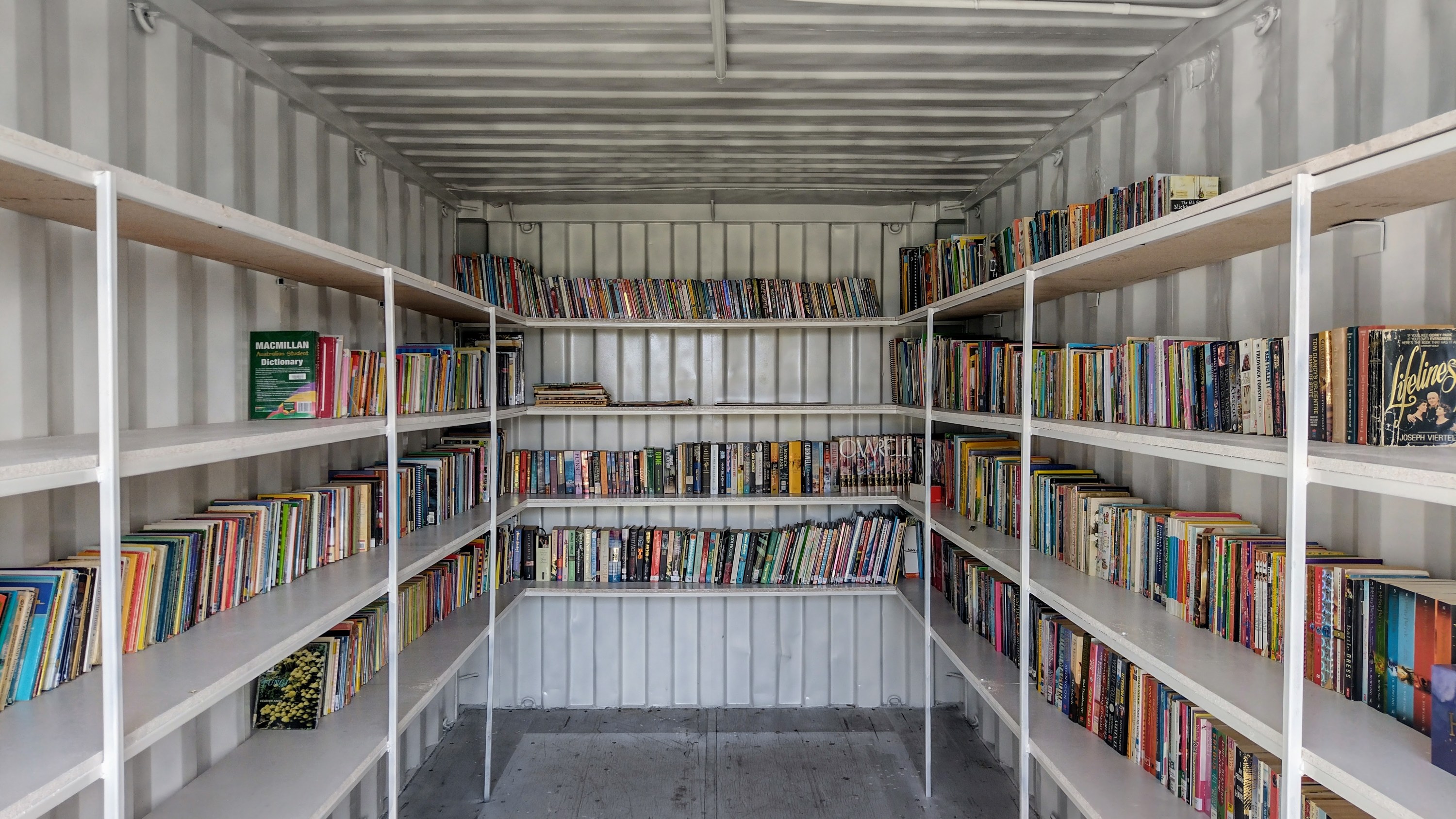
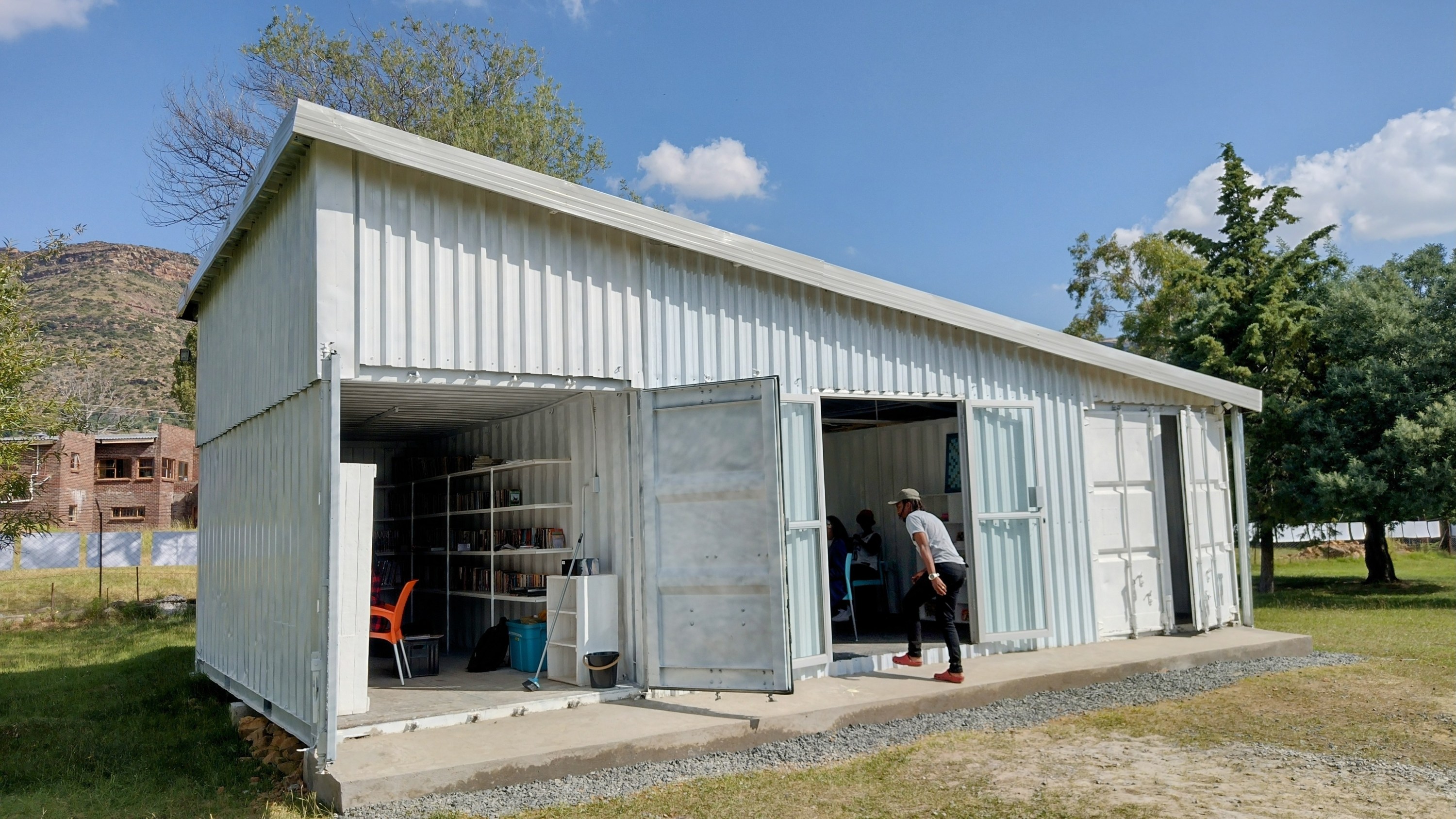
In partnership with rise and with support from Glasswaters Foundation, an innovative construction project using shipping containers was opened in March hosting a library, learning- and storage space!
The Hub’s loan-out library is open Monday – Saturday
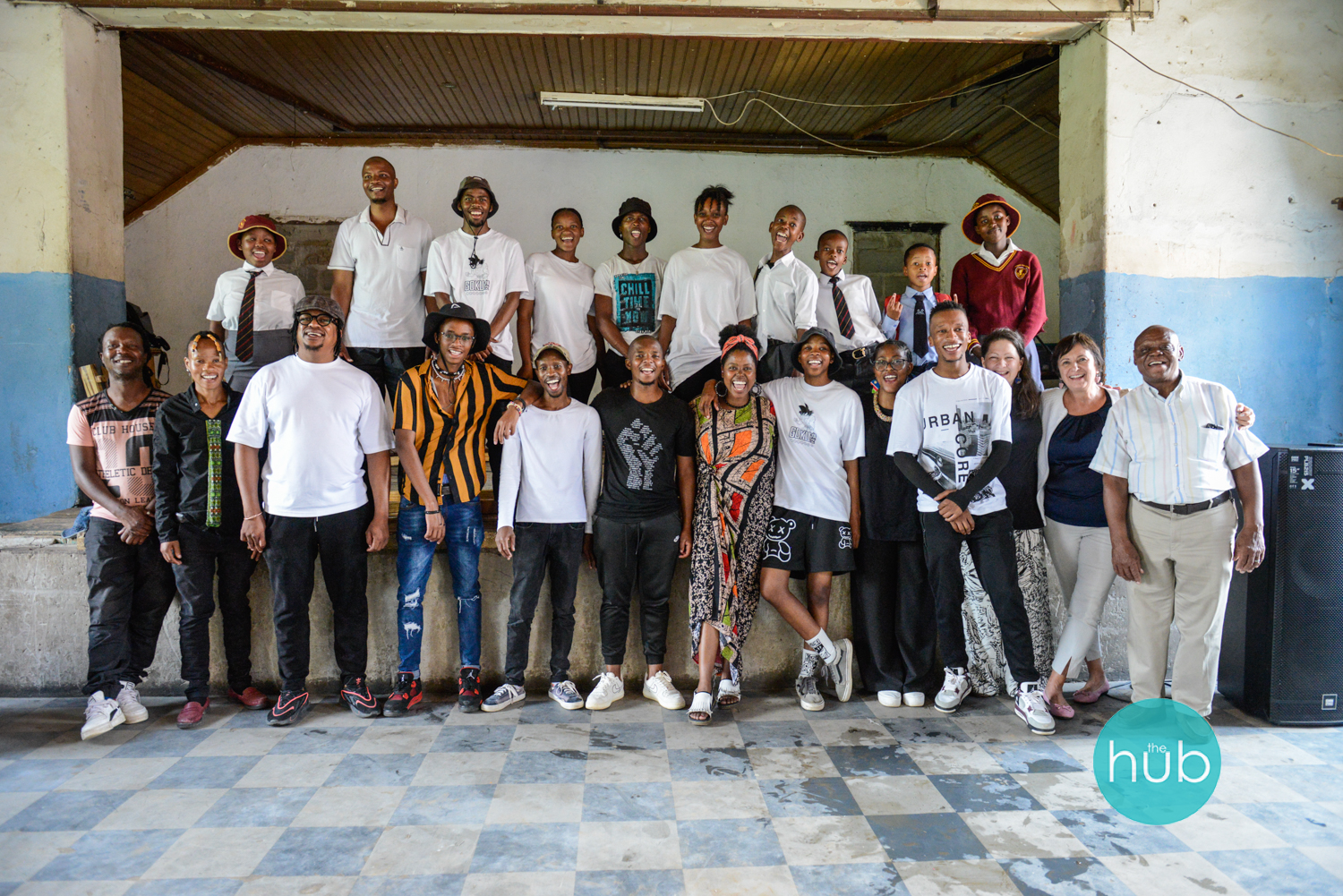
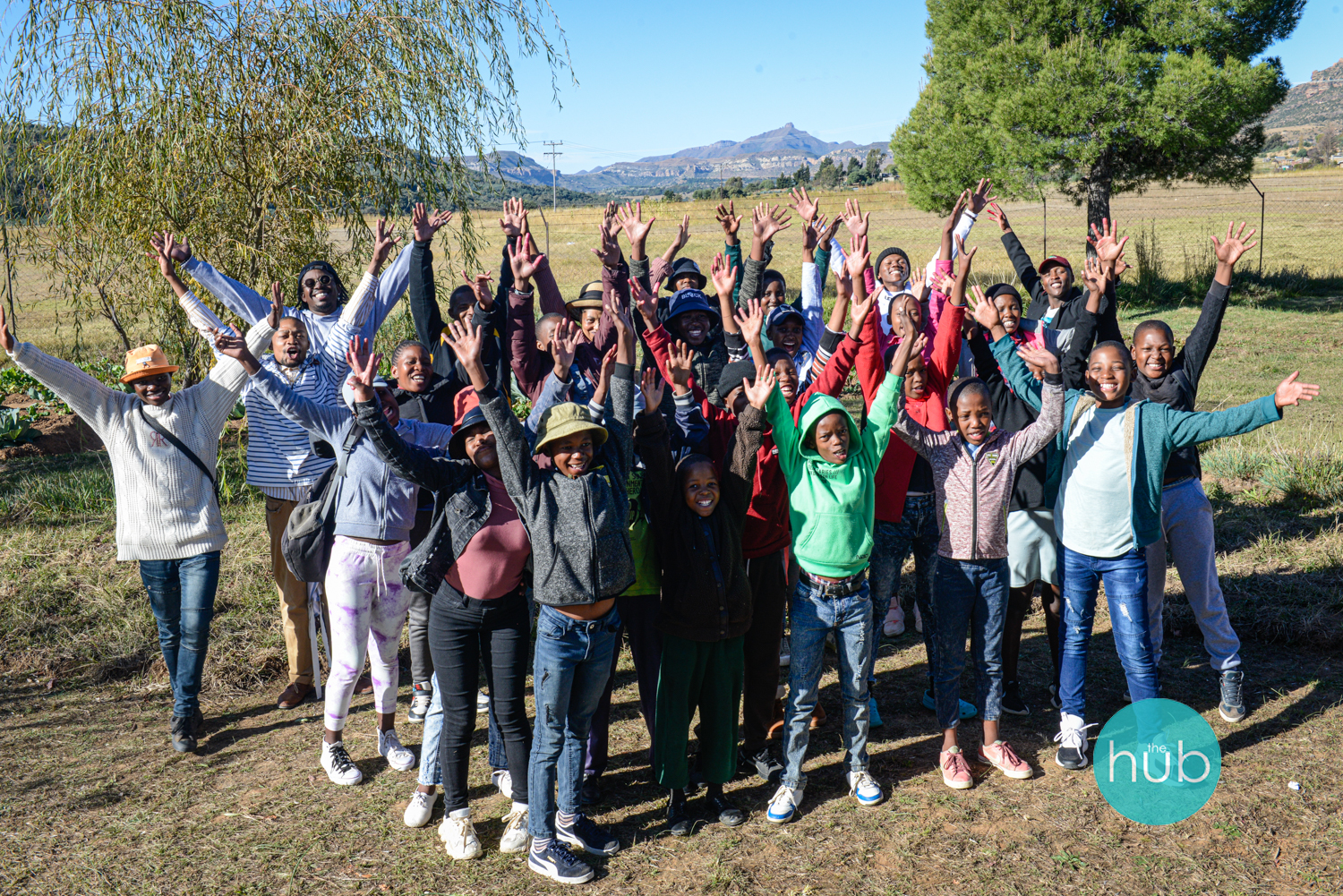
From January 29 – February 2, 2024, the world became a village at The Hub with ‘Once the 🌍 Was a Village’, a week-long music workshop. In partnership with the Embassy of Finland in Pretoria, we hosted facilitators from Finland, South Africa and Lesotho, with participants learning how to play marimba, lekolilo, lekope, thomo, cajon and djembe.
In the afternoons, our Skills & Soup participants also got to join the fun!
On day 3, Ambassador Anne Lammila and Tsakane Bok from the Embassy of Finland in Pretoria joined us as we travelled to St Cecilia Orphanage in Ha Bua Sono for a fun day of sharing music and dance, followed by a drum circle at Cafe What!
In 2023, The Hub successfully continued to implement our aim of fostering a community of young people in Lesotho who are skilled, motivated and socially conscious. We have a long-term vision for The Hub of sustainability and skills transfer, with staff, participants and those who gain skills able to pass these on others and in so doing lift other members of the community.
View The Hub’s 2023 annual report below (may not be mobile-compatible):
From July – December 2023, in partnership the Embassy of France in South Africa, The Hub took a creative, collaborative and participatory approach to raising awareness and seeking solutions to climate change and related social issues with digital arts for change – through animation, design, photography, and music production.
According to Help Lesotho: “Girls and women are the most affected during climatic shocks. The impact of climate change on females is intrinsically linked to gender inequity and violations of their human rights and dignity.
Droughts can mean that girls and women must travel further each day searching for water and firewood, increasing their workload, limiting their ability to attend school, earn income and invest in their careers, and exposes them to risks of violence.
Girls and women are more likely to be living in poverty and have less control over resources, making them more vulnerable to food insecurity. During food and water shortages, girls and women are more likely to sacrifice their own health (by choice and by force) in favour of providing for their spouses, children, or other family members.
The stress of natural disasters and food insecurity destabilizes patriarchal relationships, often leading to increased gender-based violence at the hands of stressed men.
Desperate families unable to feed their daughters often resort to early/forced marriages as a means of ridding themselves of another mouth to feed.
Environmental stressors lead to the rise of organizations that engage in human trafficking and extreme labour exploitation, most often targeted at girls and women who are vulnerable and desperate.”
The Hub strives to empower girls and women by narrating stories that emphasize the development of their resilience. The goal is to enhance their ability to navigate challenges and make optimal decisions for the well-being and safety of themselves and their families. Providing girls and women with confidence, effective decision-making strategies, and a belief in their leadership abilities makes them less susceptible to vulnerability, fostering individuals who persevere in the face of adversity.
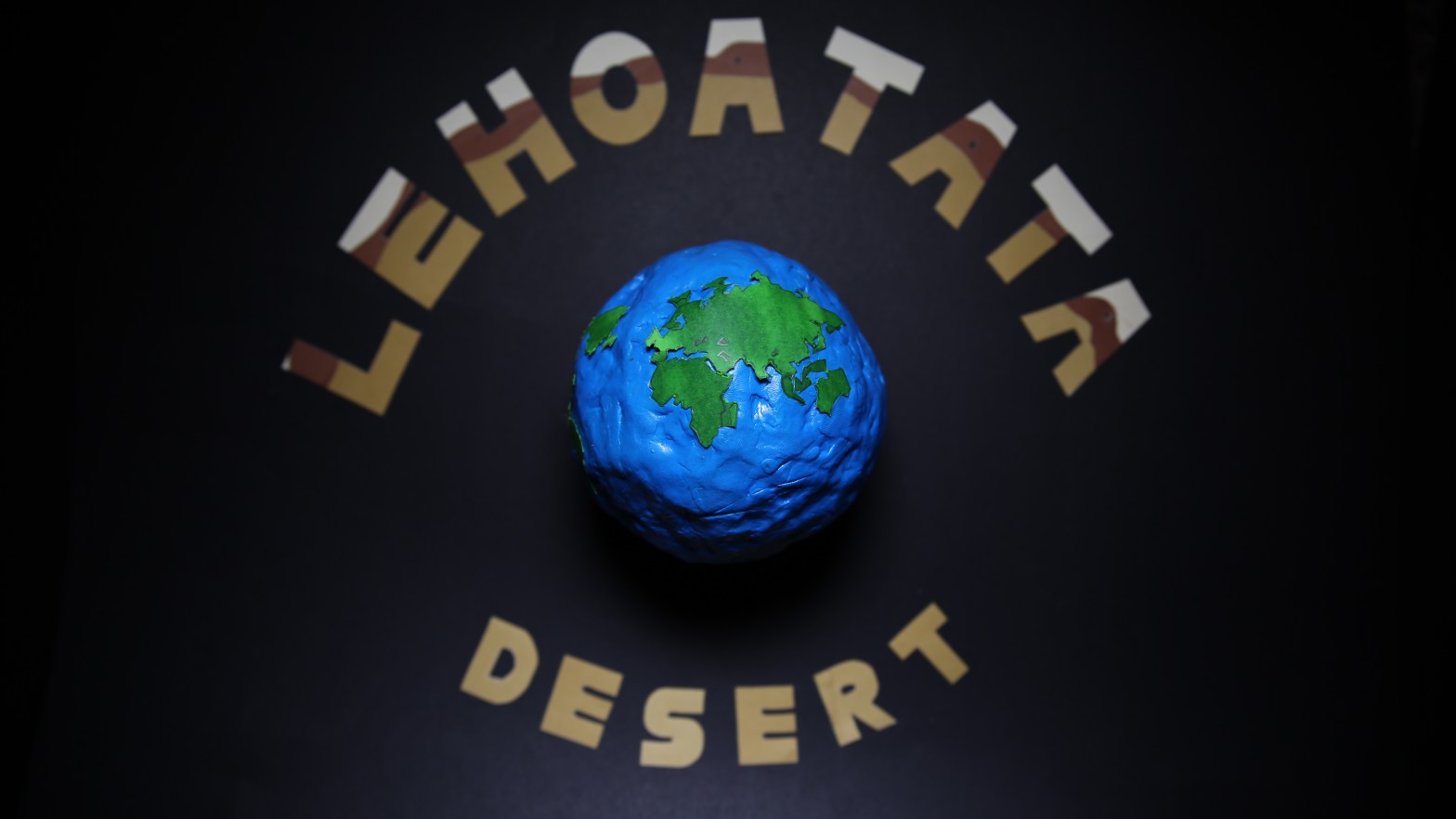
Lehoatata (Desert) is a short claymation film produced during an 8-day workshop in October 2023, led by Matty Monethi and Thato Mokhali, with 4 high school students from Skills & Soup and The Hub’s interns participating in the production.
Lehoatata (Desert)was published on November 25, the International Day for the Elimination of Violence Against Women and start of 16-Days of Activism Against GBV, and has 124,000+ views on Facebook.
Love the soundtrack? An original song was produced at The Hub for the soundtrack titled Phaphamangfeaturing youth from The Hub. Phaphamang features Thembi Mapefane, Black Dash and Tokelo the Young Prince, and was produced by Bow Lazer and T Mech.
The facilitators of the animation workshop were guests on the Hub Talk Podcastin November. Tune in for a captivating conversation that guides us through a creative journey and the unique experiences shared by Matty Monethi and Thato Mokhali.
Educational exhibition
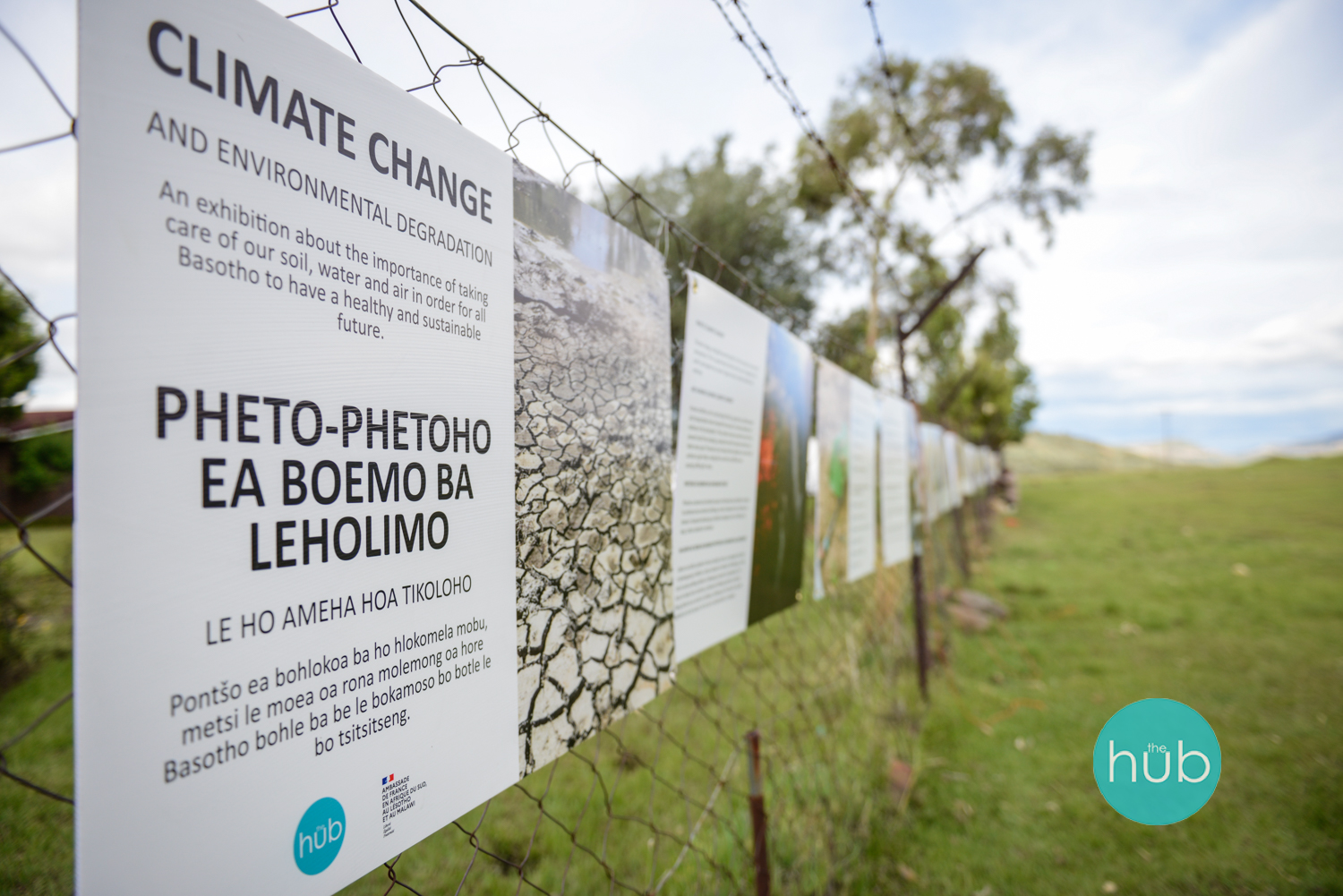
The Hub also produced an outdoor exhibition with educational posters about climate change, climate justice and gender justice. The exhibition will be permanently installed on The Hub’s long high visibility and traffic fenceline. The exhibition is free and open for everyone to access!
The Hub will invite schools for tours of the exhibition in January 2024.
Wire art against single-use plastic
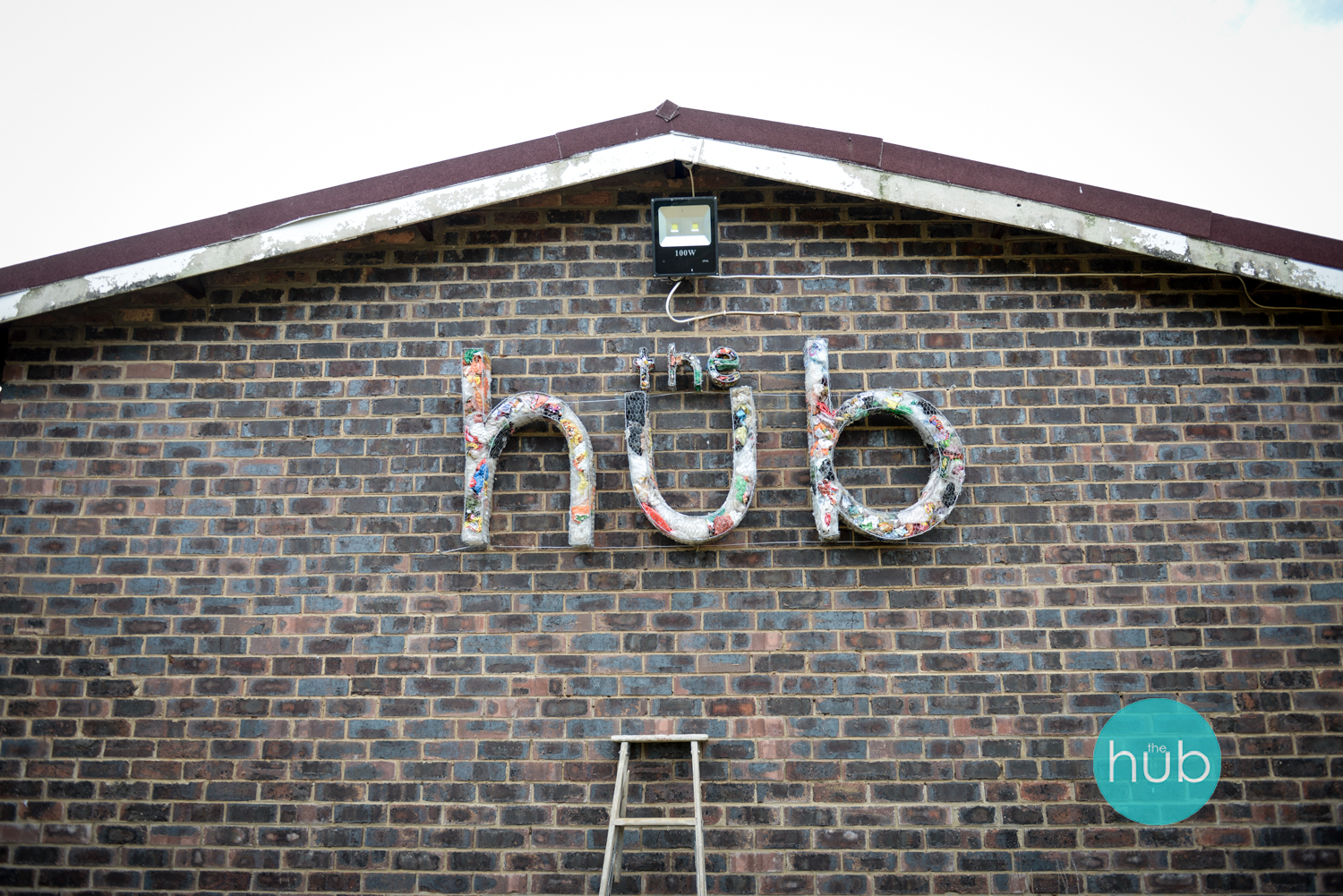
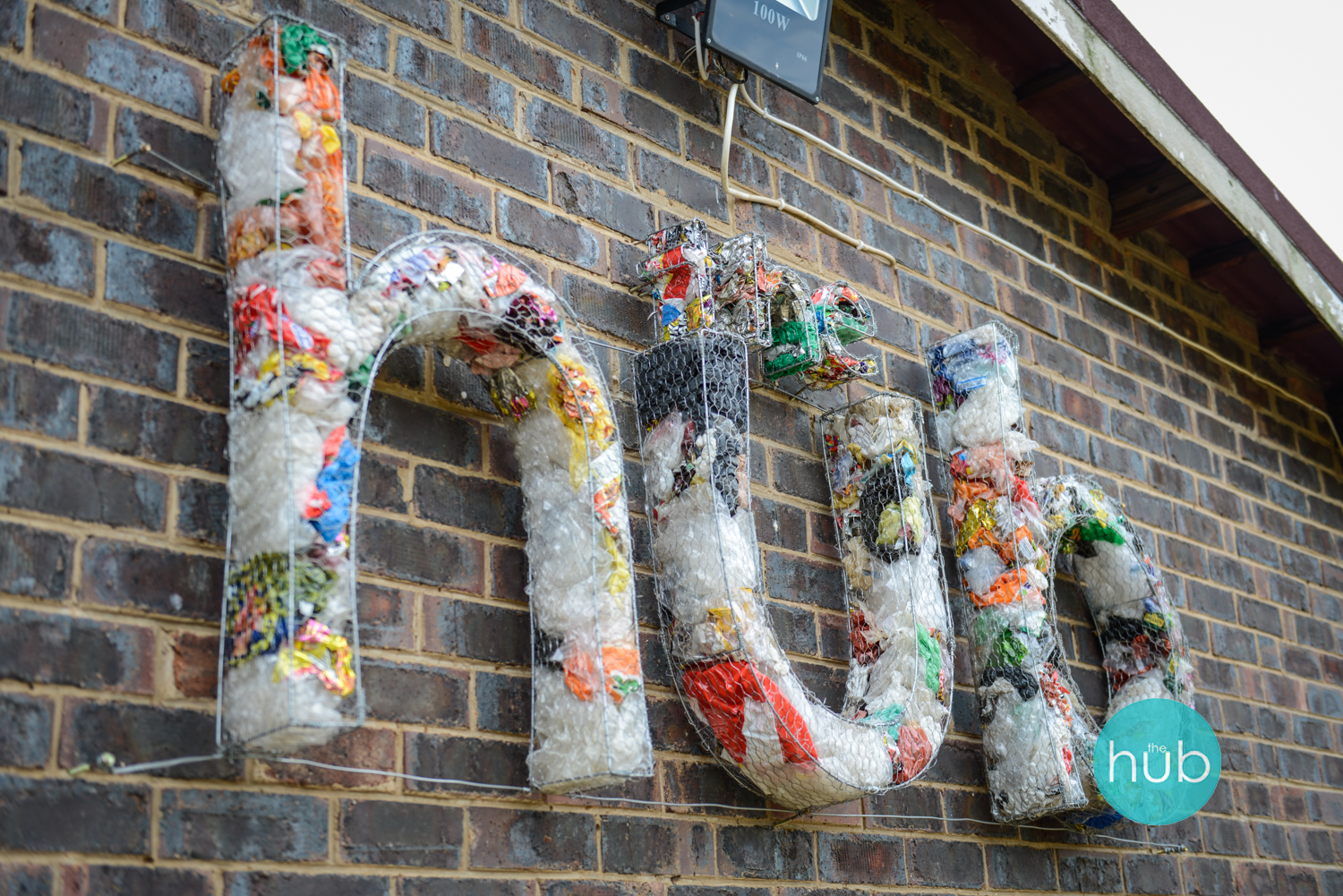
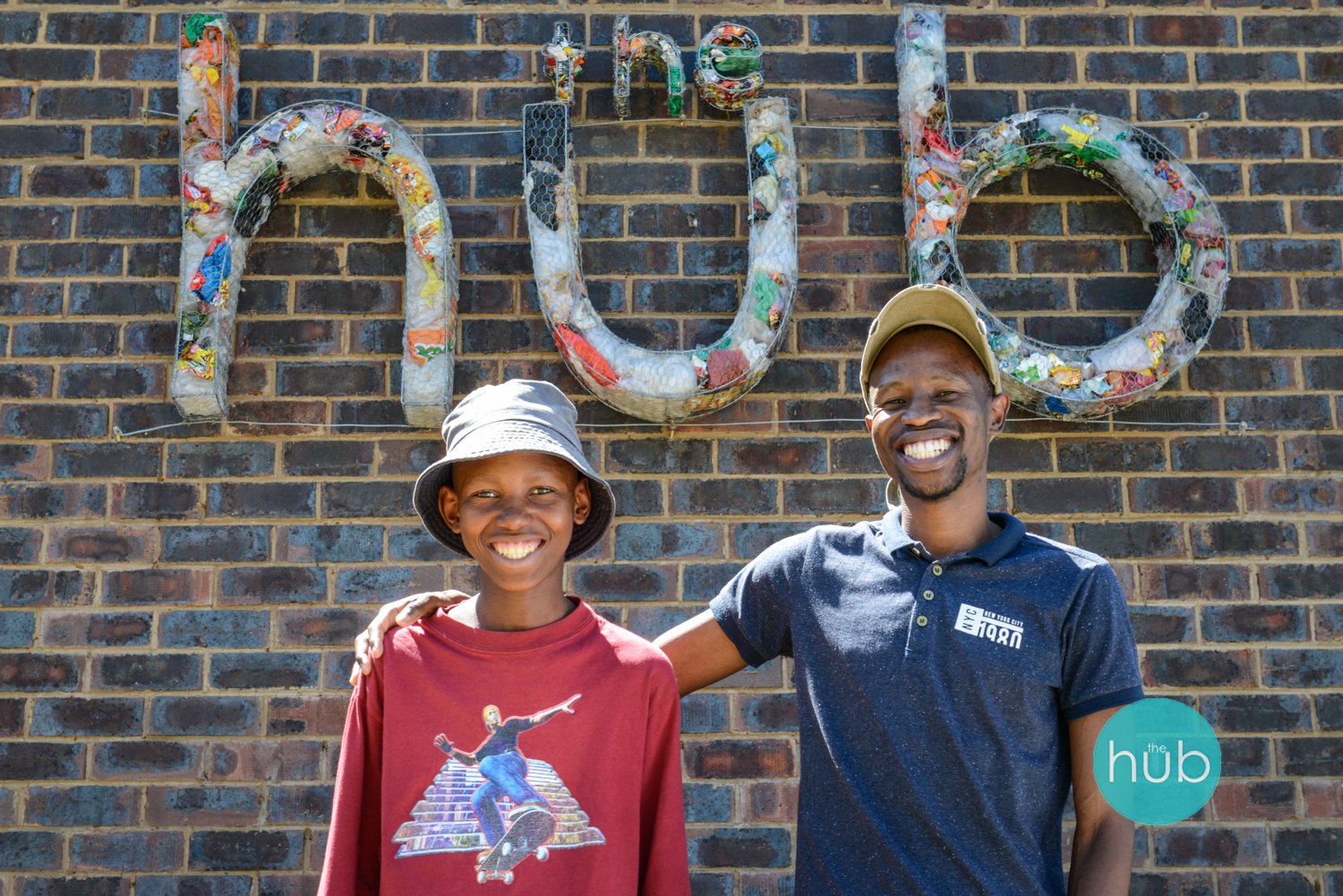
With extra wire from the exhibition, and to draw attention to issues around single-use plastic and lack of waste management in Morija, The Hub’s logo was created from wire and filled with plastic waste. The logo was produced by 16-year-old Katleho Nkakole, who builds electric cars and boats from wire and plastic that run on phone batteries. He is among 30+ youth from Morija for whom The Hub is currently raising funds for 2024 school fees.
Special thanks to the Embassy of France in South Africa for making these projects possible!
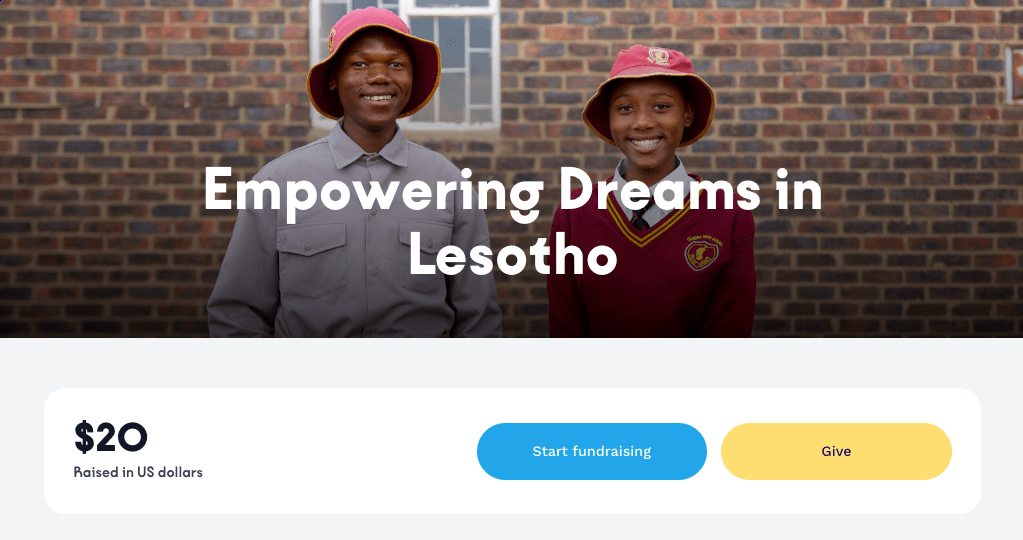
This festive season, The Hub is reaching out to friends and supporters worldwide with an urgent appeal: help us to give the gift of education by providing high school fees and support in 2024 for 30+ of our Skills & Soup participants.
Our fundraising goal is 10,000 USD. Every donation, no matter the size, will contribute to breaking down barriers and opening doors for these bright and ambitious students!
From our Skills & Soup cohort, we have identified 30+ young people who are academically gifted, but who come from severely disadvantaged economic backgrounds. As with many young people in Lesotho, these 30 young people come from families who cannot afford to send them to high school.
In Morija, attending high school costs approximately LSL 2,000 (USD 100) per year, but this is unattainable for many families who are already struggling to make ends meet and to put food on the table. Additional costs include exam fees, uniforms, books, dictionaries, calculators, and even boarding fees for some—costs which many families simply cannot cover.
According to 2021 MICS-EAGLE Lesotho Education Fact Sheets, about 80% of children in Lesotho complete primary education. However, the completion rate declines steeply for lower and upper secondary education, with only 33% completing lower secondary and only 14% completing upper secondary due to these unattainable costs. 61% of children from the wealthiest families complete high school, compared to 4% from poor families.
As The Hub, we are determined to help reverse these statistics by ensuring that the young people we work with have the educational opportunities they deserve to pursue their dreams for a brighter and better future for themselves and their families.
Every donation to this campaign will go directly into a high school fees fund that will be managed by our trusted team to cover the costs of fees, exams, books, uniforms, school supplies such as a calculator,and any other additional coststhat may arise for 30+ of our Skills & Soup participants. The Hub has been paying high school fees for a number of our participants since 2021, and we already have strong relationships with local high schools, as well as an established system to manage these bursaries for deserving high school students.
Our system takes the responsibility for high school fees out of the hands of families, as we pay fees and associated costs directly to high schools in the community. We also communicate regularly with schools to maintain an understanding of students’ needs and progress. This greatly relieves the pressure on families and allows our high school students to focus on what matters most: their studies.
By supporting this cause, you are investing in the future of these young students and empowering them to reach their full potential.

 Elisa Seppänen – Lecturer at top 10 performing arts university in the world
  Mpho Molikeng – Basotho instrument specialist and performer
 Olaotse Locx Mmileng – Marimba and percussion lecturer and performer

 The Hub