Kick4Life – Speak Out Lesotho!

Originally posted by Kick4Life on December 3, 2012.
Every year, from November 25 to December 10, governments, NGOs and individuals worldwide take part in the 16 Days of Activism Against Gender Violence – an international campaign which aims to raise awareness of the issue of gender-based violence.
In Lesotho, sexual violence against women and girls is a widespread problem. Unequal gender relations and belief in the sexual entitlement of men are entrenched in cultural and social norms, and the country has a very high incidence of rape.
At Kick4Life, we recognise that gender-based violence and the spread of HIV are inextricably linked. This year, as part of the 16 Days, we held a Story Writing Workshop which invited everybody and anybody to come along and share their stories about the issue. Participants could write about anything which they felt comfortable sharing.
The stories collected during the workshop provide a moving reflection on gender-based violence in Lesotho today. A wide range of viewpoints and issues are explored. Two of the writers are rape survivors, and share with us their very personal stories. Several speak of friends or community members who have been affected, and others share their experiences of being witness to gender-based violence in their homes as children.
The stories are not easy to read, and many readers may ask themselves why they have been shared at all. How does sharing upsetting tales of violence help anybody?
The answer is simple: in the majority of cases, victims of sexual violence are silenced. In one of the stories shared on this blog, a girl is raped by her father. The author recalls: “he told me never to say a word to anybody, not even to my Mum, or else he [would] slaughter me like a lamb.” A 2004 report on gender-based violence in Lesotho found that many women who had been raped chose not to report the rape to the police because they feared accusation and questioning from male officers[1]. The report also found that few women who were raped had sought out existing services, that women were less likely to disclose if the perpetrator was someone that they knew, and that community members often placed the blame on rape victims, rather than offering them their understanding and support.
Speaking out about sexual violence is crucial. On an individual basis, for victims of rape, it is a critical first step towards recovery. As one of the writers here shares, after talking with others, she felt that: “my pain was gone because I spoke out. Until now, as I write, I am OK and a survivor.”
On a larger, collective scale, encouraging people to speak out draws attention to the magnitude of the issue, and can be an important starting point in mobilising communities towards positive action.
Stories such as these also help bring to life an issue which is all too often clouded with jargon and seemingly abstract concepts. These stories remind us that the heavy term ‘gender-based violence’ in reality refers to every-day incidences in many people’s lives.
The stories contain strongly worded statements from both women and men which show that many young people in Lesotho are unafraid to speak out against the issue. One young man writes: “Physical abuse to women just shows how weak men are… GBV happens with those men who don’t want to be corrected of their mistakes, who think they are always right even if they are wrong.”
We hope that you find value in these stories, and that they bring the issue of gender-based violence closer to home, wherever in the world you are. Please feel free to post your comments on this blog. If you live in Lesotho and would like to contribute a story, please email [email protected]. This blog will stay up and will be available for all to read throughout the year – http://kick4lifespeakout.blogspot.com/

kick4life

The Forgotten Kingdom trailer

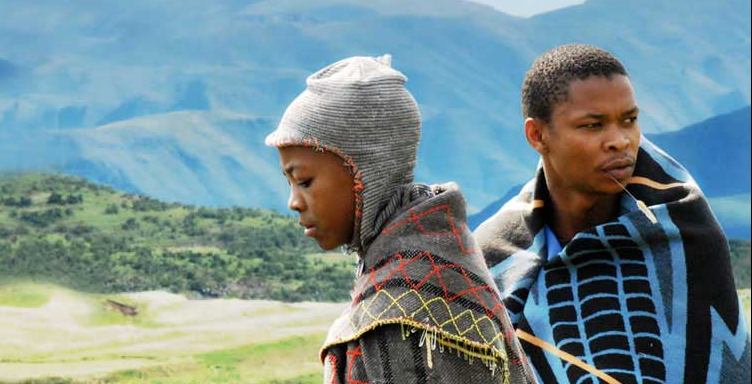
The trailer for the film The Forgotten Kingdom, which was filmed in Lesotho and South Africa in 2011 has been released! The film has already played at a few U.S. based film festivals this year is gaining praise and awards. Here is a review from Orlando Weekly:

THE FORGOTTEN KINGDOM
★★★★★

There’s an authenticity growling beneath the picturesque surface and deceptively simple storytelling of this South African-based coming-of-age (and coping-with-mortality) story. The blank stares of protagonist Atang Mokoenya (Zenzo Ngqobe) often grow as meditatively wide as the vistas and canyons the character travels to find some sort of resolution. Emotions blend with the natural elements, words with rhythmic indigenous chants.

This world premiere of U.S.-based director Andrew Mudge’s debut feature – presented, with subtitles, in the African dialect of Sesotho – follows Mokoenya from the crime-riddled streets of Johannesburg, South Africa, to the homeland, Lesotho, from which he was plucked by his father as a young boy. Mokoenya’s father passes away in a manufacturing village, leaving his son with prepaid funeral instructions that require Mokoenya to travel back to his tribal birthplace with his body. The slow unraveling of Mokoenya’s urbanized conceits upon his arrival in Lesotho – especially upon reconnecting with a female childhood acquaintance, Dineo – creates a compelling and subtle thread of self-discovery amid displaced cultural identity.

But the deliberate lingering pauses and panoramic sweeps of the director can’t disguise the turmoil of two Africas. Mysticism clouds science (Dineo’s sister is stricken with AIDS, a fact her father chooses to literally lock away in a room), but ancient traditions concurrently weave optimism
and purpose into otherwise random occurrences. Throughout a large part of his journey (much of it on horseback), Mokoenya is guided by an orphaned boy who swears he is the “eyes of the dark clouds” that follow Mokoenya everywhere. It’s an ambitious narrative device, but Mudge balances the disbelief suspension with pervasive charm. What might have been an exercise in exploitative cultural tourism in the vein of Paul Simon’s Graceland is instead a modern parable universal in its message, but unique to its location. – Billy Manes

The Forgotten Kingdom (Trailer) from Black Kettle Films on Vimeo.
Art Is…

By Lineo Segoete

I have NEVER gotten people, sure with time I have developed some kind of mechanism to deal but I still do not understand them. When I was younger, I always found myself involved in some kind of conflict, either I hurt someone (i.e. beat them), said something inappropriate or ignored them altogether. Understand, these always resulted from a contradictory action which led to my (over) reaction.

For the most part, my heart is always in the right place. My intention is always to spread happiness, meaning I am prone to want to impress others. I take it personally when I am taken out of context, especially when I am given no premises to defend myself. Yes I am defensive, sue me.

After constantly being taken advantage of and blamed when things go wrong one does tend to build up walls. One falls prey to self-defeat, insecurity, doubt and blindness if one is consistently torn down or hardly encouraged. One tends to neglect one’s own beauty when one is never accepted for who one is especially in the social context.

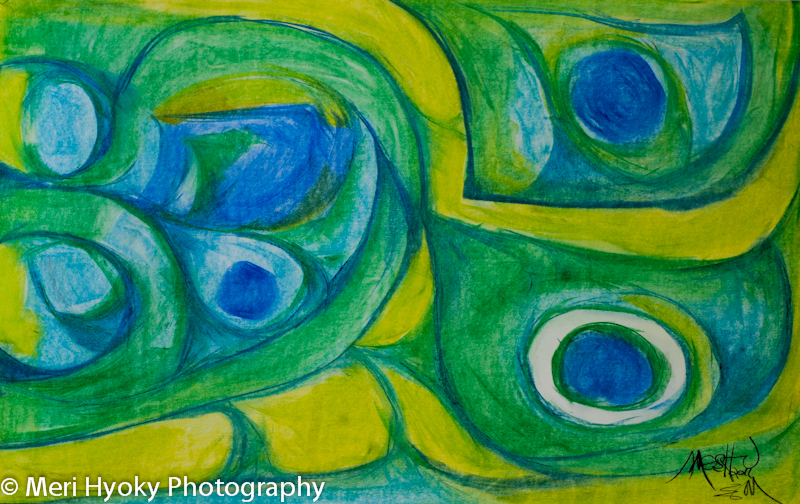
Art has always served as the tool to make sense of this strange world; it is the one thing I have never been self-conscious with or about. This may seem conflicting considering that it is imperative for my written work to be eloquent enough not to be misconstrued. Nevertheless, with art life is fair, honest, loyal, whole, a wonderful tragedy and forever.

I’ve just concluded that I am a social misfit and it’s ok if my universe revolves around me, this is the nature of man. In my universe, I stare at the stars and dream up poetry, I look at colours and see God’s face; mountains, rivers, flowers, children, death, pain and struggle make more sense to me than people ever will.

People are a paradox and I’m socially awkward, what a dilemma. I love art and people love ‘love’, perhaps that is our common ground. We are all different things to different people, some of which are unpleasant, so what. You can’t please everybody, but art will always liberate you.