Dams and archaeology in Lesotho

Metolong Authority and the Lesotho Heritage Network host discussion on how to build dams in Lesotho and save cultural heritage. 

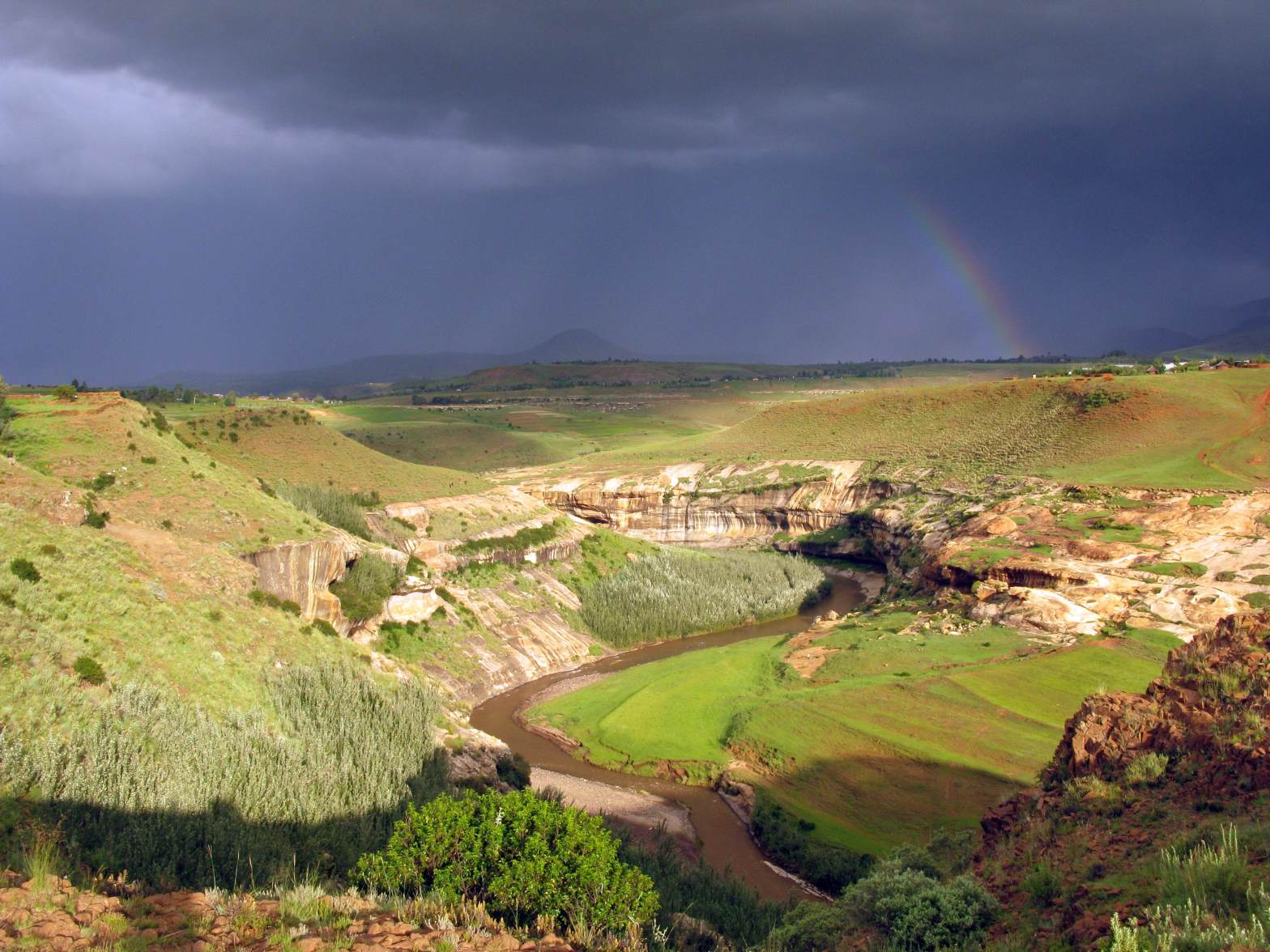
The Metolong Dam represents a major advance for Lesotho, not only because it will provide clean, treated water to so many people and businesses in the west of the country, but also because it has afforded a rare opportunity to explore Lesotho’s heritage and contribute to its heritage sector. In collaboration with the Metolong Authority and the World Bank, the Department of Culture sponsored the Metolong Cultural Resource Management (MCRM) Project, a four-year project with two main aims: 1) to record and salvage cultural heritage ahead of the Metolong Dam; and 2) to train Basotho heritage managers and thus build capacity for Lesotho’s heritage sector. Since 2008, the MCRM Project has completed excavations of Middle and Later Stone Age and historical archaeological sites, rock art recording and removal, archival and intangible cultural heritage assessments, and has provided training in a range of heritage field skills to ten Basotho who have recently founded the Lesotho Heritage Network (lesothoheritage.wordpress.com). The MCRM Project also featured a substantial community participation programme, including pitsos, school visits, and newsletters distributed throughout the dam’s catchment. This combination of research, conservation, and capacity building is unique to Metolong, but is especially relevant now that impact assessments for the next Lesotho Highlands Water Project dam at Polihali have begun, and the future of Polihali’s heritage and heritage managers is an open question.

To mark the conclusion of the MCRM Project, the Metolong Authority and the Lesotho Heritage Network are hosting a special lecture by Professor Peter Mitchell of the University of Oxford (United Kingdom). Professor Mitchell is one of the world’s leading experts in African archaeology, especially on the archaeology of Bushman hunter-gatherers in Lesotho, where he has worked for more than two decades. In addition to his work in the Metolong area, Professor Mitchell’s projects have included excavations at Sehonghong and Likoaeng in Thaba-Tseka District, Tloutle ha Mpiti in the Roma Valley, and sites associated with Phase I of the Lesotho Highlands Water Project. Professor Mitchell will be discussing the outcomes of the MCRM Project, their relevance to archaeology elsewhere in Lesotho, and potential future directions for research and heritage management in Lesotho. The lecture will take place on 10 July 2014 at 7:00 PM in the Naleli Room at the Maseru Sun. Attendance is free to the public but due to limited capacity early arrival is recommended. Details are also available on the Lesotho Heritage Network website, lesothoheritage.wordpress.com.

Unsung heroes wow the masses

By Lineo Segoete

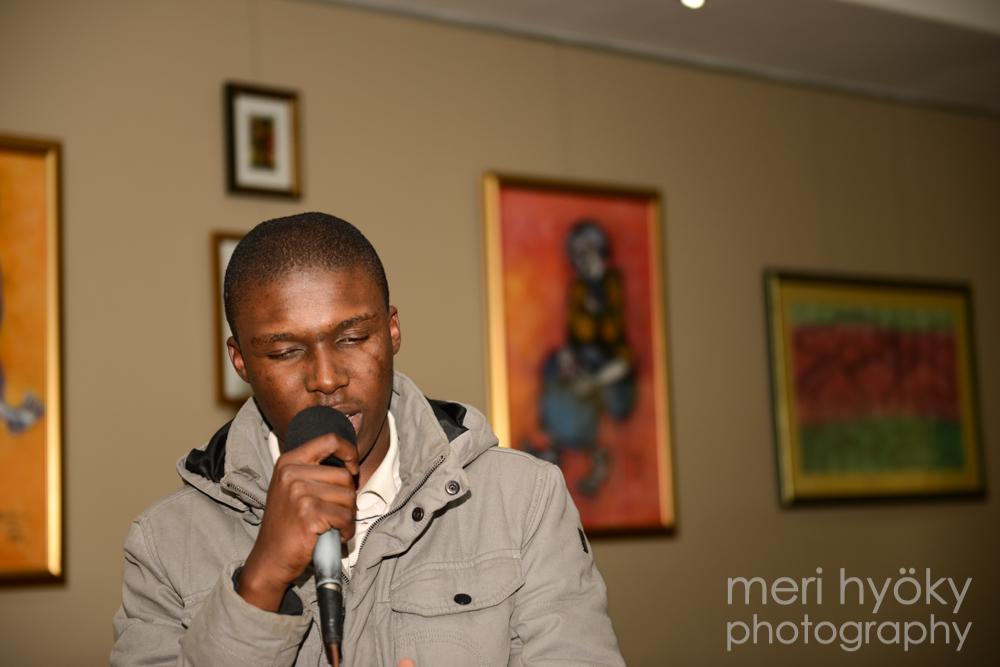
Morija Museum and Archives (MMA) hosted a Heroes’ Day celebration at Renaissance Coffee and Café on 24th May as a precursor to the 2014 leg of the Morija Arts and Cultural Festival. Local band Major 7 set the tone for the evening while INI entertainment and the Bakehase reserved the consistency through energised and humble pieces that passed a positive and uplifting message to the audience.

These artists did not limit themselves to specific genres; the audience was spoilt to jazz, pop, reggae, Kwaito, dancehall, Famo and Afro-soul through which they carried their own originality and flair. In keeping with the theme the MC, Mpho Matete gave a brief yet powerful salutation to “the nobodies” that hardly receive recognition for the contributions they make: the mothers (surrogate or biological) who raised us, the guy in the street who helps a lady find her wallet with all its contents, the fathers who spend prolonged periods of time without seeing their families, the sisters who crave a social life but do not have one because they have to nurse their siblings and many more.

Kabaka and Cecilia of the Bakehase (a post Modern African collective) opened the show with a live Bongo jam-session. The segment was exceptionally well received in that although bongos are a popular African instrument they are rarely played in public spaces in the country. The set inspired the other artists to also incorporate the drums into theirs. InI followed with charmingly articulated and expressed poetry and Hip Hop backed by acoustic guitar and melodious vocals, all specifically tailored to suit the “unsung heroes” theme.

Major 7 enthralled everyone with their ability to shift between genres without ever once losing momentum. They improvised meticulously and kept the crowd captivated by throwing pleasant surprises at them and incorporating dance into their set. Passers-by in pioneer mall stopped in their tracks to get a whiff of the flavour and everyone wore big smiles on their faces.

The event was thrown as part of activities organised by MMA intended to sustain public visibility throughout the year besides the festival period alone. More importantly, it was organised to tribute our heritage as a people with gratitude and humility. The response was encouraging and sponsors Renaissance and BAM promotions were happy to have played a hand in seeing it to its realisation, as were the people who attended and sought to be entertained.

Mini Gallery:

(See all photos from the event on Facebook by clicking here)

Inspiring a new generation of green activists in Lesotho

By Leila Hall

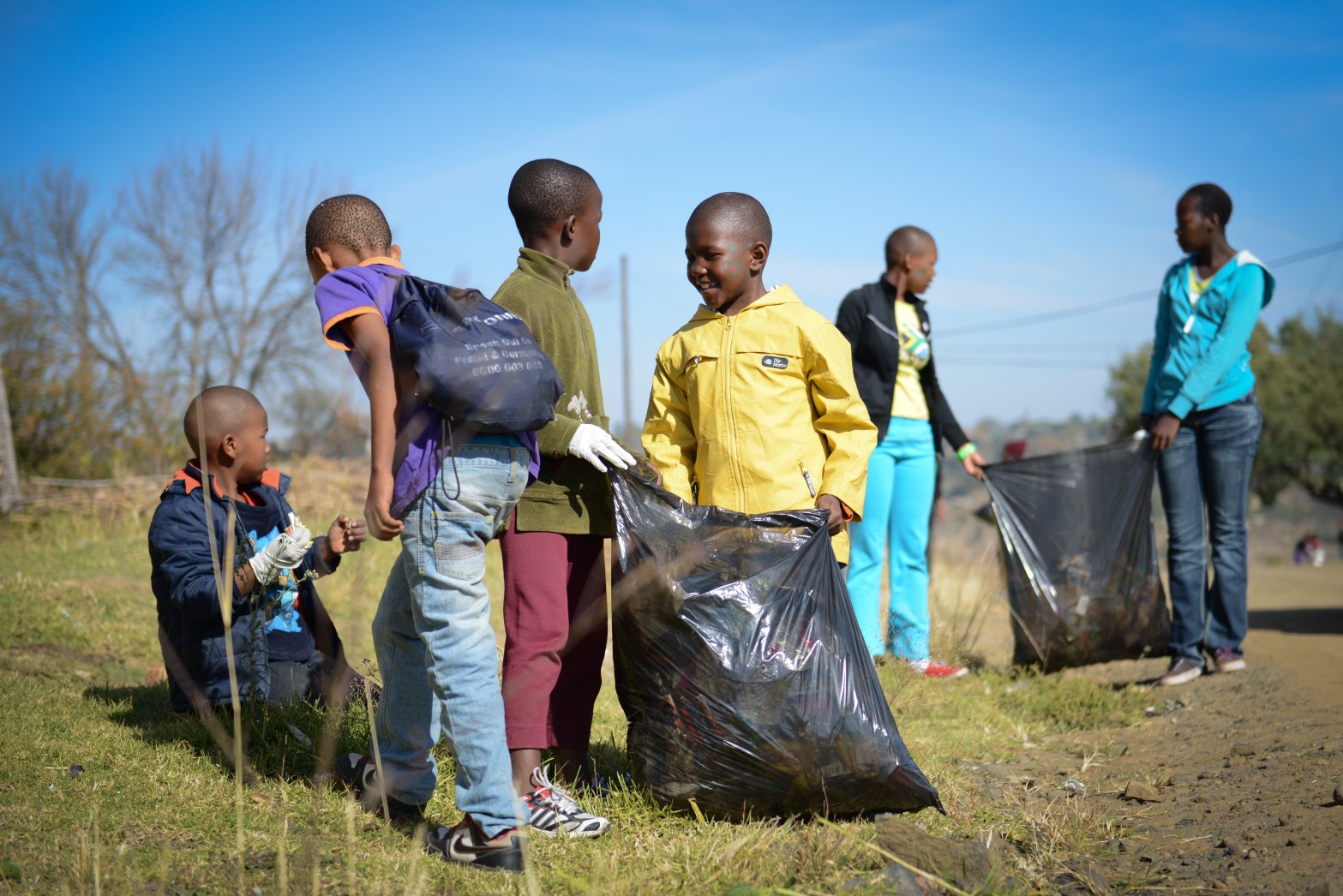
It is a Saturday morning in Moshoeshoe II, a neighborhood of Maseru, Lesotho. A small army of eco-warriors has set out to try and clean up the litter in their community. The group is made up of children and teenagers of varying ages who work together, holding black rubbish bags between them and picking up the many bottles, cans, and miscellaneous bits of rubbish that are strewn along the sides of the neighborhood’s dirt roads.

Clean-up days such as this one happen every second Saturday in this neighborhood. The initiative is organized by Africa’s Green Generation (AGG), a Lesotho-based NGO founded by sisters Fila and Mahlao Maema.

“It’s a good exercise for the children, because they get to learn about waste segregation – the idea that not everything is litter,” explains Fila. “We emphasise the idea that cleanliness is important, and that it begins at home. We try to challenge the children to think of what our environment would look like if we just left everything as it is.”

Under the guidance of the two sisters, a core group of children and teenagers living in the neighborhood get together on a regular basis, and have even assigned themselves various leadership positions. Sixteen-year-old Motšopho Motheselane is currently President of the group.

“We meet on Saturdays and during the school holidays,” he says. “We hold clean-up days and we also make things, like knitting and wire cars. We use old glass bottles to make pots for plants, and we recycle tins to make wheels for wire cars.”

Motšopho is worried about the problem of litter in so many communities in Lesotho, and would like to see AGG’s activities expand to other parts of Lesotho.

“I want to see a clean Lesotho in the future,” he says, “with everyone cleaning his or her village. We have to make other people interested in cleaning up, we have to form other AGG groups in the country.”

Today’s clean-up day is followed by a talk and Q&A session with Chris ‘Redz’ Ranthithi, a young Mosotho activist who recently travelled to Canada and held interviews with a number of people about issues related to climate change: an experience that has been documented in the film Talking to CanadiansThe young members of AGG are fully attentive, engaged by Chris’ stories and knowledge, and unafraid to raise their hands and ask questions. It is clear that even within this small group there is a sharp interest in environmental issues, and a desire to take positive action.

However, as Fila explains, there exist many barriers in Lesotho for young green activists looking to make a difference. There is currently no recycling plant in the country, and very few public rubbish bins.

“The situation doesn’t change: we hold a clean-up day, but two weeks later when we hold another one there is litter everywhere again,” she says. “There are no bins in this community. The bar behind me has no bin, so there are always bottles and cans on the floor outside. It would be great to run an education and awareness campaign, to encourage people not to litter, but you can’t tell people to not litter when there are no bins available!”

“Most of the rubbish that we pick up is simply taken by the Maseru City Council to the city’s main dump. We need bins where we can separate rubbish properly, and we need a recycling plant, otherwise much of what we do is pointless.”

Despite these challenges, however, the sisters are working hard to try and improve and expand AGG’s reach and activities, and especially to inspire in a younger generation of Basotho the desire and confidence to take action towards creating a cleaner and healthier environment in Lesotho and further afield.

After Chris’ talk, Mahlao addresses the group: “Everything starts at home, everything starts with you. You guys are the solution, not your parents. It will be you and your children living on this earth.”

For more information on AGG and on how you can support their work, visit their website: http://africasgreengeneration.wordpress.com/ or contact them via email – [email protected]


This is what we’re marching for

By Lineo Segoete

In a culture that generally rests on compulsory heterosexuality, it is unheard of to lodge anything but persecution and degradation of feminism, homosexuality and anything that does not subscribe to traditional (read conservative) blueprints of masculinity and gender perceptions. The male is the head, tough, like thunder and the protector; he abates his feminine side therefore inhibiting his ability to show affection and compassion. It is this mentality that many of our military men hold and boldly defend in their attitude toward women and LGBTIS people.

We saw images on the internet of Ugandan soldiers burning homosexuals caught breaking the law or those in Sudan abducting and raping women. Soldiers in Lesotho are as not that great an exception; they blurted obscenities at a recent IDAHOT march (on Saturday, 17 May) as their truck drove past the crowd, mighty and glorious in their machismo and misogyny.  In keeping with tradition some took the liberty of hitting on the “pretty girls” within the crowd thereby striking the perfect balance of their patriarchal brainwashing.

Many heterosexual males blame homosexuality on a matriarchal upbringing. The general perception is that men who lack a strong male connection in their upbringing are prone to develop female habits and personalities. To put it more bluntly: many straight men think gay men are so because they want to become or consider themselves females. Not only is this thinking absurd, it is lazy and haphazard. What of womanisers who were reared by matriarchs and surrounded by many sisters and aunts?

The word soldier here should be embraced in its entirety: It represents military men and other forms of male fraternities; from Ras Tafari brethren, Hip Hop artists, sportsmen, corporate men and Seminary men because these groups are also just as brutal in their stance against homos and their ideologies on the perfect model of a virtuous woman.

In his view, the soldier believes that the right kind of woman is one who keeps her silence, mammies the children, knows where the red belt is, cooks and cleans. Being domesticated has nothing to do with gender but with the individual (not everyone who loves to cook is good cook either, think about it). There is much more to being female and to being LGBTI than being perceived as weak, and they should not be generalised as being one thing either.

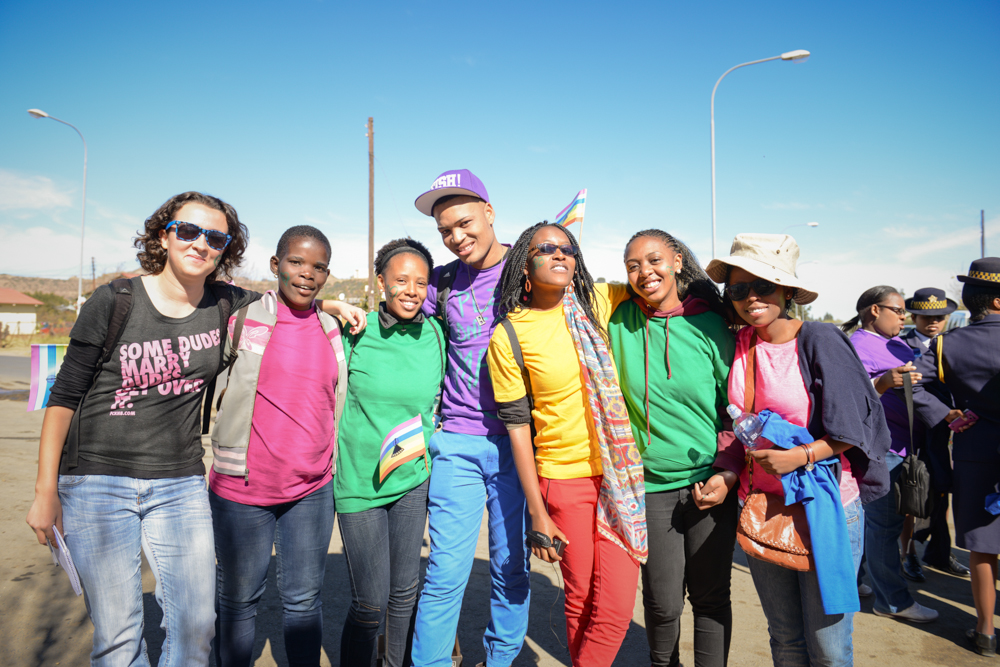
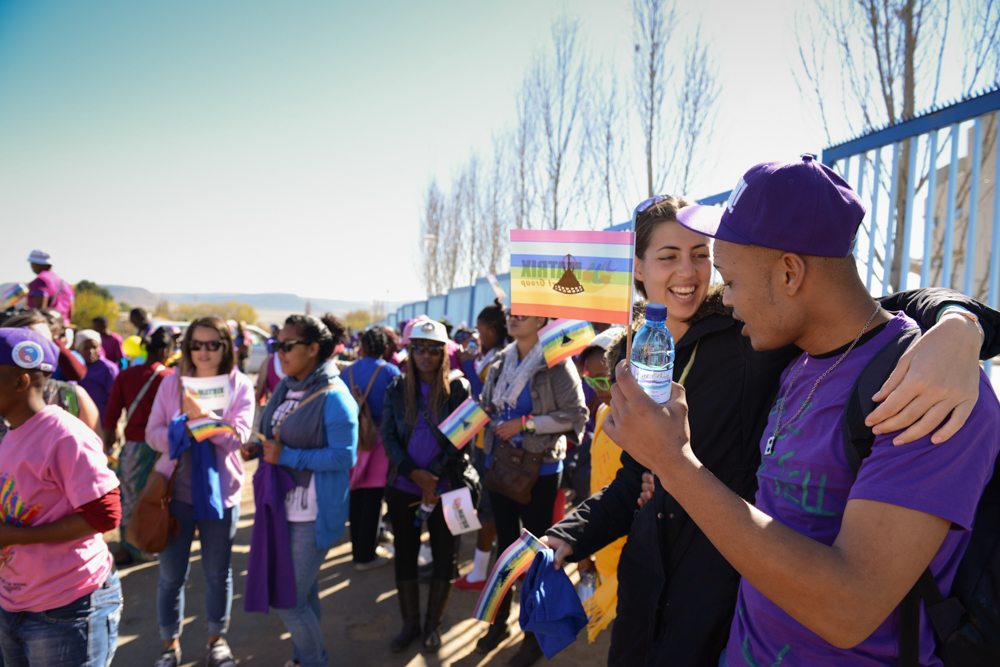
The IDAHOT march was one of the best acts of solidarity I have ever been a part of, I loved observing voyeurs’ reactions, answering questions and even the bit of negativity that came in the form of macho soldiers in their green truck, I thought to myself: “this is exactly what we are marching for!”. I liked the confusion we all caused as well because heterosexual or LGBTI we marched in unison and this struck the public on a personal level. Many people saw at least one person in the crowd that they identified with which to me said there is room for us to connect if we’d just stop being stiff brutes living on dated principles that only strengthen division and resistance to change in this dynamic world.

Click here for photos from IDAHOT:

IDAHOT photos


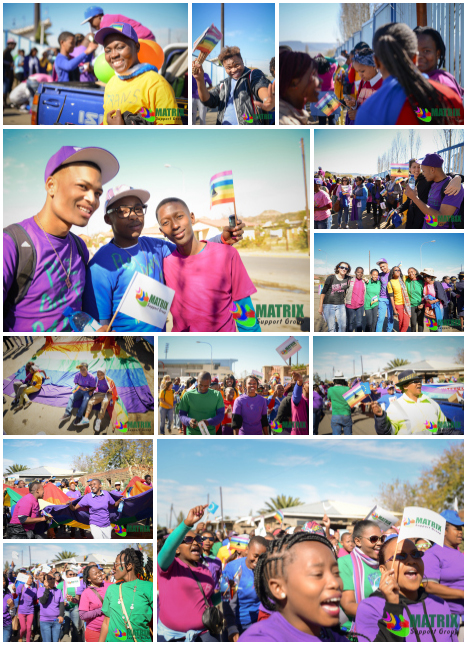
Photos from IDAHOT march in Maseru

On the 17th May each year, events are held around the globe to celebrate the International Day Against Homophobia and Transphobia. In Lesotho, a local LGBTI advocacy organisation – Matrix Support Group – organised a peaceful march for the second year in a row. Over 200 people came out to support the event. The colourful procession made its way through the centre of Maseru and ended at the Maseru Club, where a number of speeches, discussions and performances took place.